BIRDS of THE WORLD - An Online Bird Book
Long-Legged WADERS
Storks
Order Ciconiiformes Family Ciconiidae
Long-Legged WADERS
The long-legged waders are comprised of the egrets, herons, ibises, spoonbills, storks, and flamingos. They are a diverse group, united by their long legs that enable them to wade for food. Their familes and orders are given below:
Egret, Herons: Order Pelecaniformes, Family Ardeidae
Ibis, Spoonbills: Order Pelecaniformes, Family Threskiornithidae
Flamingos: Order Phoenicopteriformes, Family Phoenicopteridae
Egret, Herons: Order Pelecaniformes, Family Ardeidae
Ibis, Spoonbills: Order Pelecaniformes, Family Threskiornithidae
Pelecaniformes also includes Balaenicipitidae (Shoebill); Pelecanidae (Pelicans); Scopidae (Hamerkop)
Storks: Order Ciconiiformes, Family CiconiidaeFlamingos: Order Phoenicopteriformes, Family Phoenicopteridae
Storks
Order Ciconiiformes Family Ciconiidae
Stocks have large and heavy bills. Their nests are also very large and used year after year. They are mute, but clack their bills as a means of communication, especially at or near the nest. They eat insects, worms, fish, and small mammals. They are related to egrets, herons, ibises, and spoonbills, but not to falmingos.
Genus Anastomus
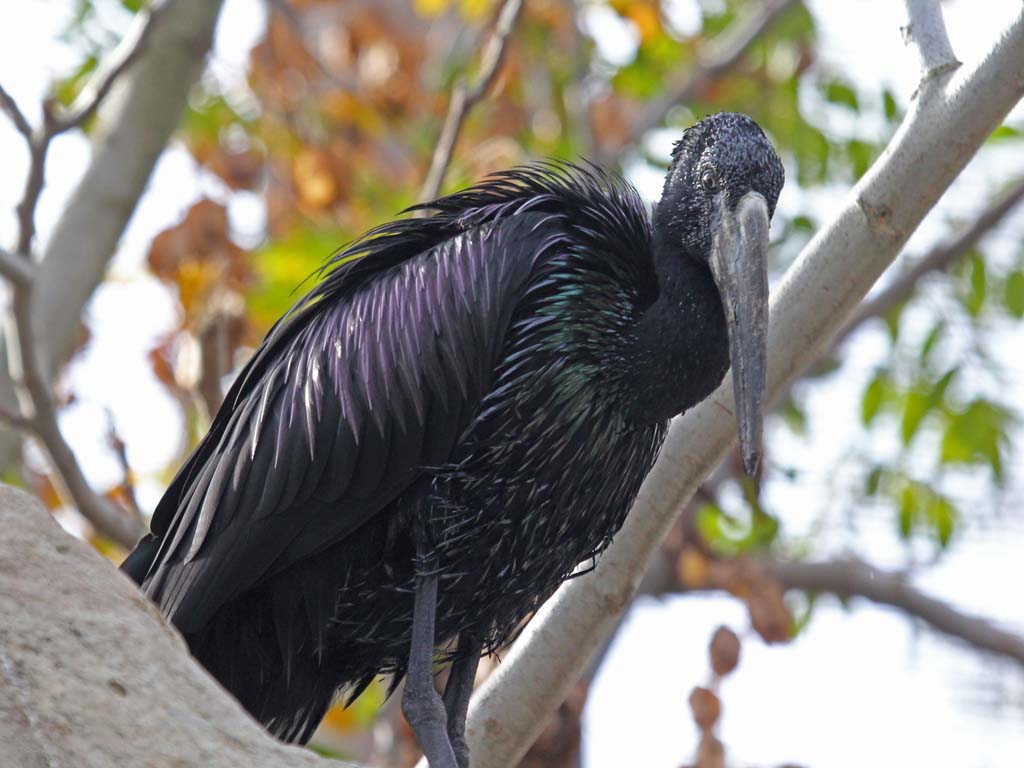
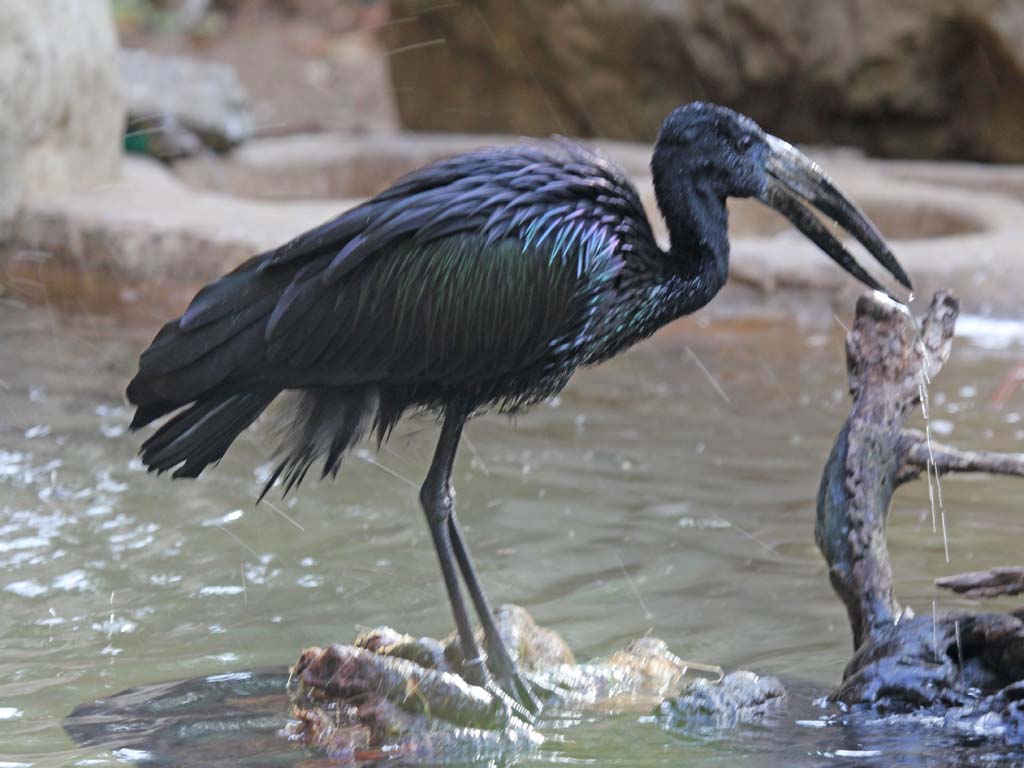
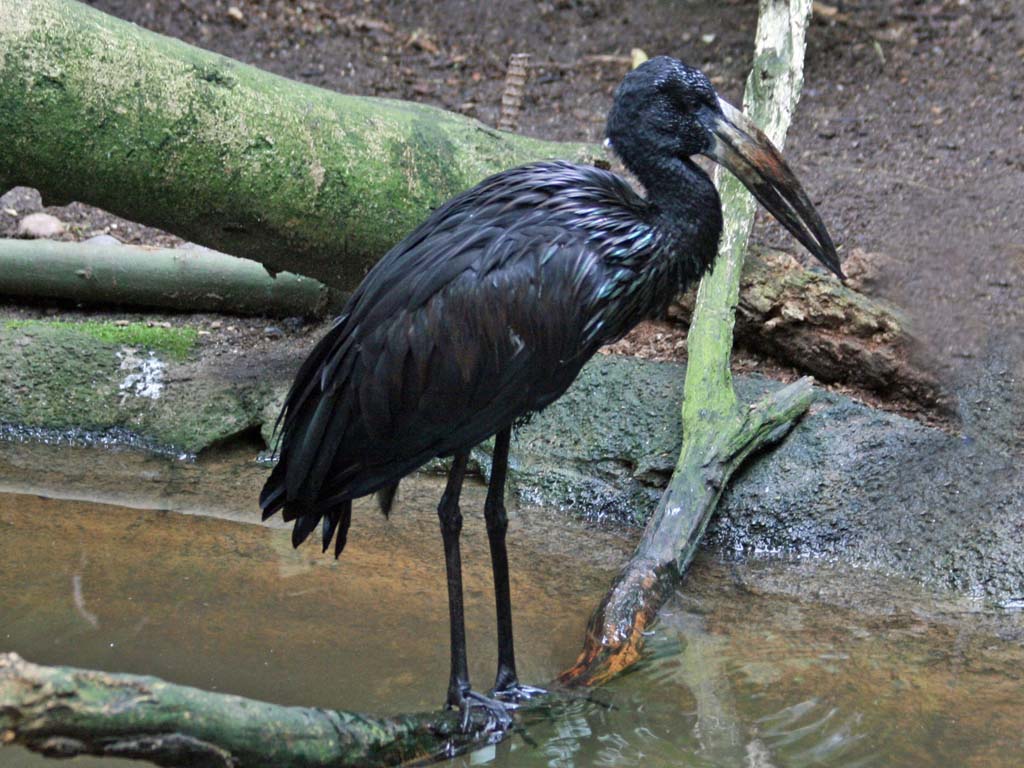
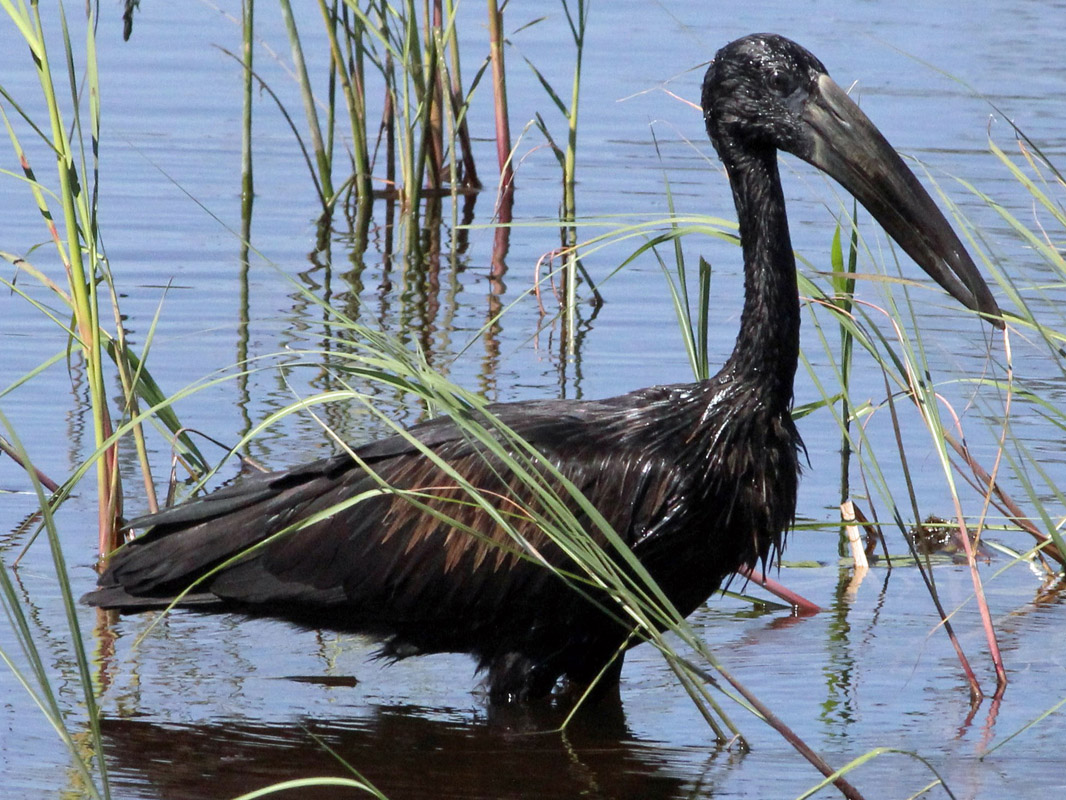
The Openbills are large wading birds characterized by large bills, the mandibles of which do not meet except at the tip. The cutting edges of the mandible have a fine brush like structure that is thought to give them better grip on the shells. This feature develops only in the adults.
Stork,_African Openbill also African Openbill Anastomus lamelligerus Found: Africa
Image by: 1, 2) Dick Daniels - San Diego Zoo 3) Sandy Cole - San Diego Zoo 4) Charlie Westerinen


Stork,_Asian Openbill also Asian Openbill Anastomus oscitans Found: Asia
The Asian Openbill Stork has mainly gray plumage; glossy black wings and tail that may have a green or purple sheen;
Image by: 1, 2) Charlie Westerinen near Seim Reap Cambodia 3) JJ Harrison - Thailand


Genus Ciconia
These are large storks, typically 100 cm tall, with a 180 cm wingspan and a long thick bill. Ciconia storks are gregarious and colonial breeders, and pairs stay together for life. They typically build large stick nests in trees. These storks feed on frogs, insects, young birds, lizards and rodents.
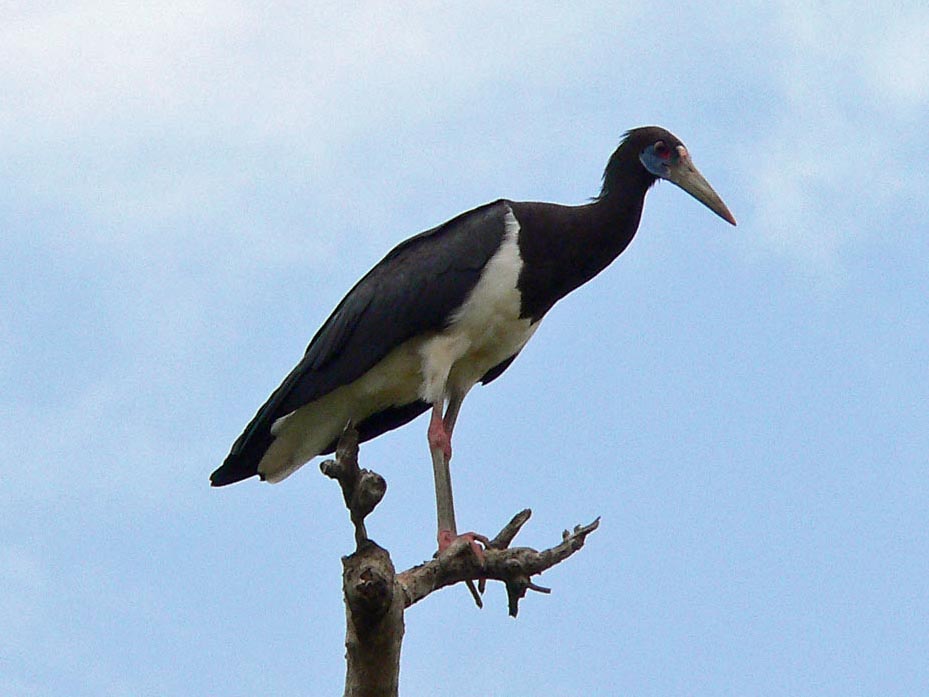
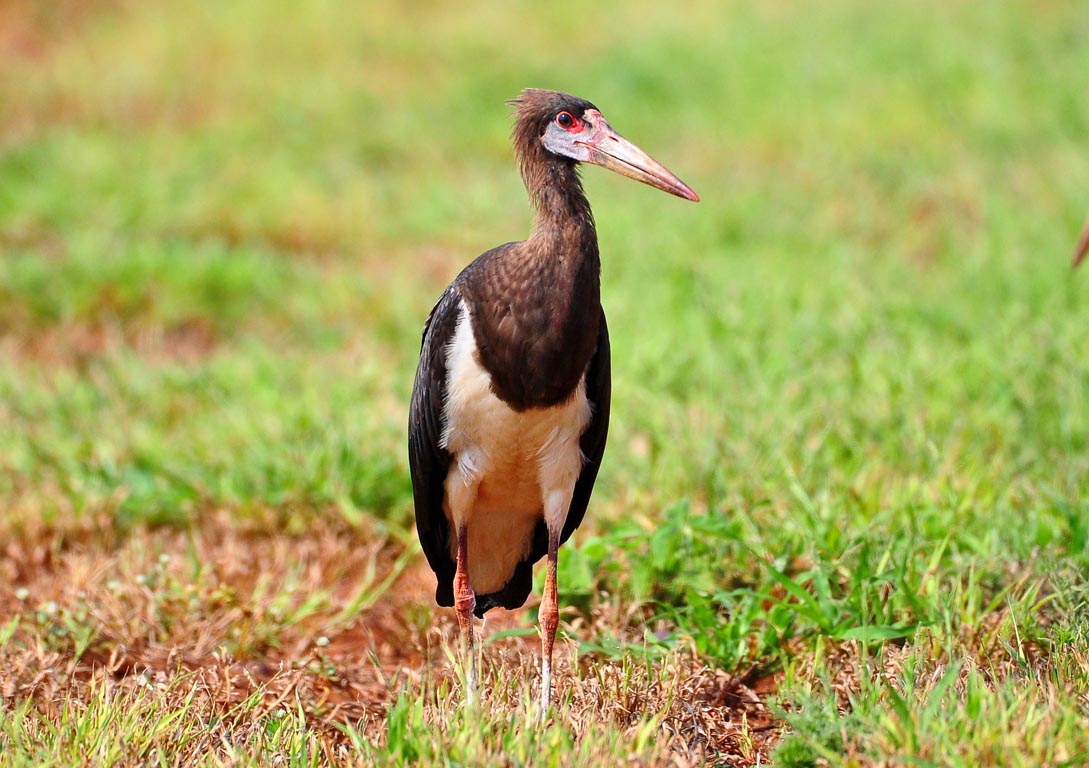
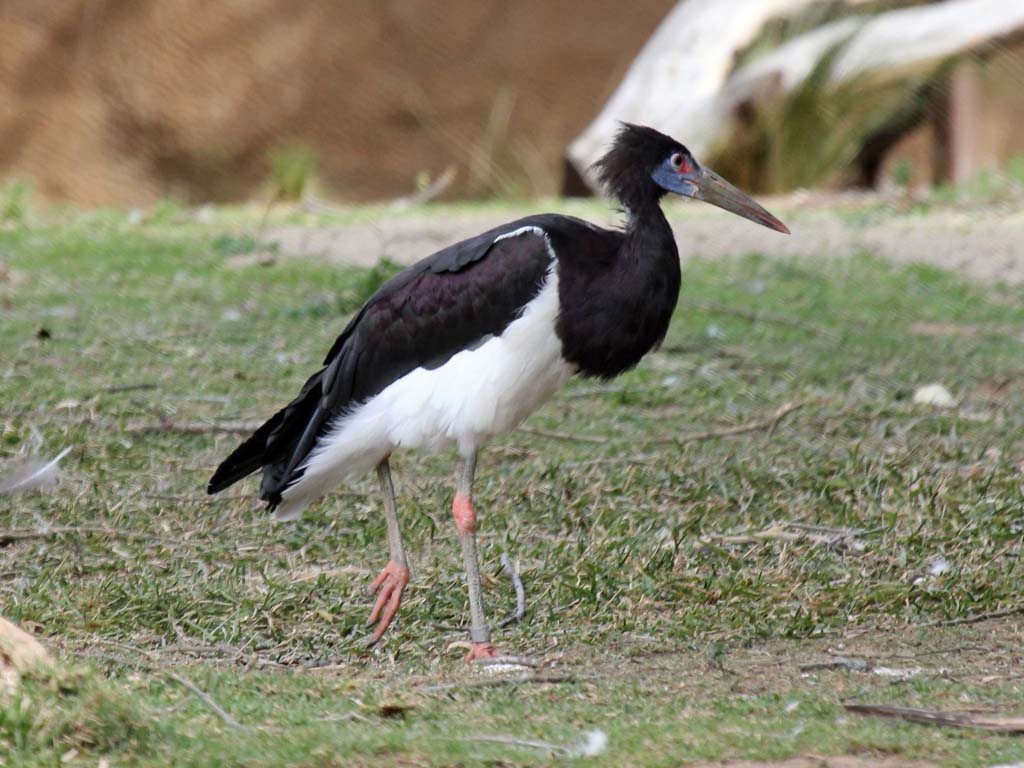
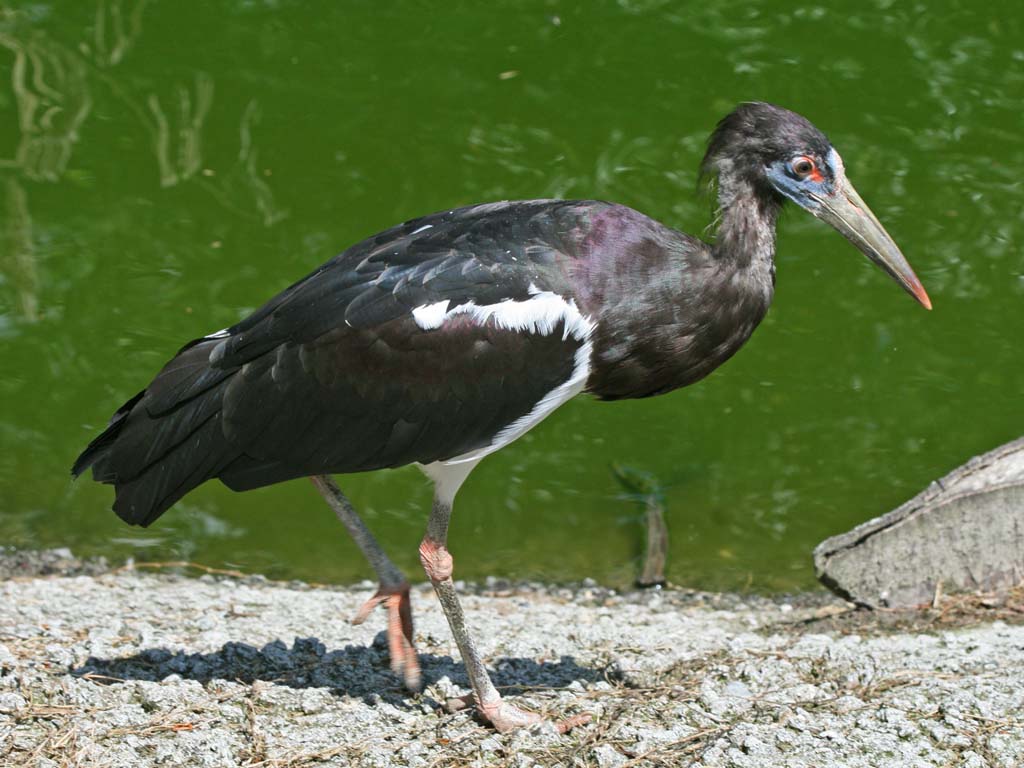
Stork,_Abdim's Ciconia abdimii Found: Africa
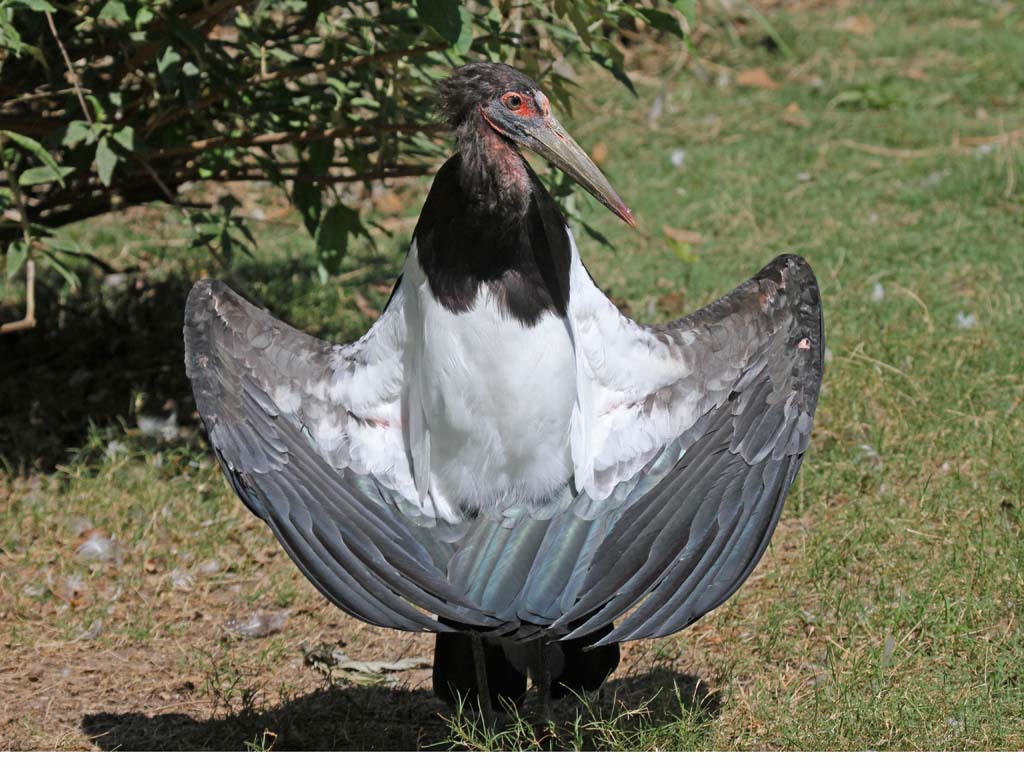
The Abdim's Stork has black upperparts, head, neck, upper-breast; white lower-breast, belly; gray legs, bill; red knees and feet; . In breeding season it has red skin in front of eyes; blue skin near the bill. It is the smallest stork.
Image by: 1) Christiaan Kooyman - Niger 2) Ian White -
Zambia
3) Dick Daniels - San Diego Zoo 4) Sandy Cole - Sylvan Heights 5) Dick - Sylvan Heights


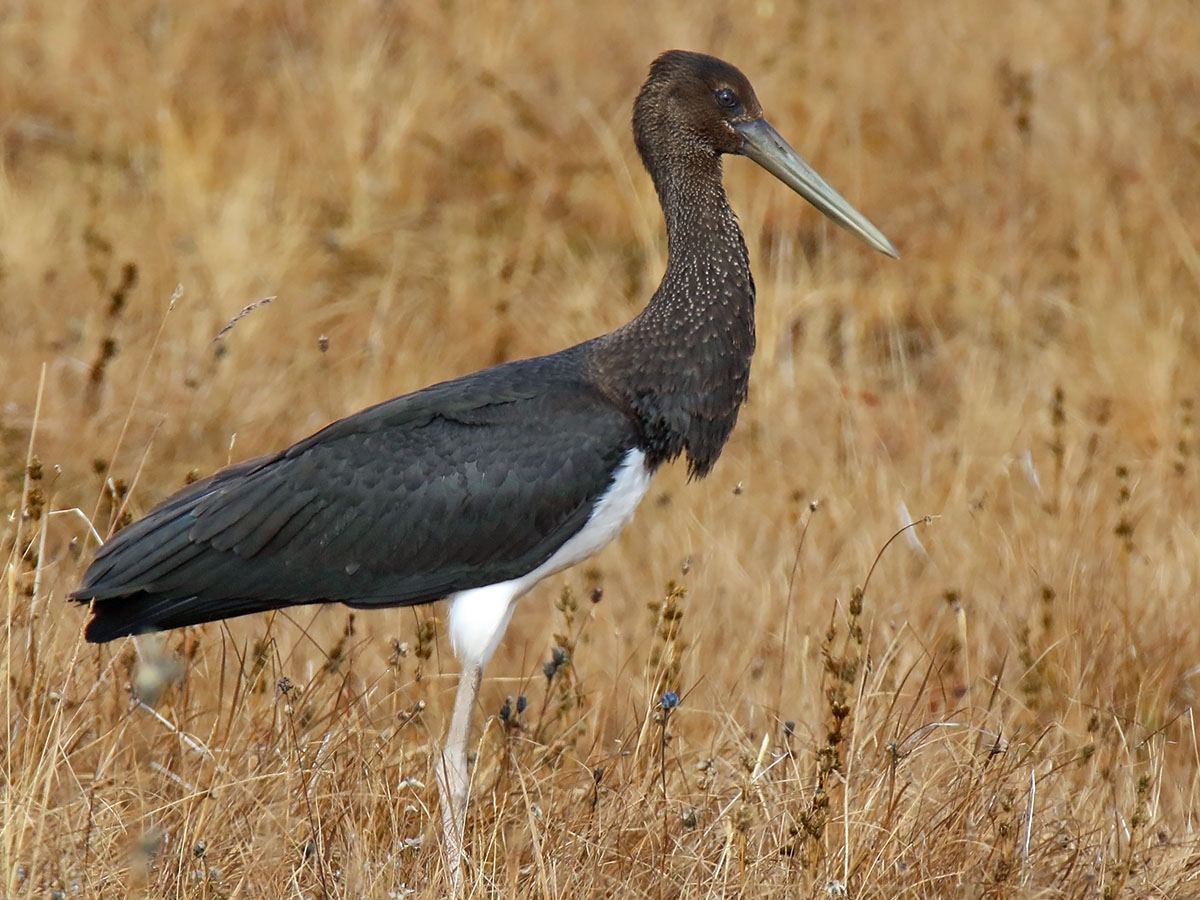
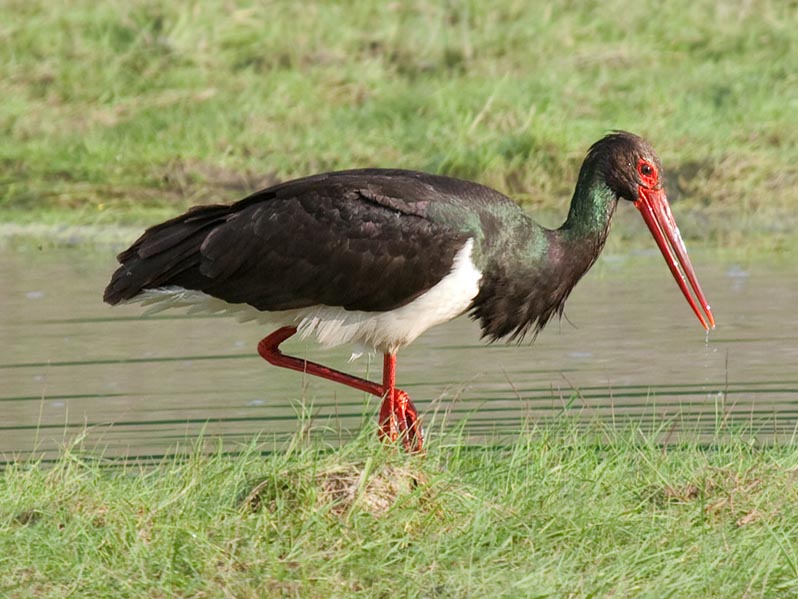
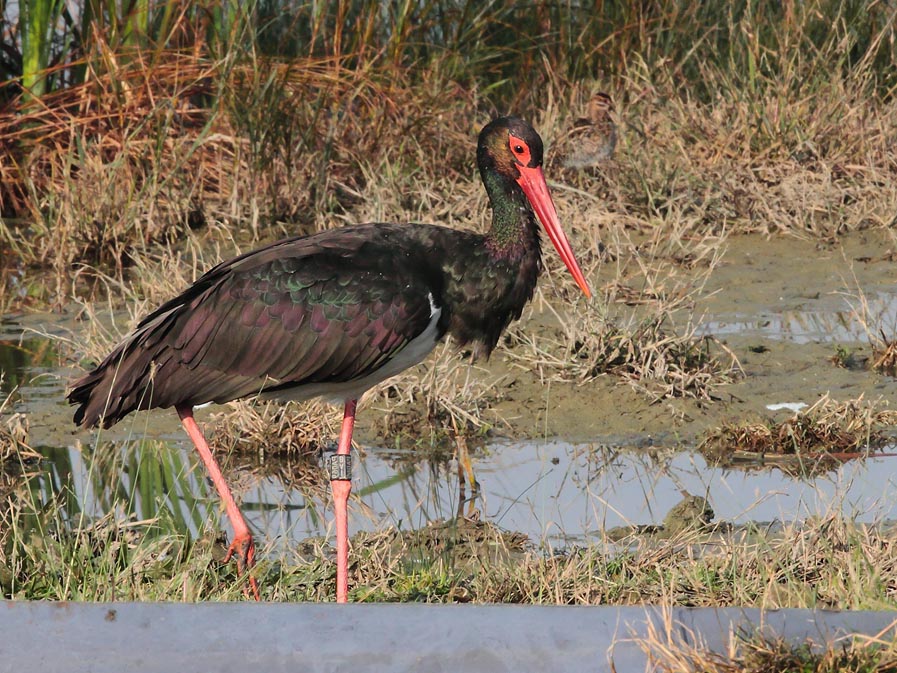
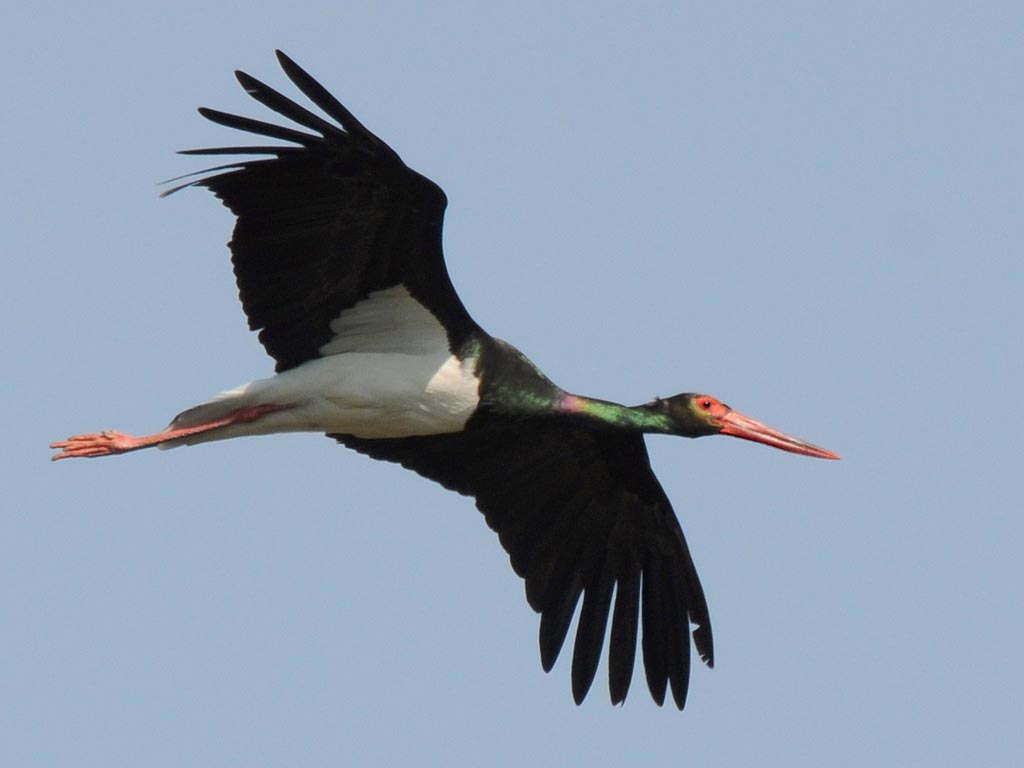
Stork,_Black Ciconia nigra Found: Europe, Asia, Africa, Australasia
The Black Stork has mainly black plumage; white lower-breast, belly, under-tail coverts; red bill, legs, skin around the eyes.
Similar to: Black-necked Stork. The Black Stork has black back; red bill. Black-necked Stork has white back, black bill.
Image by: 1) Imran_Shah - Pakistan 2) Sergey Pisarevskiy - Russia
3) Cristiano Crolle - Racconigi, Italy 4) JV Verde - Portugal Similar to: Black-necked Stork. The Black Stork has black back; red bill. Black-necked Stork has white back, black bill.
Stork,_Maguari Ciconia maguari Found: South America
Image by: 1, 2, 4, 5, 6) Cláudio Timm - Rio Grande do Sul, Brazil 3) Cristiano Crolle - Esteros del Iberà, Argentina


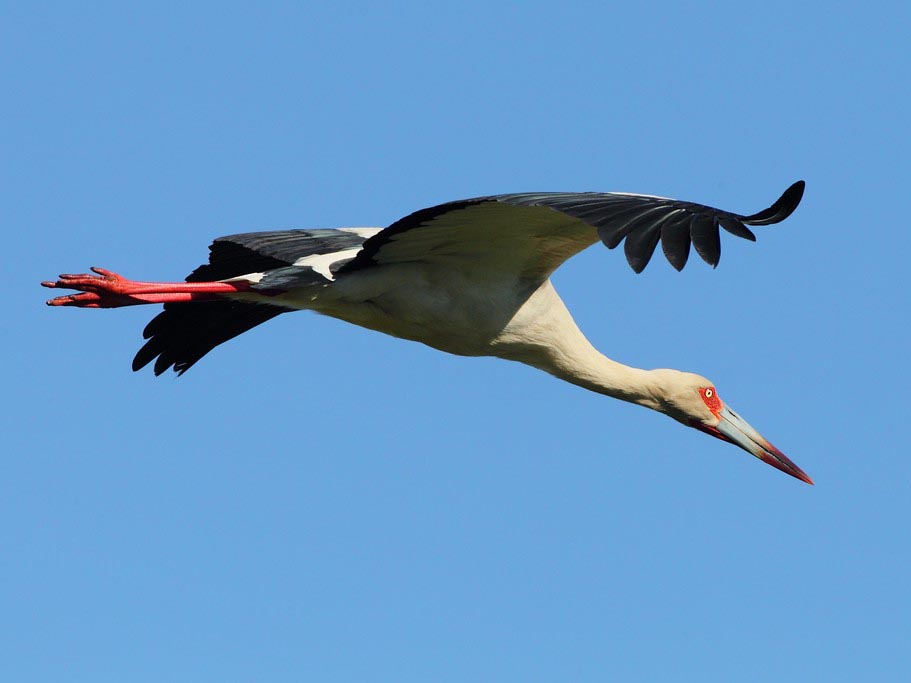


Stork,_Oriental Ciconia boyciana Found: Asia
The Oriental Stork has mainly white plumage; black wings; red legs, skin around eyes; blackish bill.
Similar to: White Stork. Oriental Stork has blackish bill; White Stork has reddish bill.
Image by: 1, 3) Hiyashi Haka 2) Spaceaero2 4) Blake Matheson - Yangtze BasinSimilar to: White Stork. Oriental Stork has blackish bill; White Stork has reddish bill.


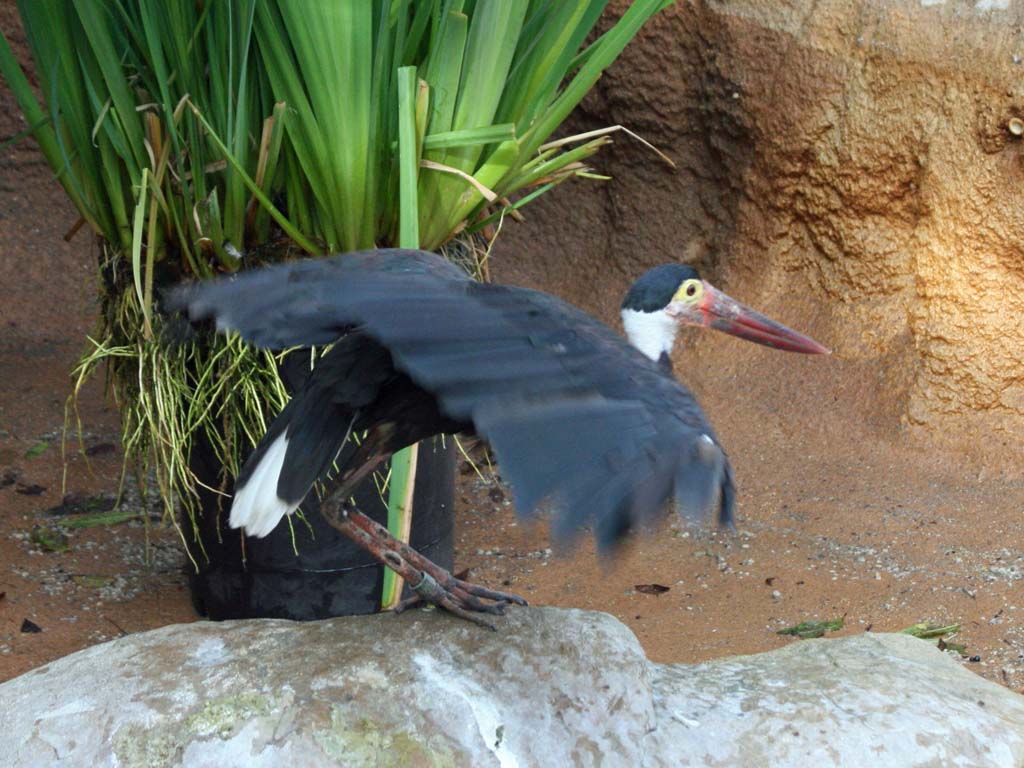
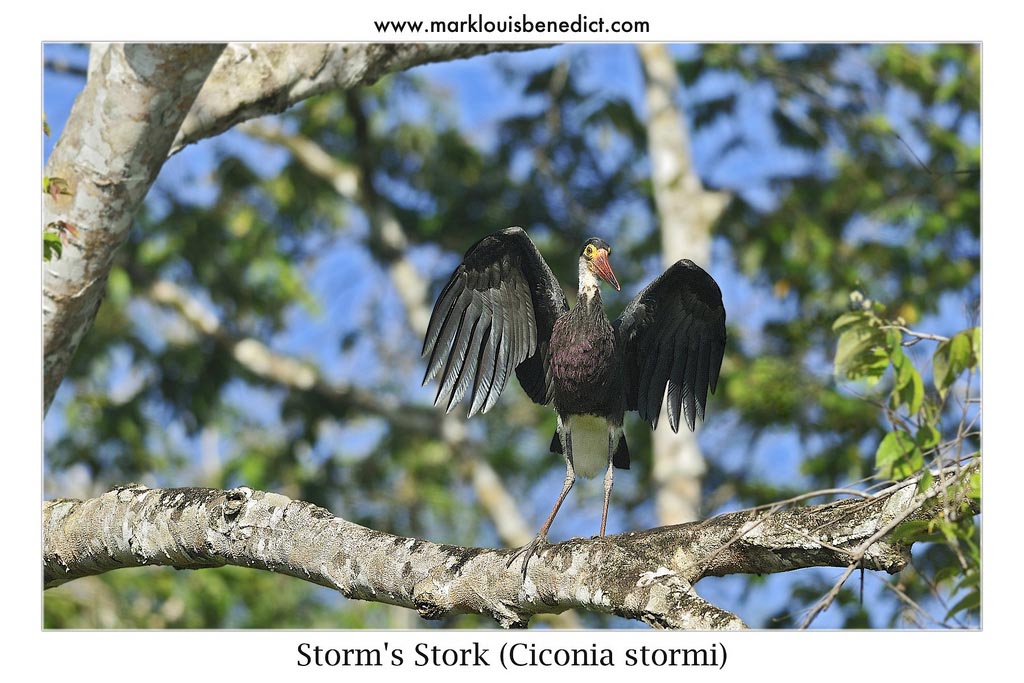
Stork,_Storm's Ciconia stormi Found: vicinity of Malaysia
The Storm's Stork has mainly black plumage; white neck; red bill, legs; orange bare facial skin;yellow orbital skin.
Image by: 1) Nathan Rupert 2, 3 Sandy Cole - San Diego Zoo 4) Mark Lewis Benedict


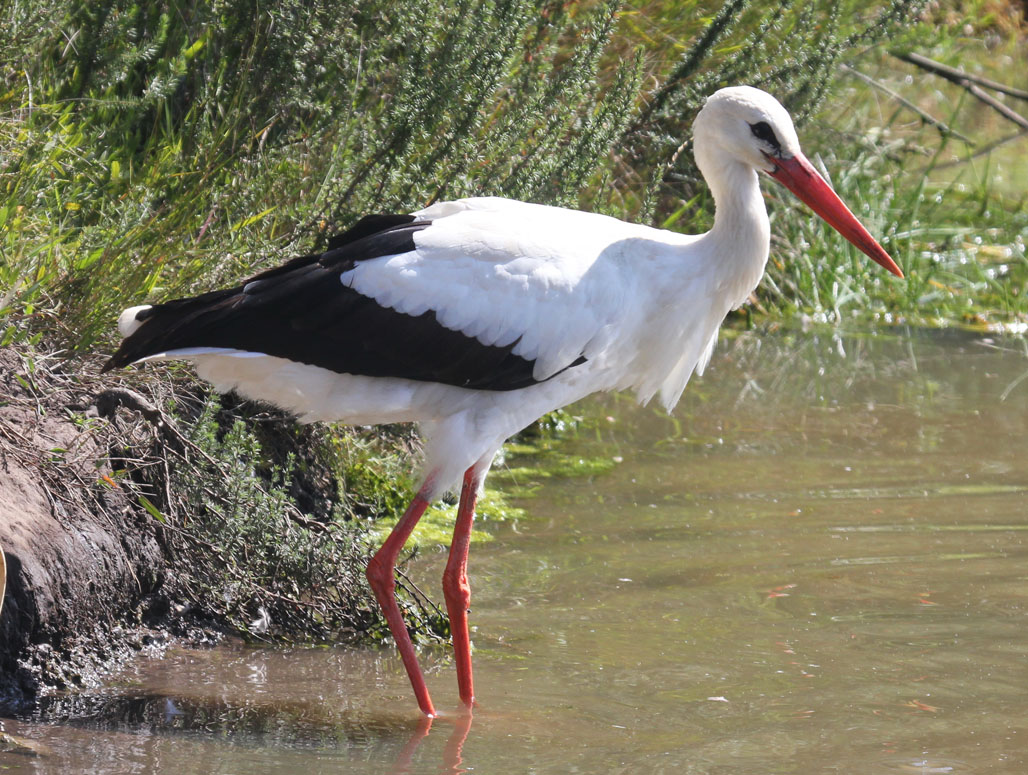
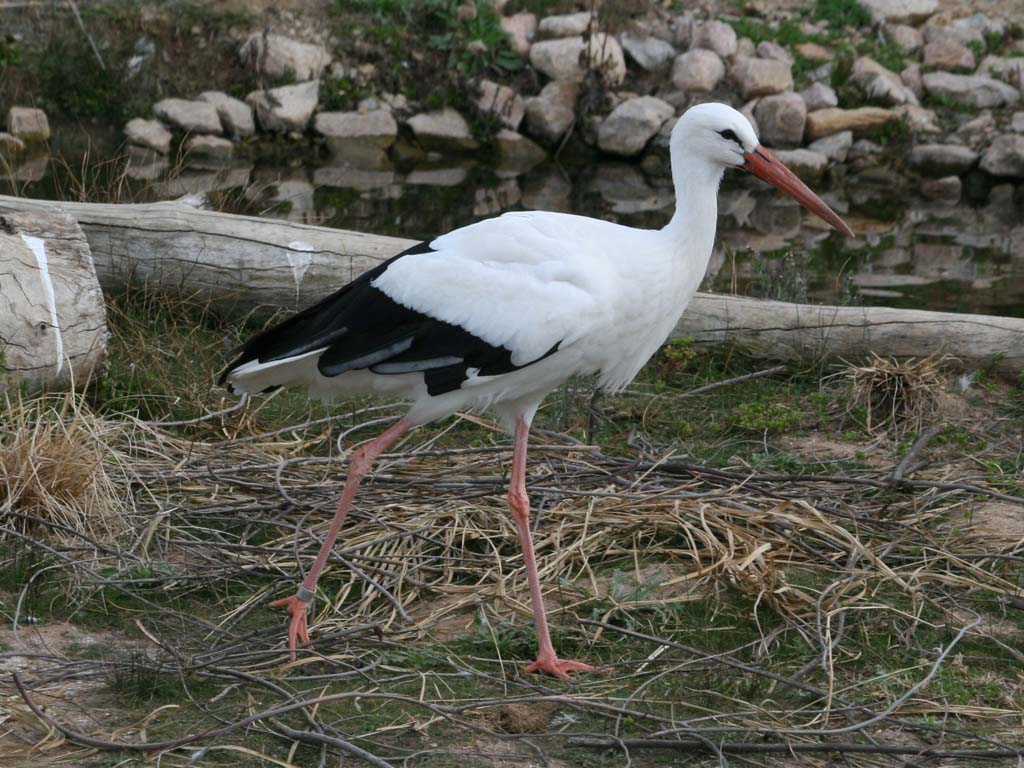
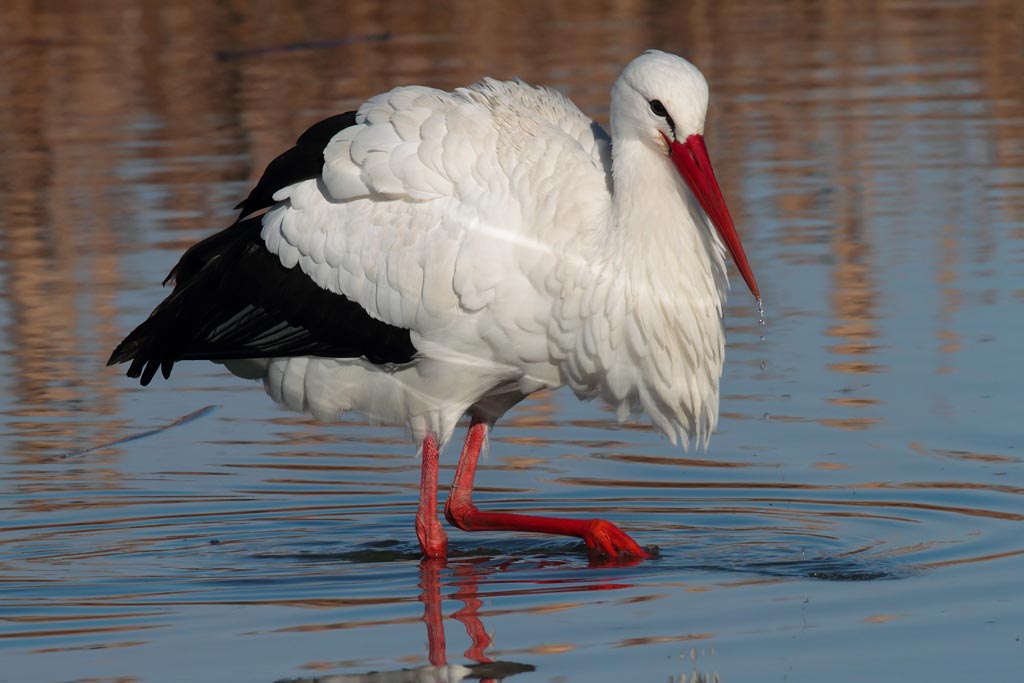
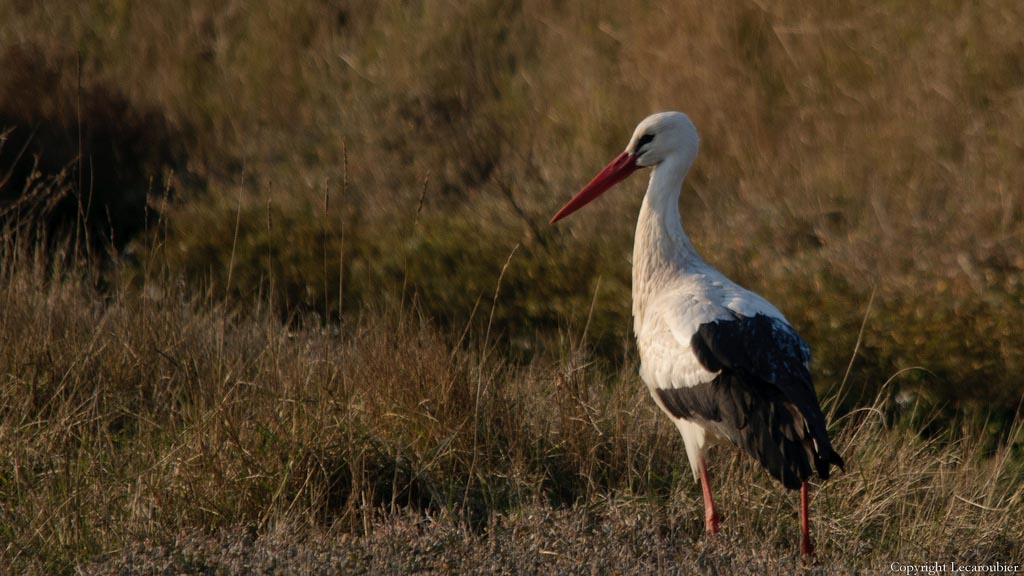
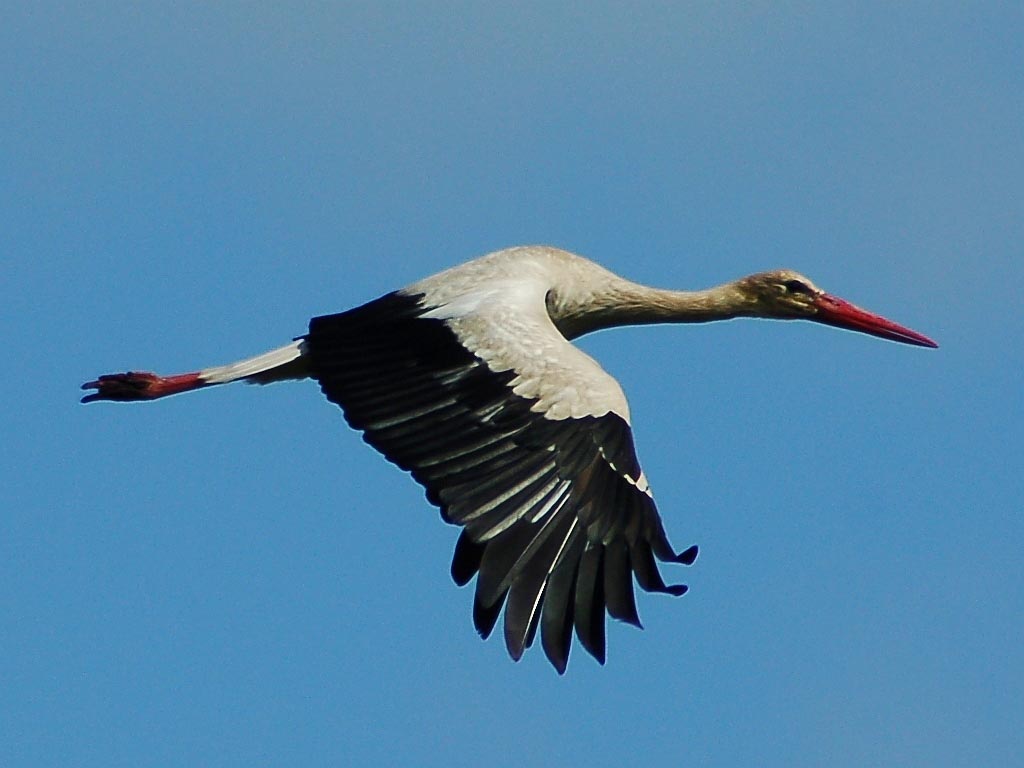
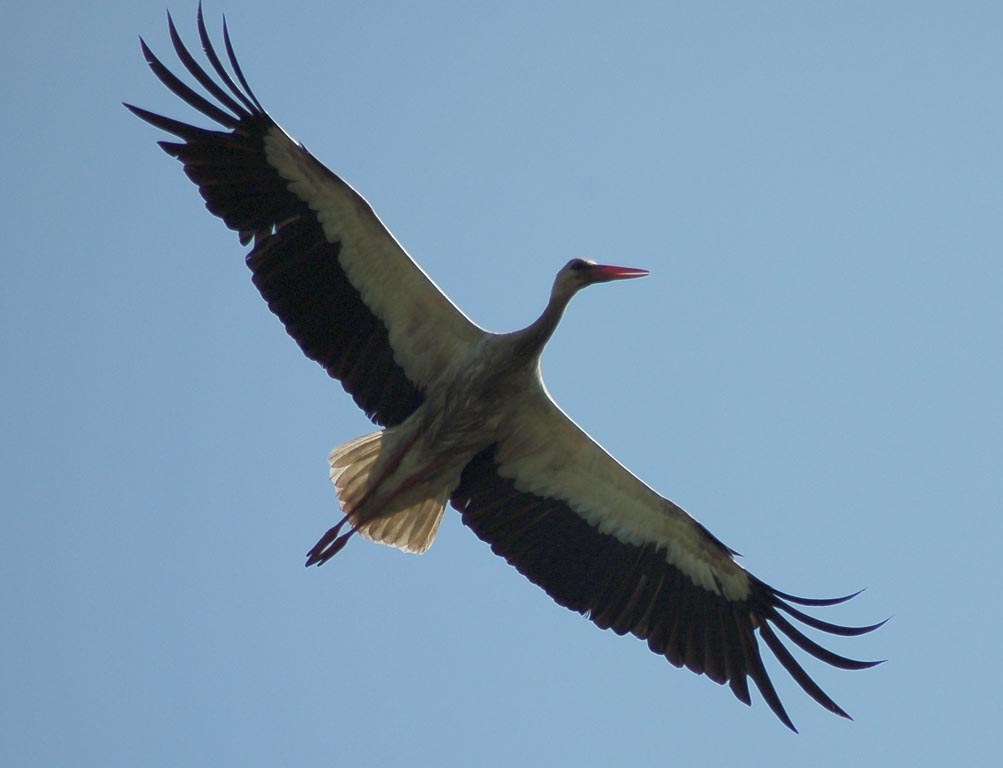
Stork,_White Ciconia ciconia Found: Europe, Asia, Africa
The White Stork has mainly white plumage; black wings; red legs, bill.
Similar to: Oriental Stork. Oriental Stork has blackish bill; White Stork has reddish bill.
Image by: 1) Charlie Westerinen 2) Dick Daniels - South Africa 3) Sandy Cole - San Diego Zoo 4) Cristiano Crolle - Racconigi, Italy 5) Erik Lecaroubuier - France 6,7) JV Verde - Portugal 8) Video by Avibirds. More vidoesSimilar to: Oriental Stork. Oriental Stork has blackish bill; White Stork has reddish bill.



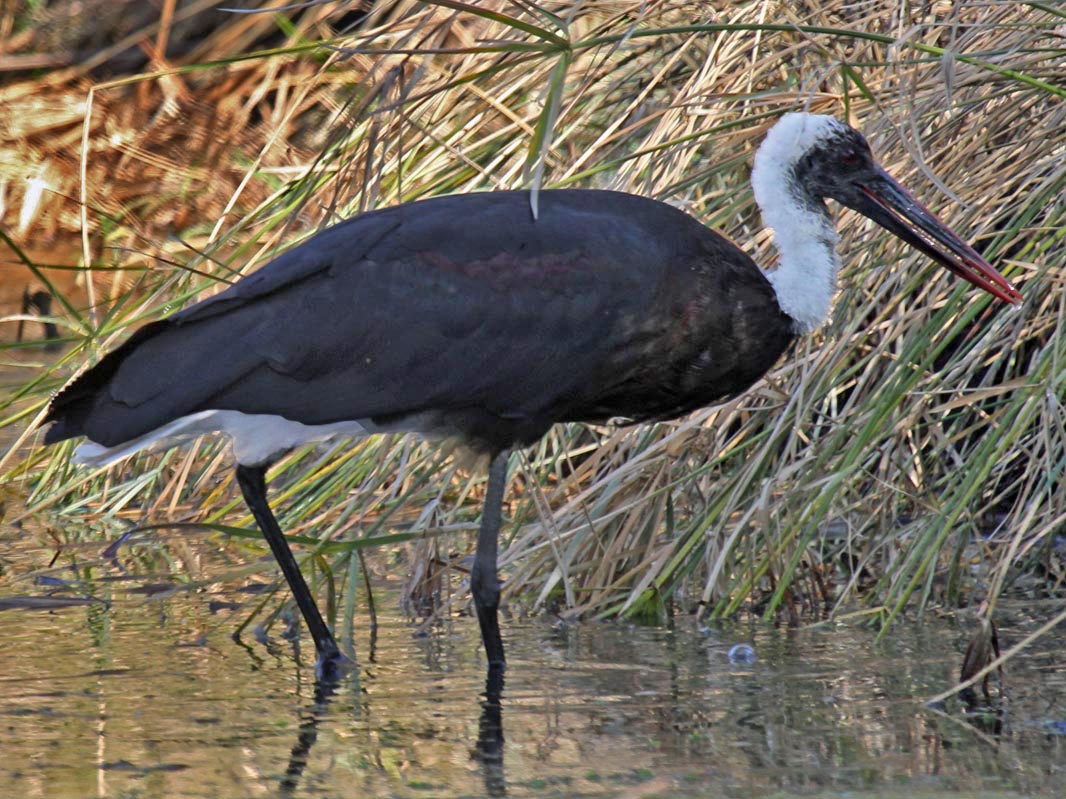
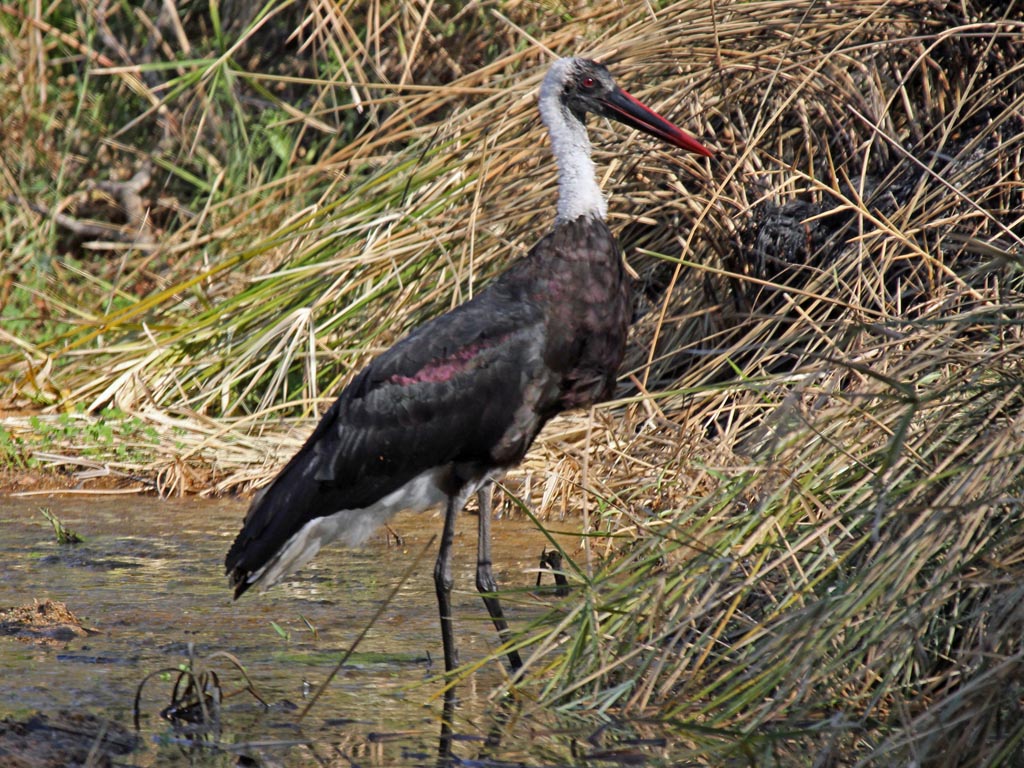
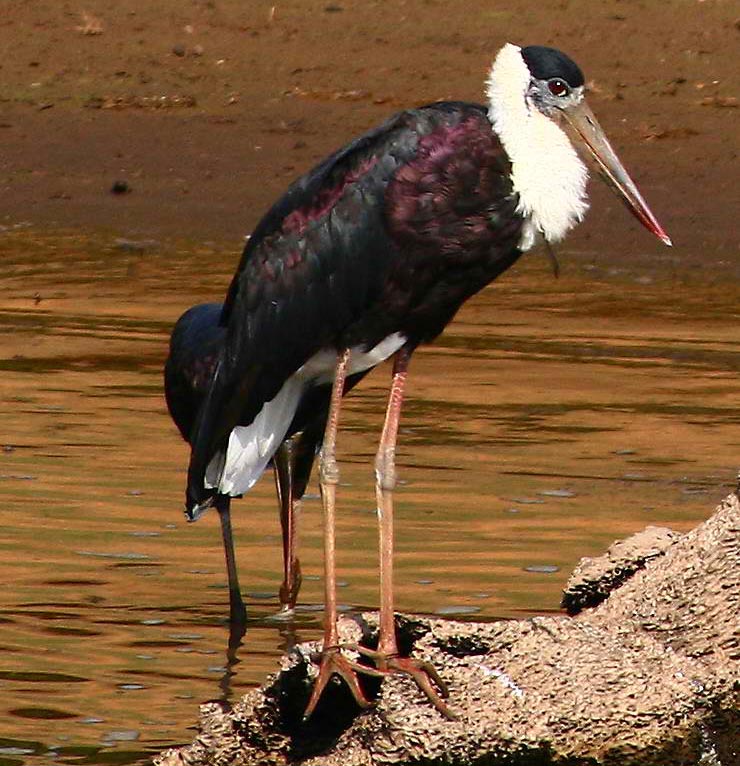
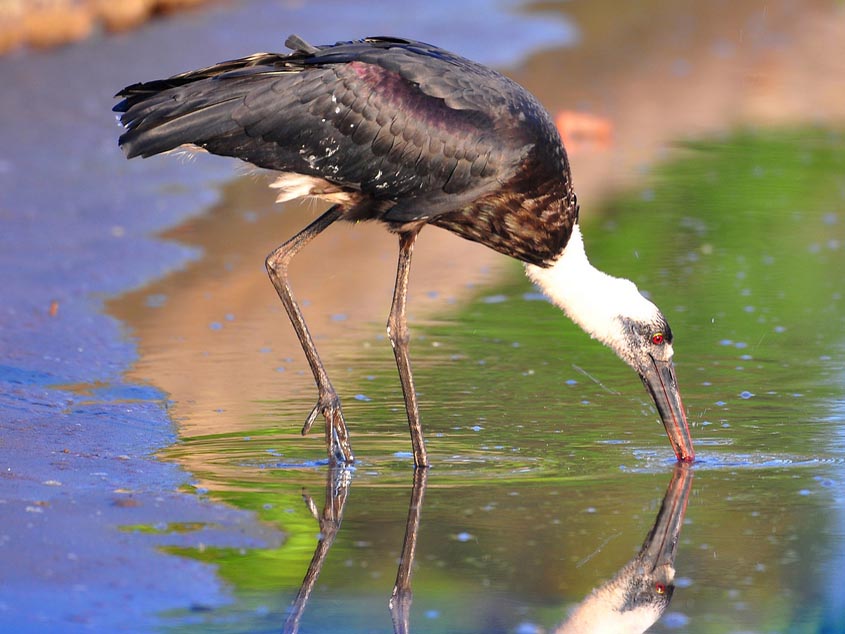
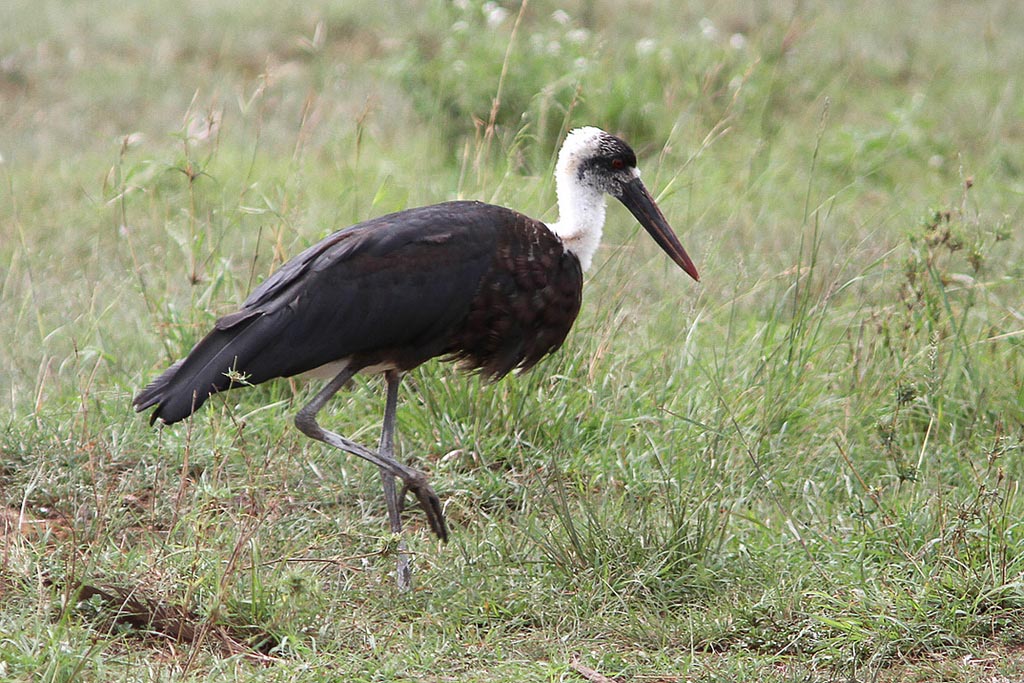
Stork,_Woolly also Woolly-necked Stork Ciconia episcopus Found: Asia, Africa
The Woolly Stork has mainly glossy blackish-green plumage; black crown of variable size; white neck, lower-belly; red legs.
Image by: 1, 2) Dick Daniels - South Africa, 3) Kaippally 4) Ian White - South Africa 5) Dave Curtis - Kenya 6 Lip Kee - Botswana 



Genus Ephippiorhynchus
Two species of very large storks, both with impressive bills.
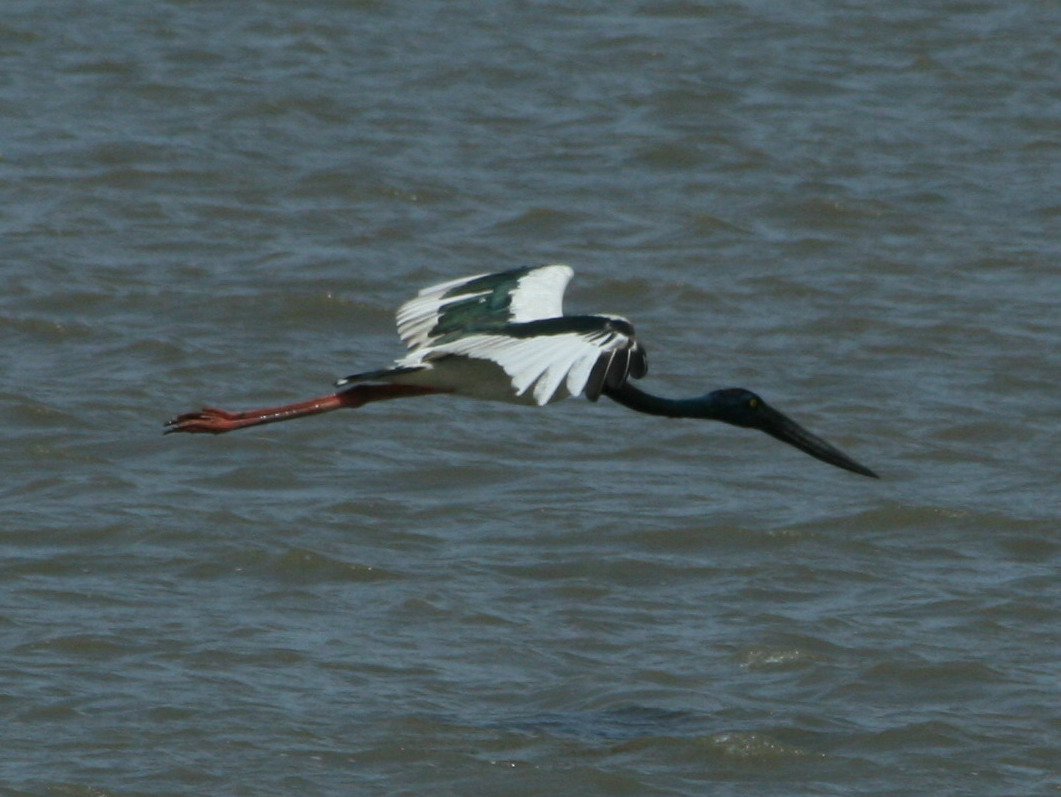
Stork,_Black-necked Ephippiorhynchus asiaticus Found: Asia, Australasia
The Black-necked Stork has black neck, head, bill, secondary flight feathers, tail; white back, belly; red legs. Male has brown iris; female has yellow iris.
Similar to: Black Stork. The Black Stork has black back; red bill. Black-necked Stork has white back, black bill.
Image by: 1) Arthur
Chapman - Australia 2) David Cook - Australia
3) JM Garg - India
4) Ralph Green - Australia 5) Dick - Australia
Similar to: Black Stork. The Black Stork has black back; red bill. Black-necked Stork has white back, black bill.

1) Juvenile 2) Pair 3) Female 4) Male
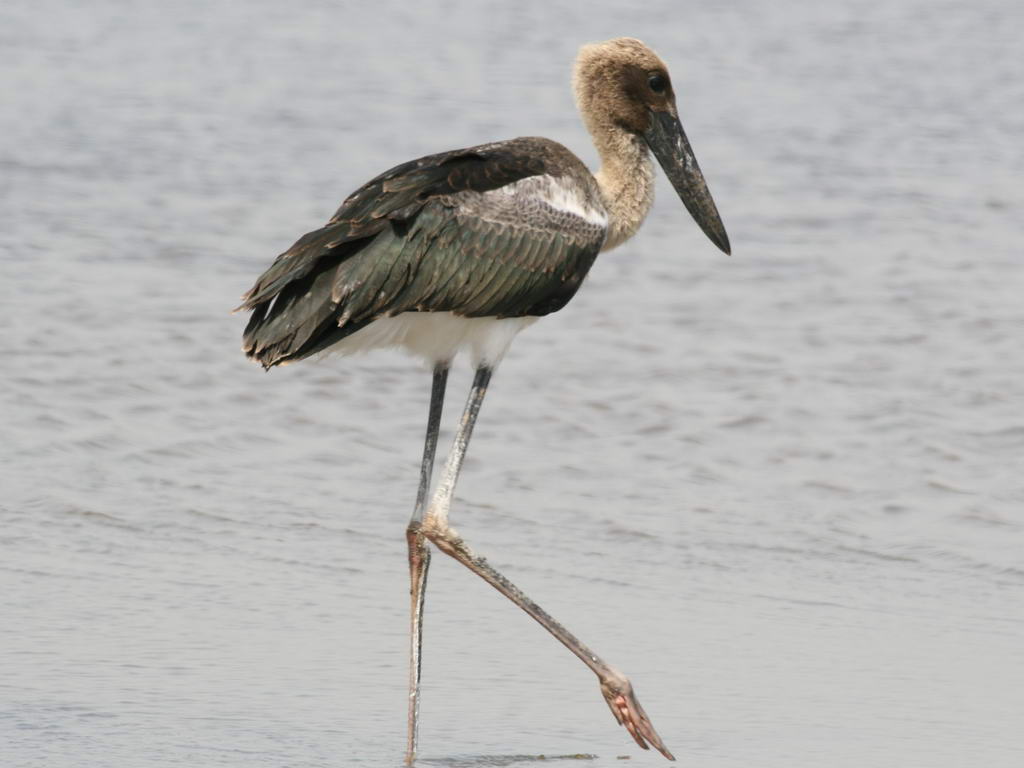


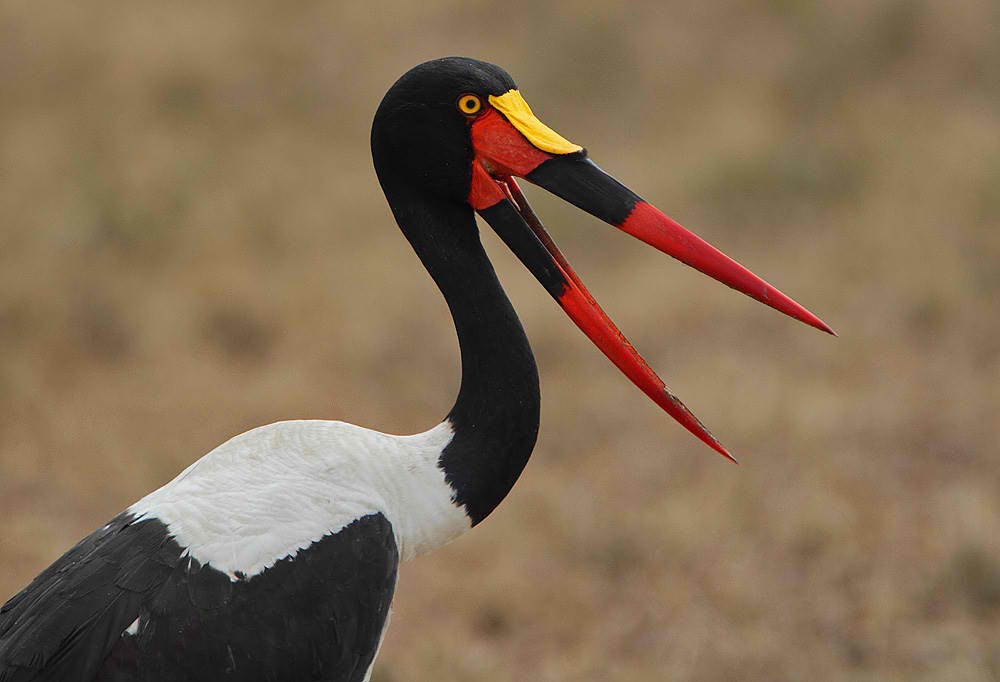
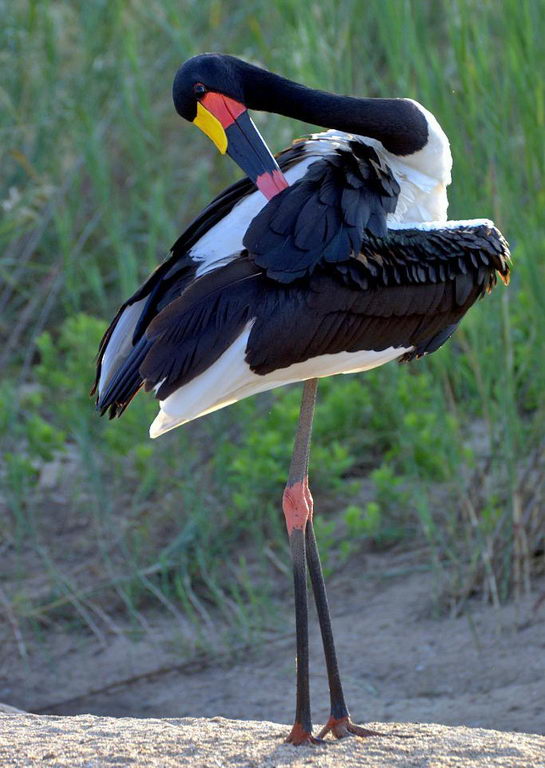
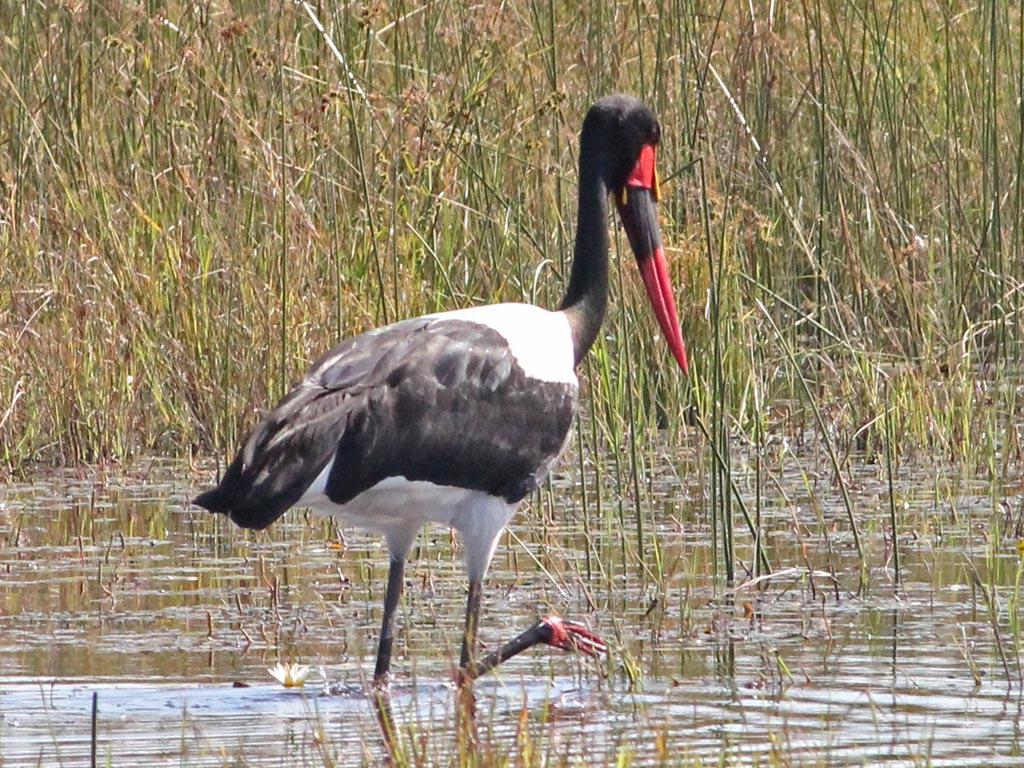
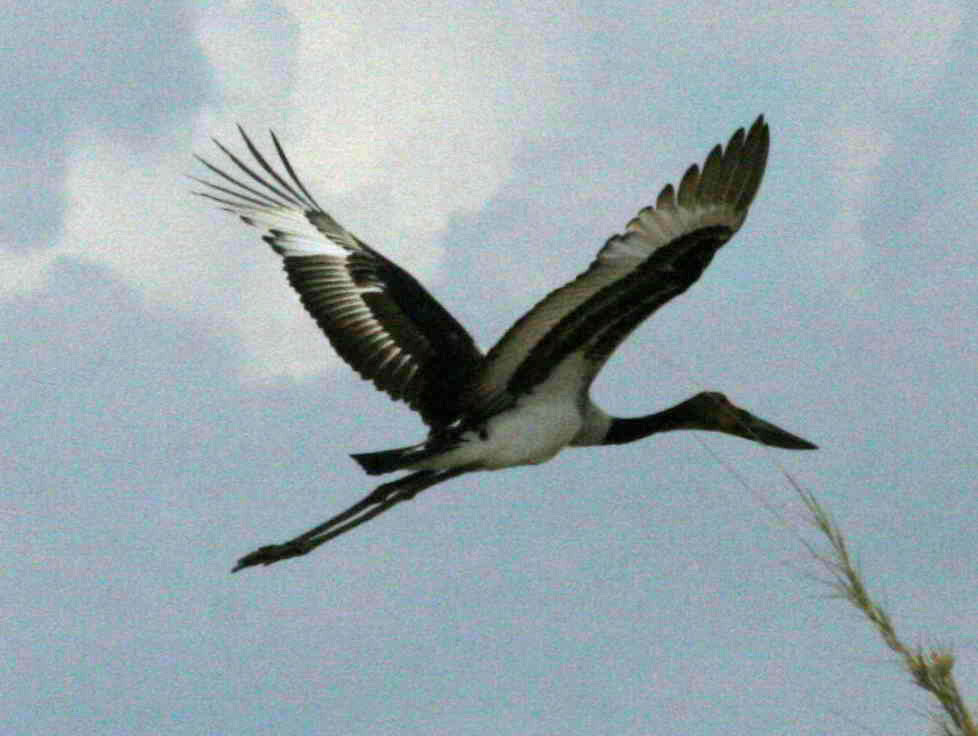
Stork,_Saddle-billed Ephippiorhynchus senegalensis Found: Africa
The Saddle-billed Stork has iridescent black head, neck, back, wings, tail; white rest of plumage; massive bill with yellow frontal shield - black band - red band; black legs with pink knees.
Image by: 1, 3) Arno Meintjes 2) Steve Garvie 4) Charlie Westerinen - Zimbabwe 5) Dick Daniels - Tanzania 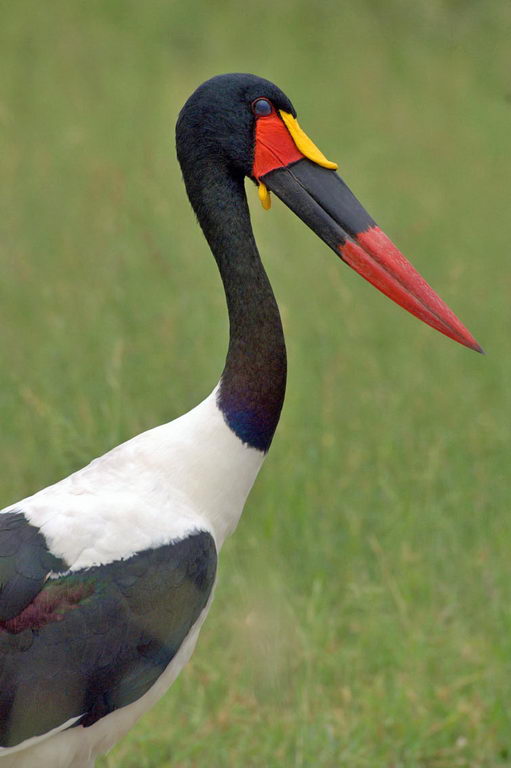
Genus Leptoptilos
The three species each have a black upper body and wings, and white belly and undertail. The head and neck are bare like those of a vulture. The huge bill is long and thick. Juveniles are a duller, browner version of the adult.
Adjunct, Greater Leptoptilos dubius Found: India
The Greater Adjunct has gray upperparts; massive wedge-shaped pale gray bill; bare light gray crown; distinctive neck pouch (bright orange in breeding season); white underparts.
Similar to: Lesser Adjunct. Greater Adjunct has neck pouch; Lesser Adjunct has no pouch.
Image by: 1) Manvendra Bhangui 2, 3) Yathin 4) PandiyanSimilar to: Lesser Adjunct. Greater Adjunct has neck pouch; Lesser Adjunct has no pouch.


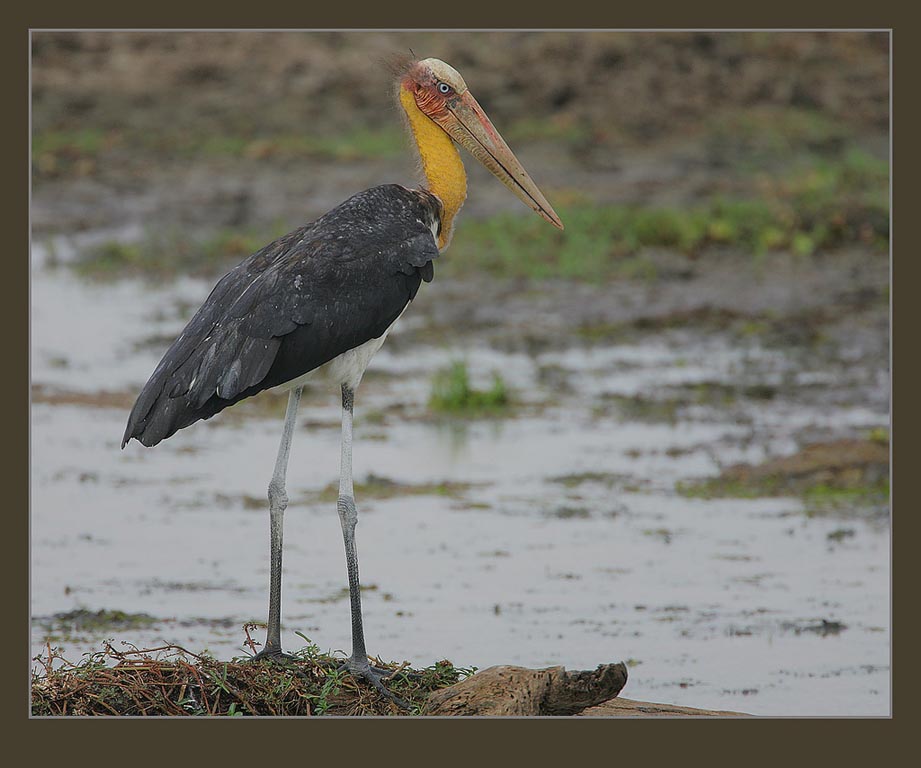
Adjunct, Lesser Leptoptilos javanicus Found: Asia
The Lesser Adjunct has dark gray upperparts; wedge-shaped pale gray bill; bare light gray crown; ; white underparts.
Similar to: Greater Adjunct. Greater Adjunct has neck pouch; Lesser Adjunct has no pouch.
Image by: 1, 5) Lip Kee - India 2) Sandy Cole - Central Zoo of Nepal
3) Jason Thompson - Thailand 4) Steve GarvieSimilar to: Greater Adjunct. Greater Adjunct has neck pouch; Lesser Adjunct has no pouch.

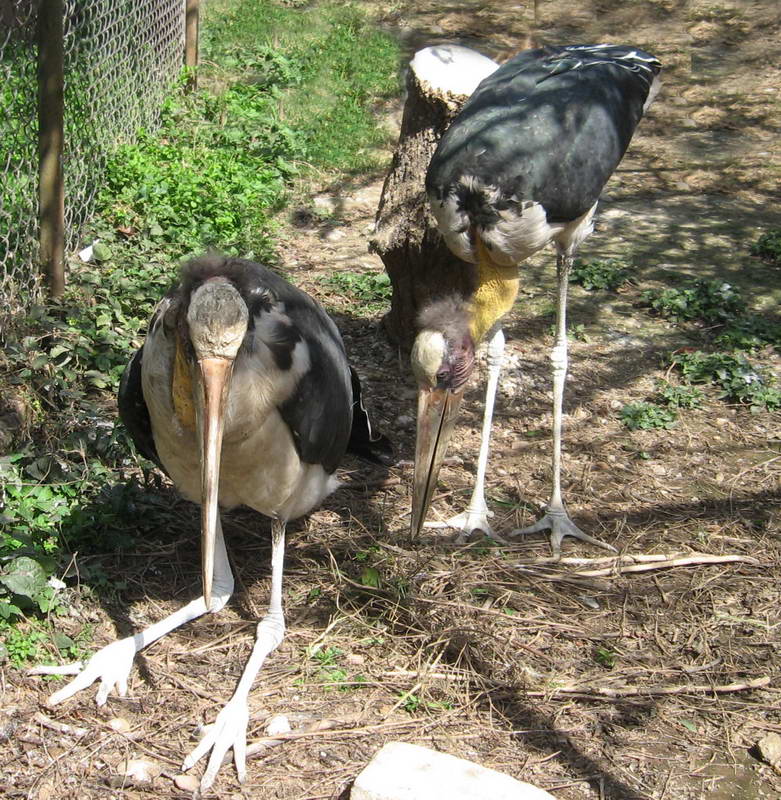


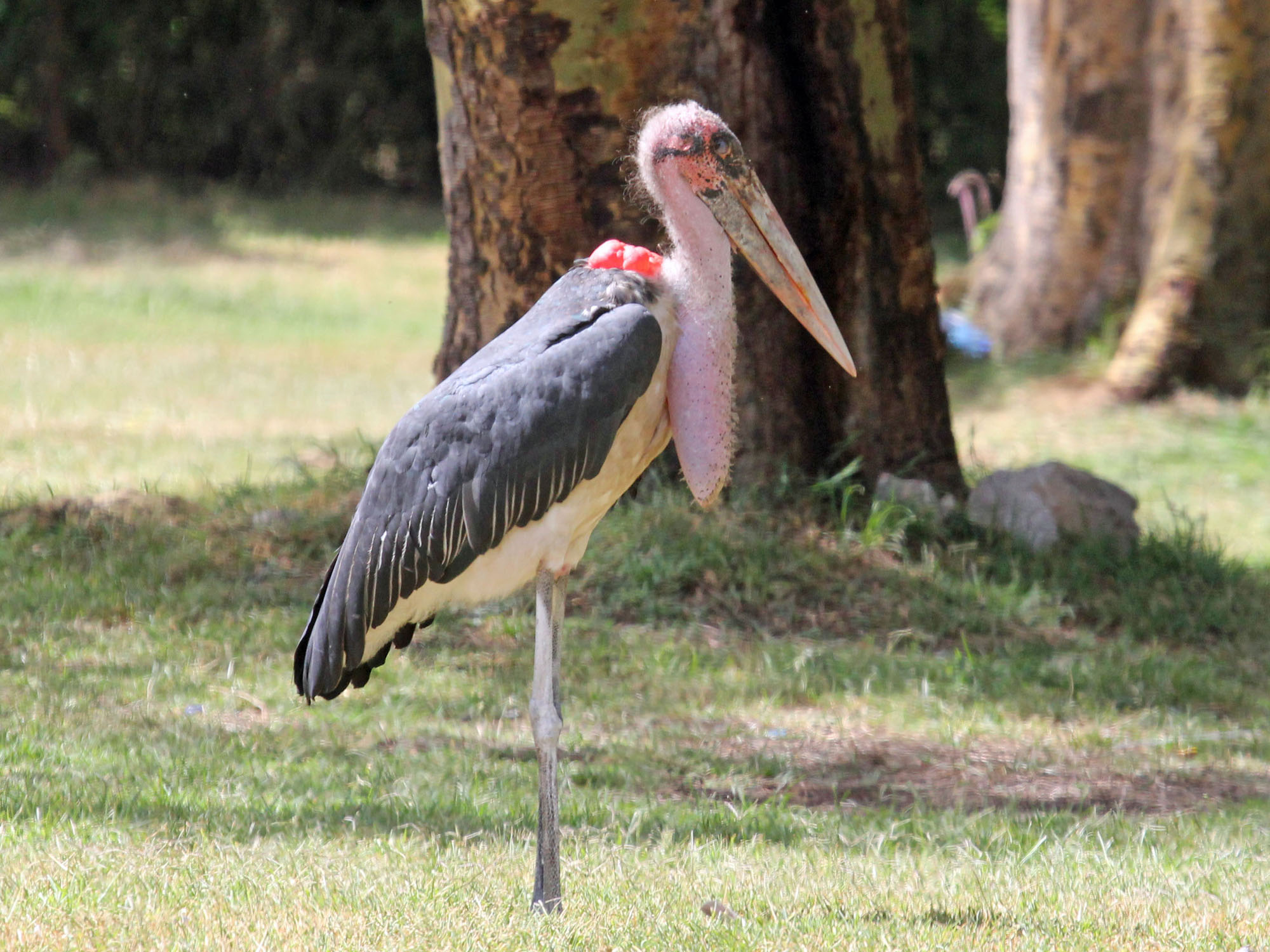
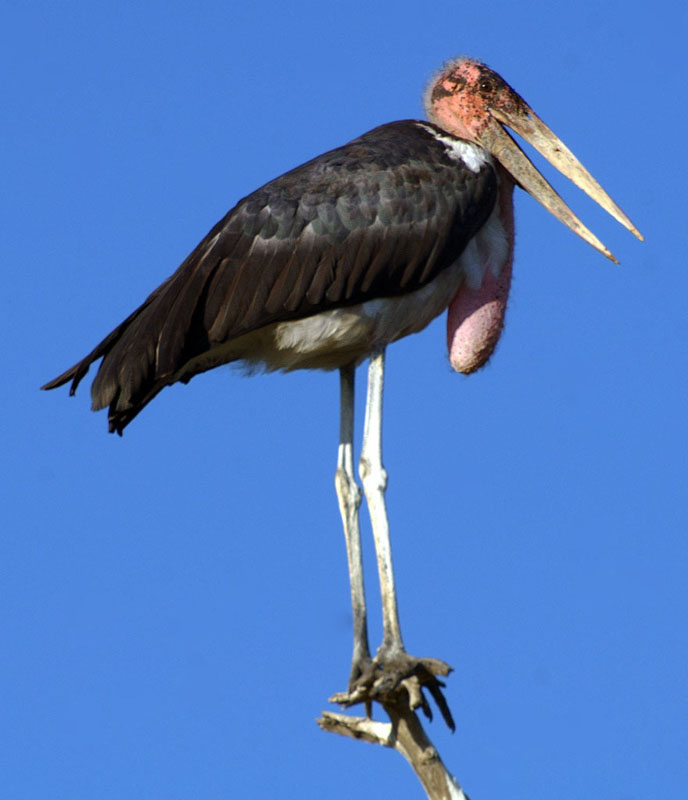
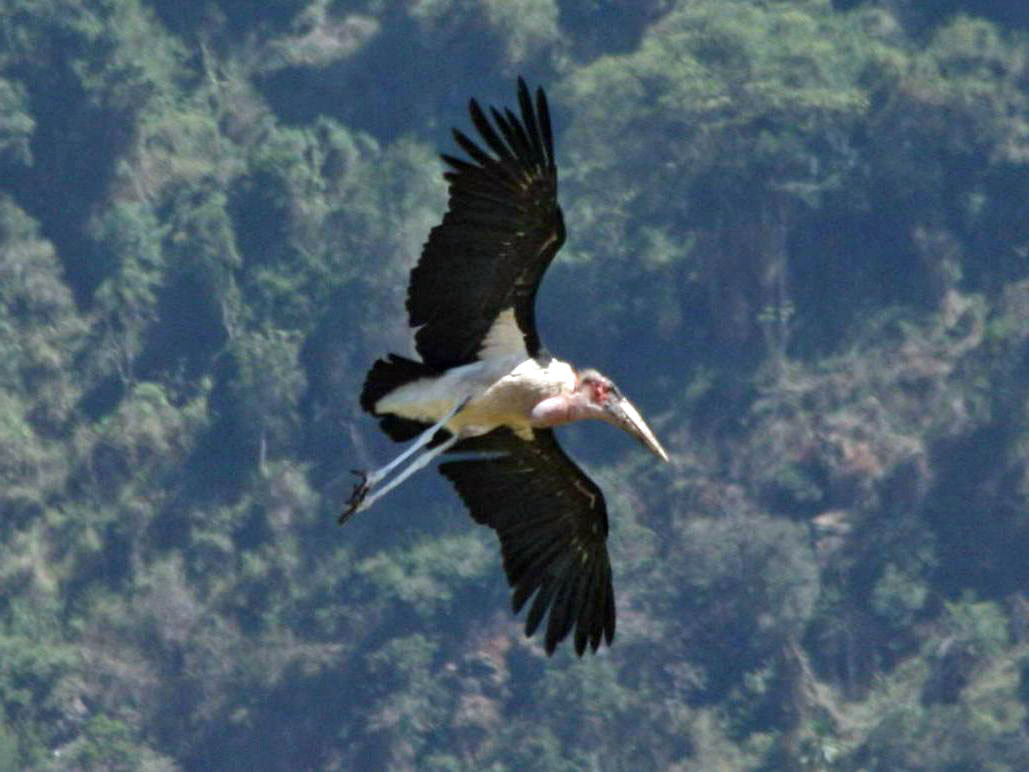
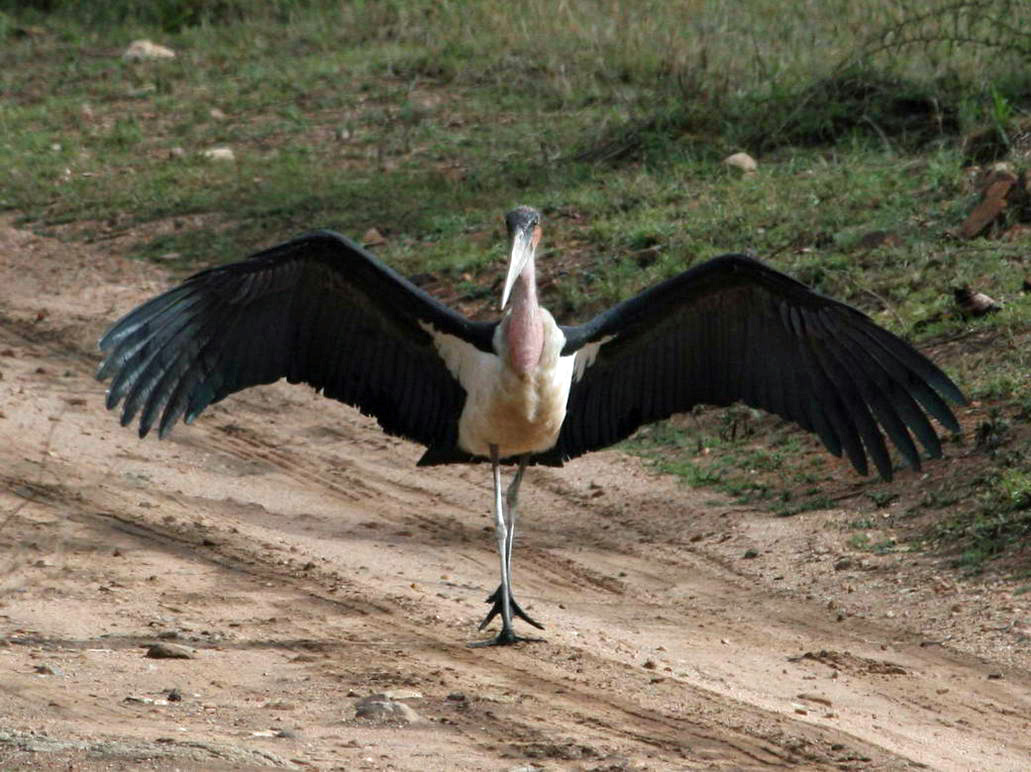
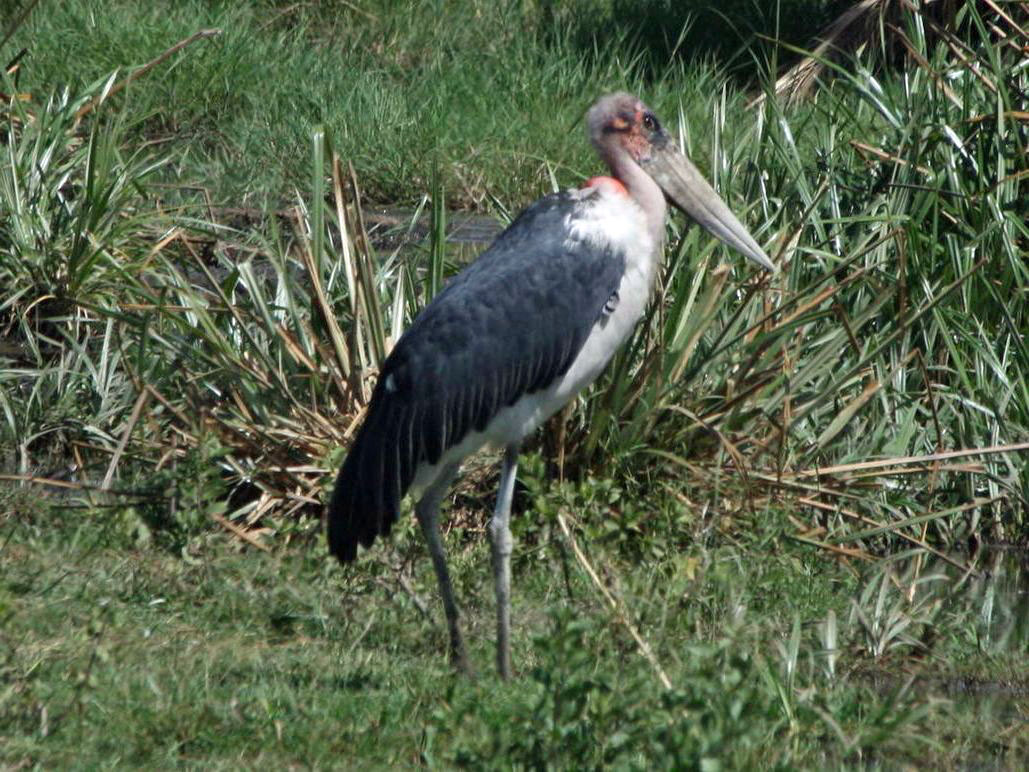
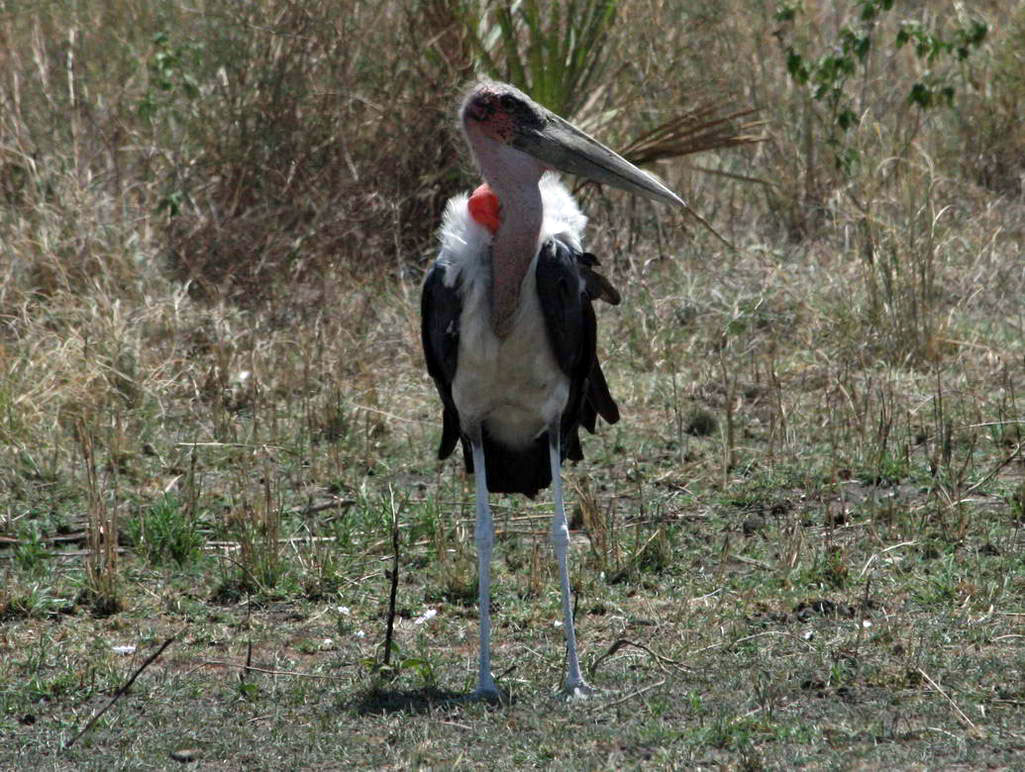
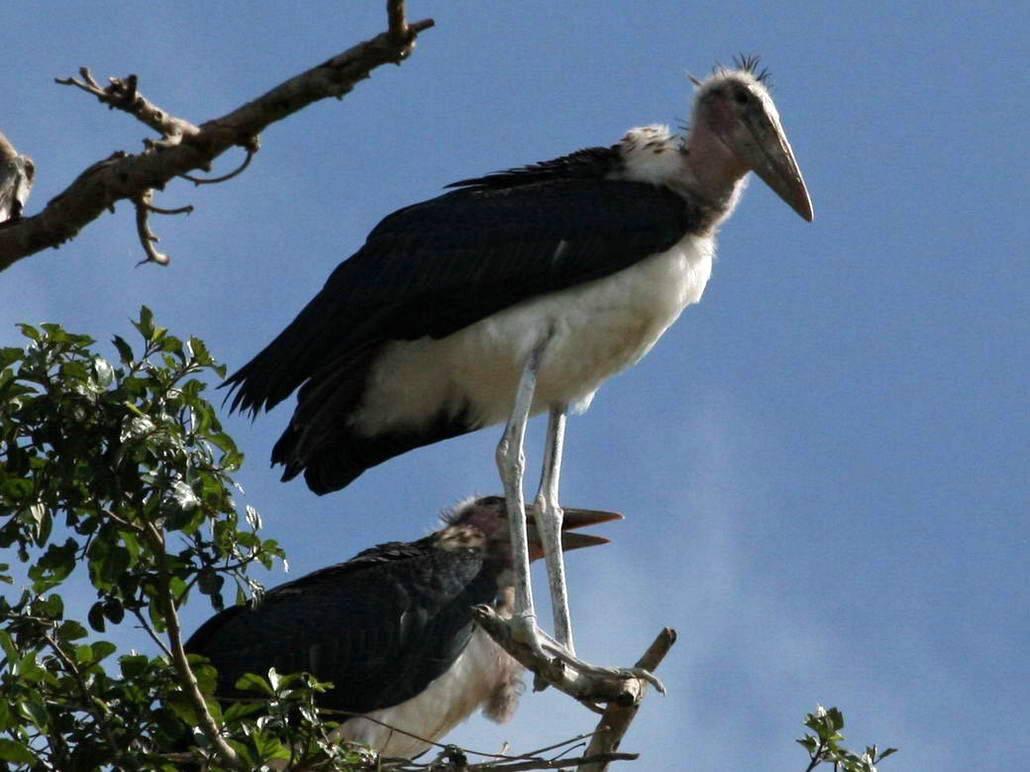
Stork,_Marabou Leptoptilos crumeniferus Found: Africa
The Marabou Stork has black upperparts; white underparts; bare head, neck; pink throat sack; huge bill.
Image by: 1) Arno Meintjes 2, 4, 5, 6) Dick Daniels - Tanzania 3) Dick - Tanzania 7, 8) Dick - Kenya



Genus Mycteria
The Mycteria storks are large birds, typically around 90–100 cm in length with a 150 cm wingspan. The body plumage is mainly white in all the species, with black in the flight feathers of the wings.
Stork,_Milky Mycteria cinerea Found: Asia
The Milky Stork has mainly white plumage; naked red face; greenish-black tail, flight feathers.
Image by: 1) Lip Kee Yap - Singapore 2) Aiza Zainol 3) DChai21 4) Sergey Pisarevskiy - Sinapore


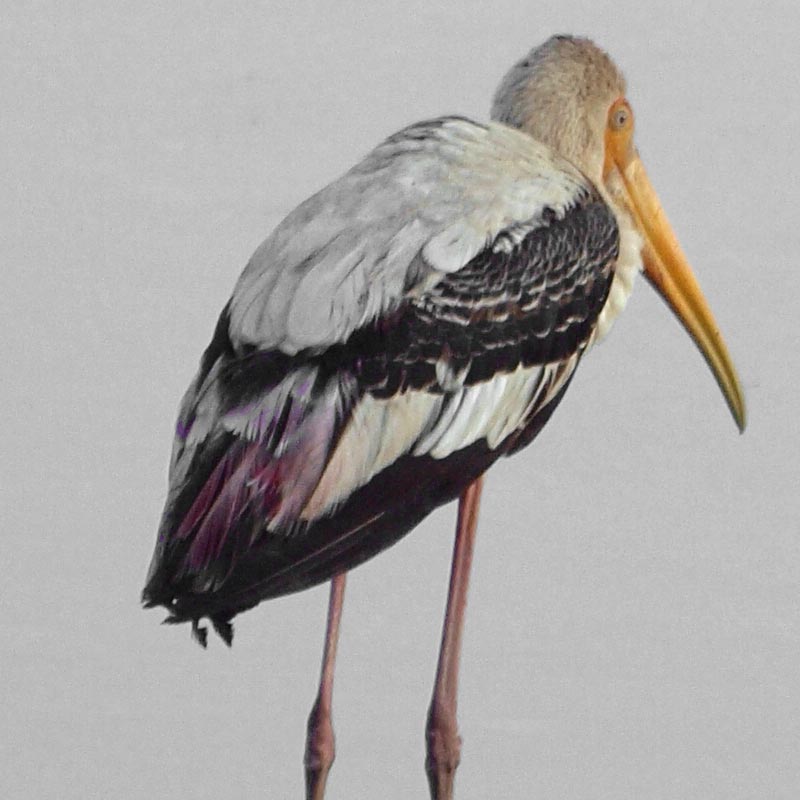
Stork,_Painted Mycteria leucocephala Found: Asia
The Painted Stork has mainly white plumage; black breast band with white scaly markings; bare orange or reddish face; yellow bill. Resembles an ibis.
Image by: 1) mdemon - Mysore, Karnatalso, India 2) Raul654 -
Disney's Animal Kingdom 3) Bhardwaj Shanthanu - Kachchh, Gujarat, IN


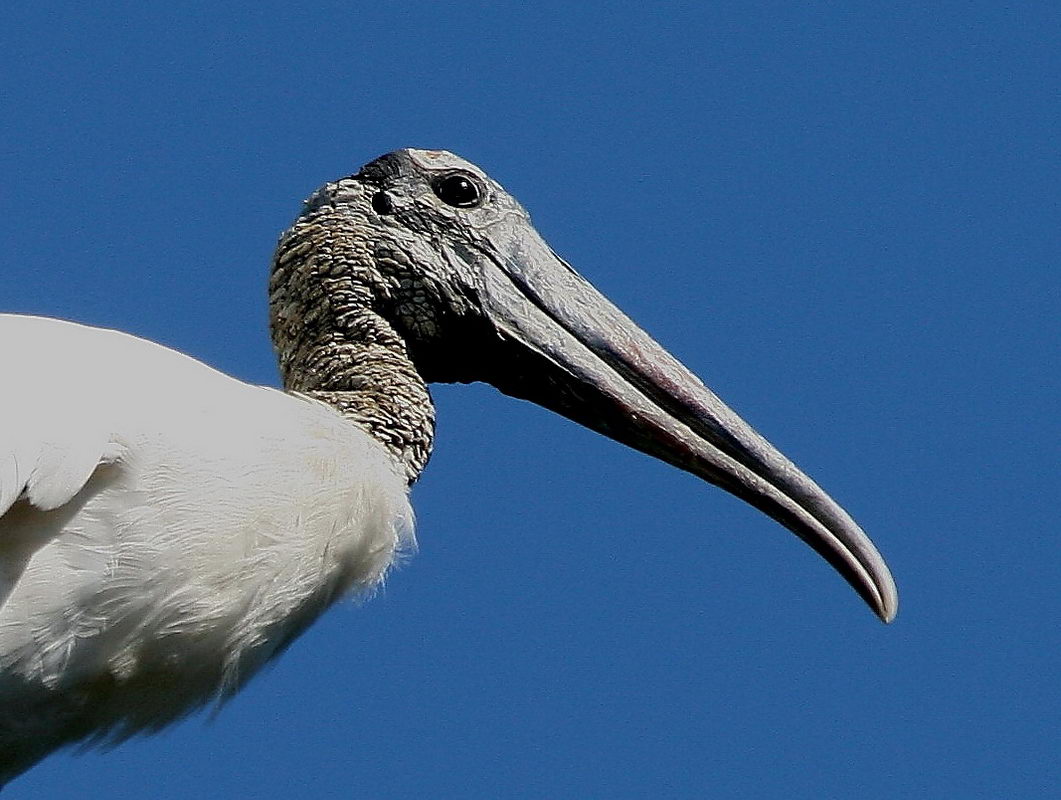
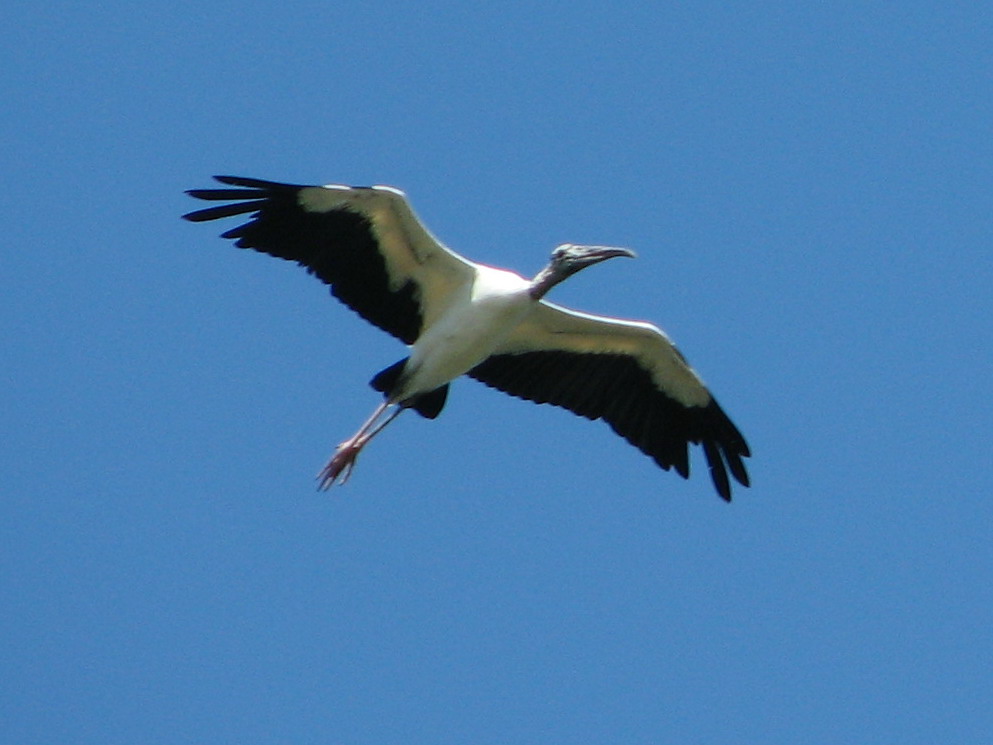
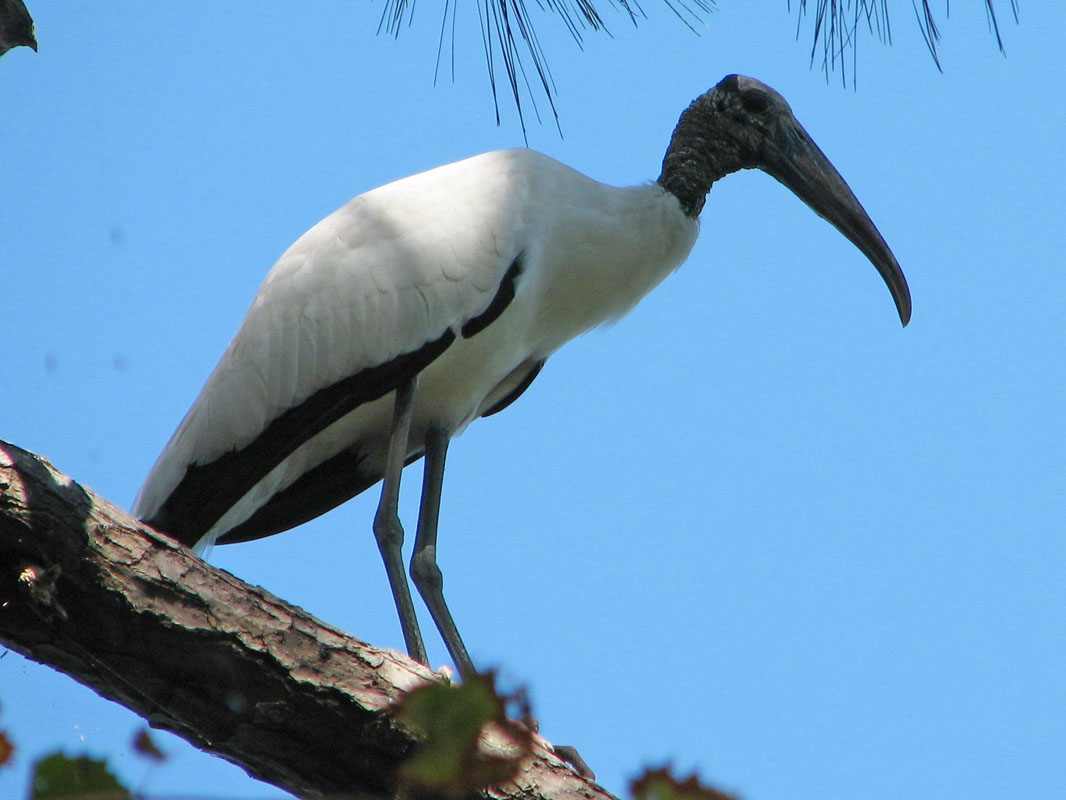
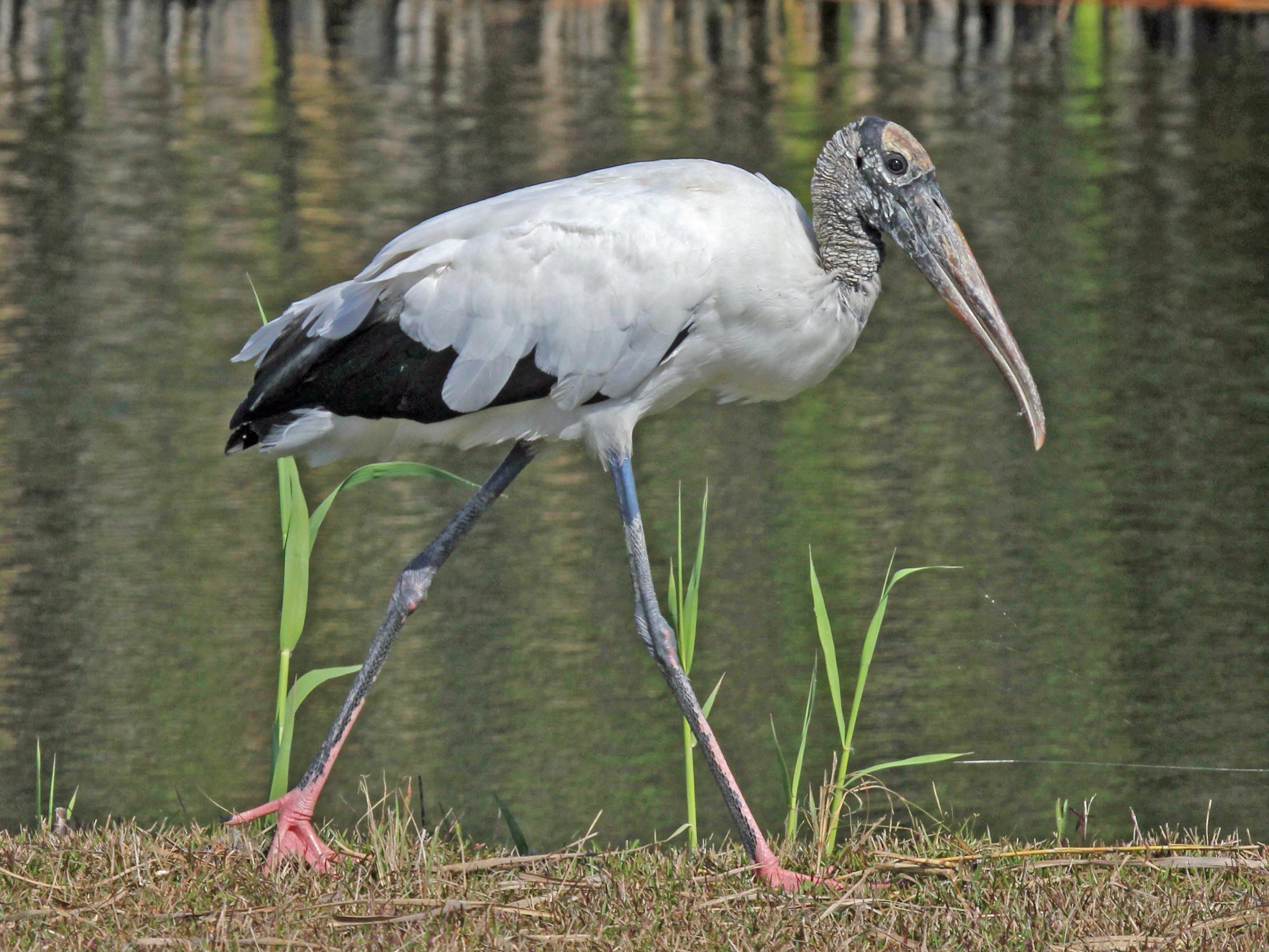
Stork,_Wood Mycteria americana Found: The Americas
The Wood Stork appears all white on the ground, with blackish-gray legs and pink feet. In flight, the trailing edge of the wings is black. The head is dark brown with a bald, black face that only its mother can like, and the thick downcurved bill is dusky yellow.
Image by: 1, 2) Dick Daniels - the town of Sunset Beach, North Carolina 3, 4)
Dick - Sunset Beach
5) Dick - Jacksonville, Florida 6) Dick - Everglades National Park, Florida 
_RWD1.jpg)





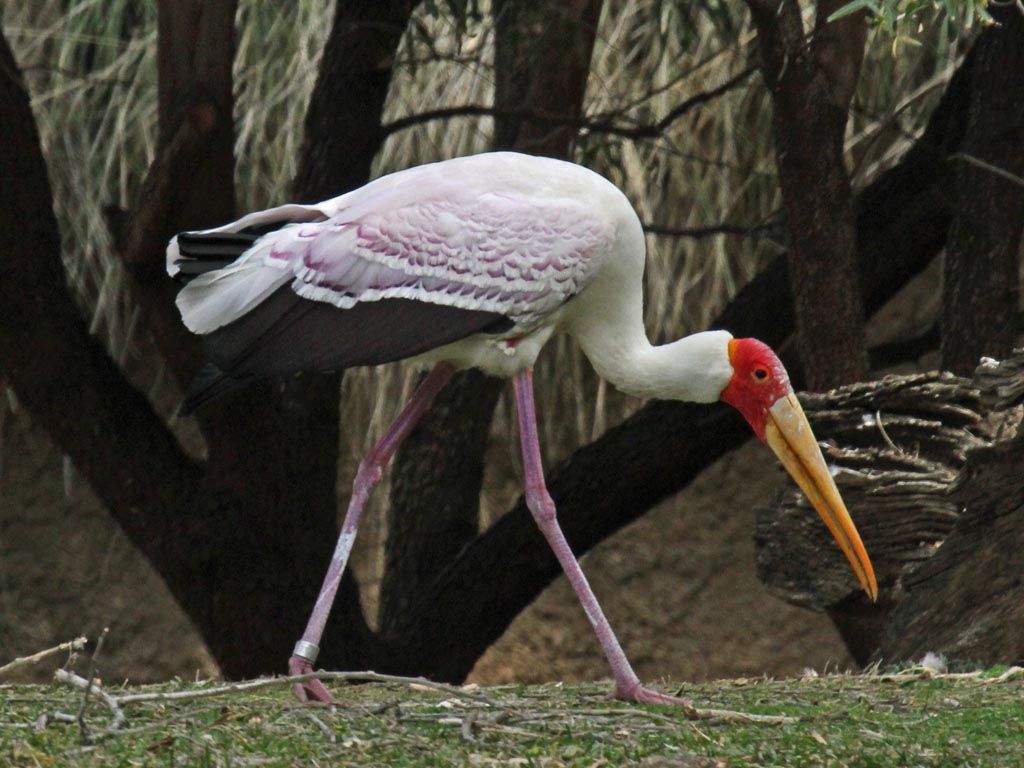
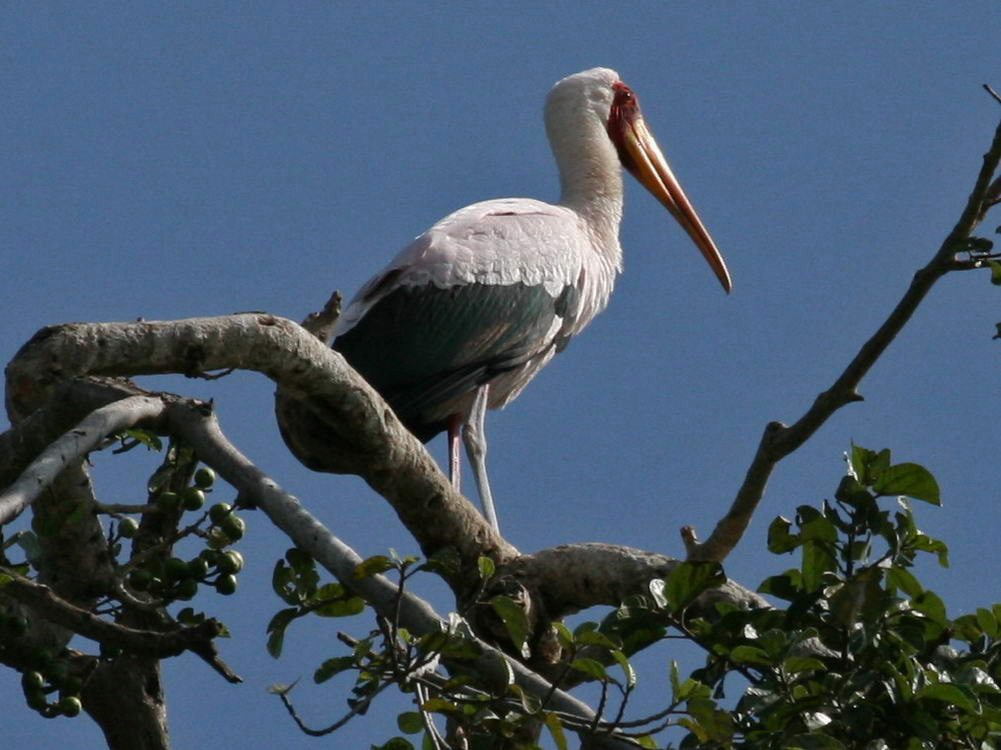
Stork,_Yellow-billed Mycteria ibis Found: Africa
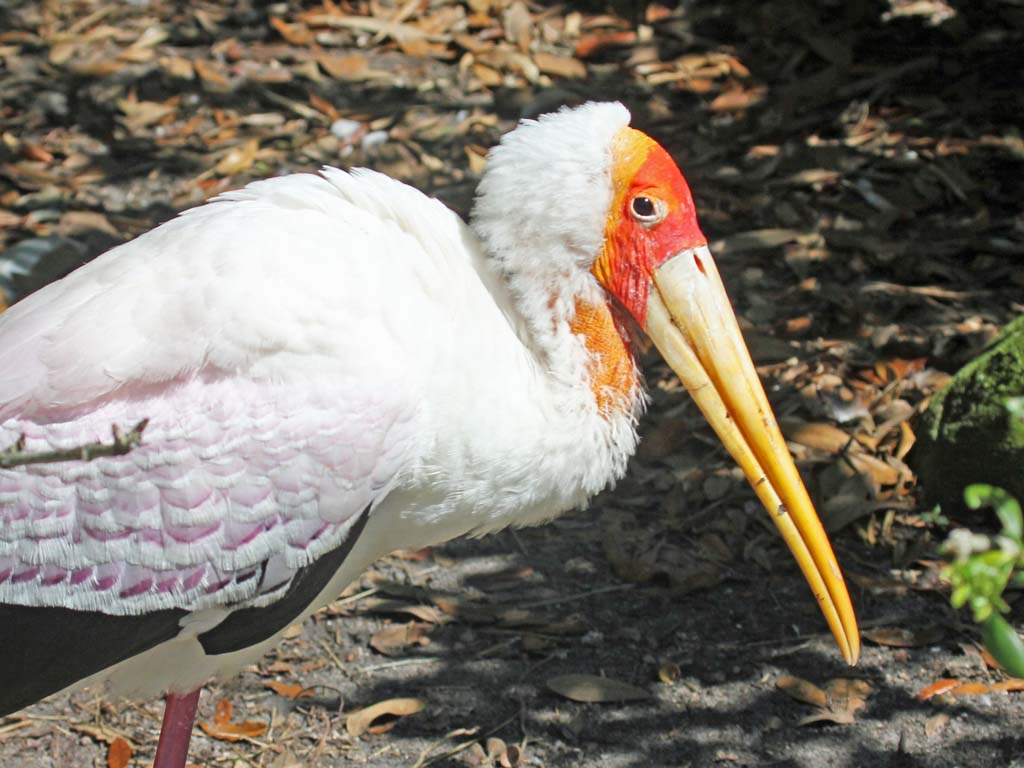
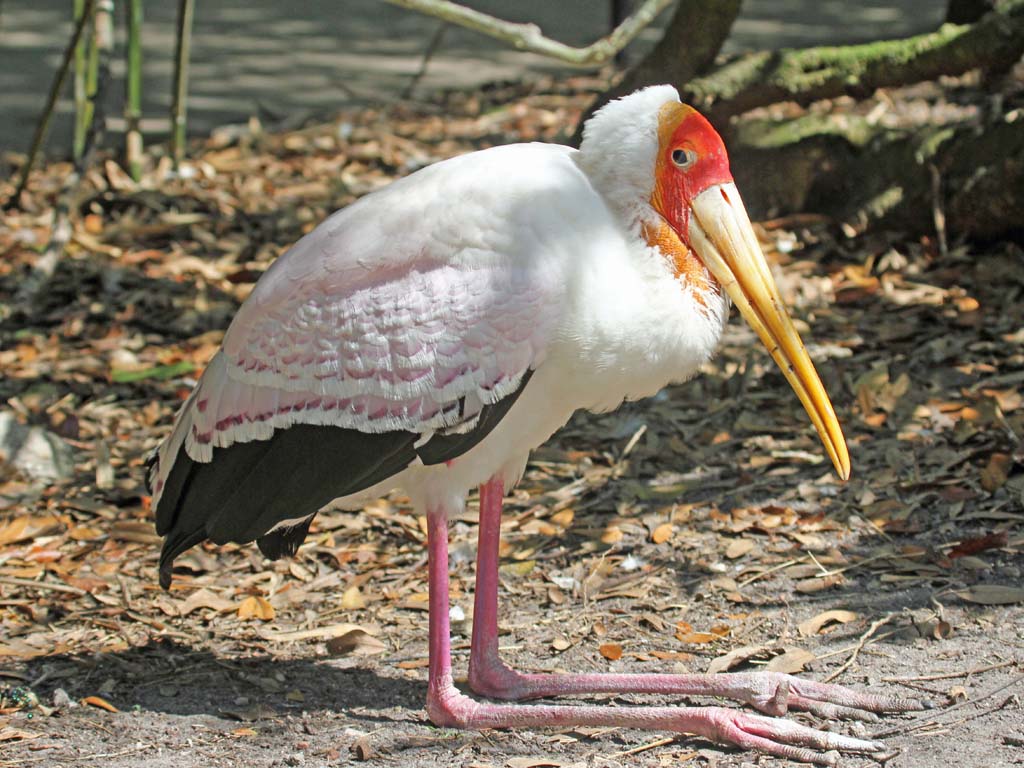
The Yellow-billed Stork has mainly pinkish-white plumage; orange face; yellow bill; black wings, tail. Juvenile has grayish-brown plumage, bill; dull orange face; brownish legs.
Image by: 1, 7) Dick Daniels - Kenya 2, 3) Dick - the Jacksonville Zoo - Florida 4) Dick - San Diego Zoo 5) Dick - Tanzania 6) Nik_Borrow - Uganda S. Shankar - Kenya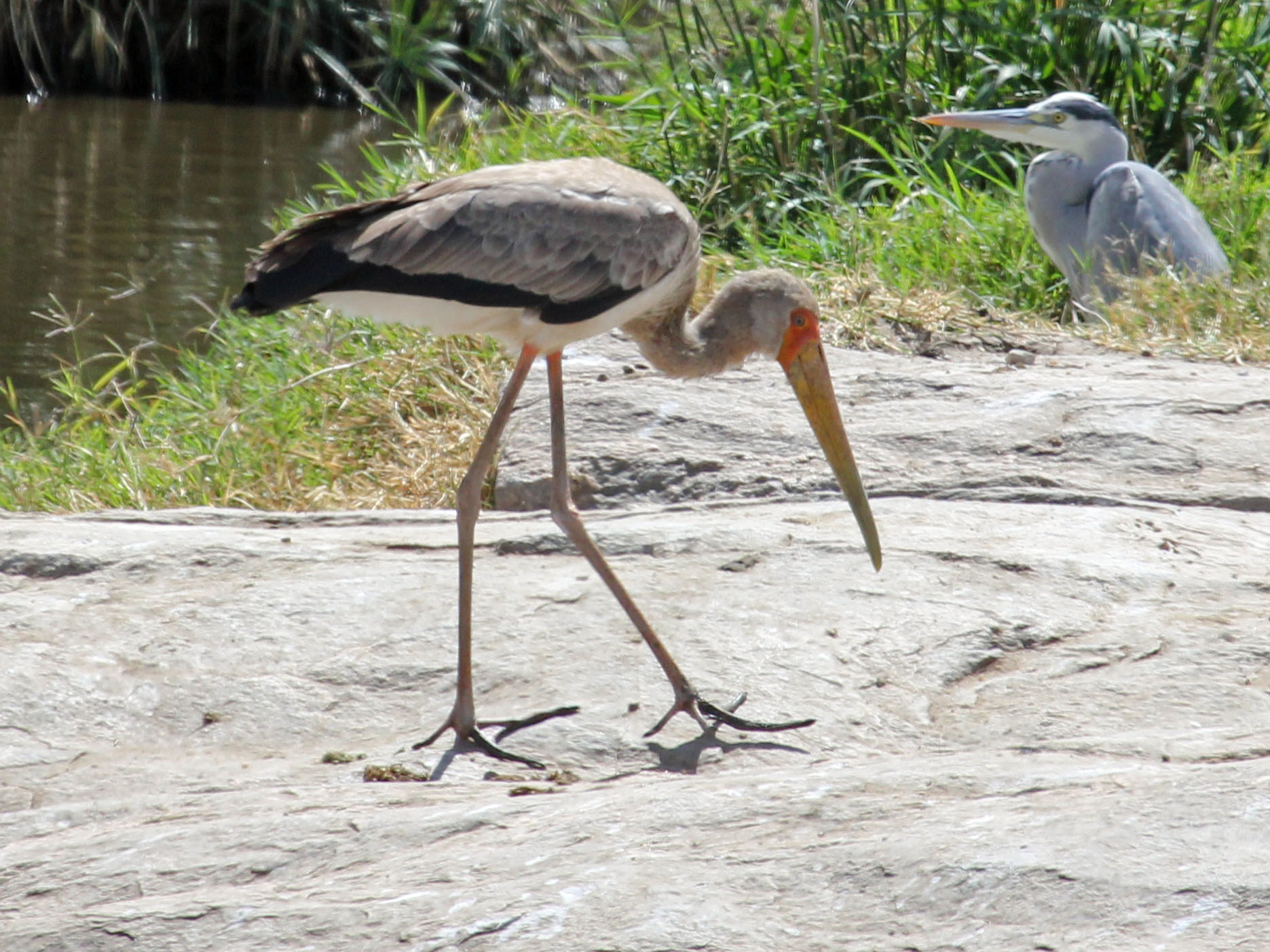
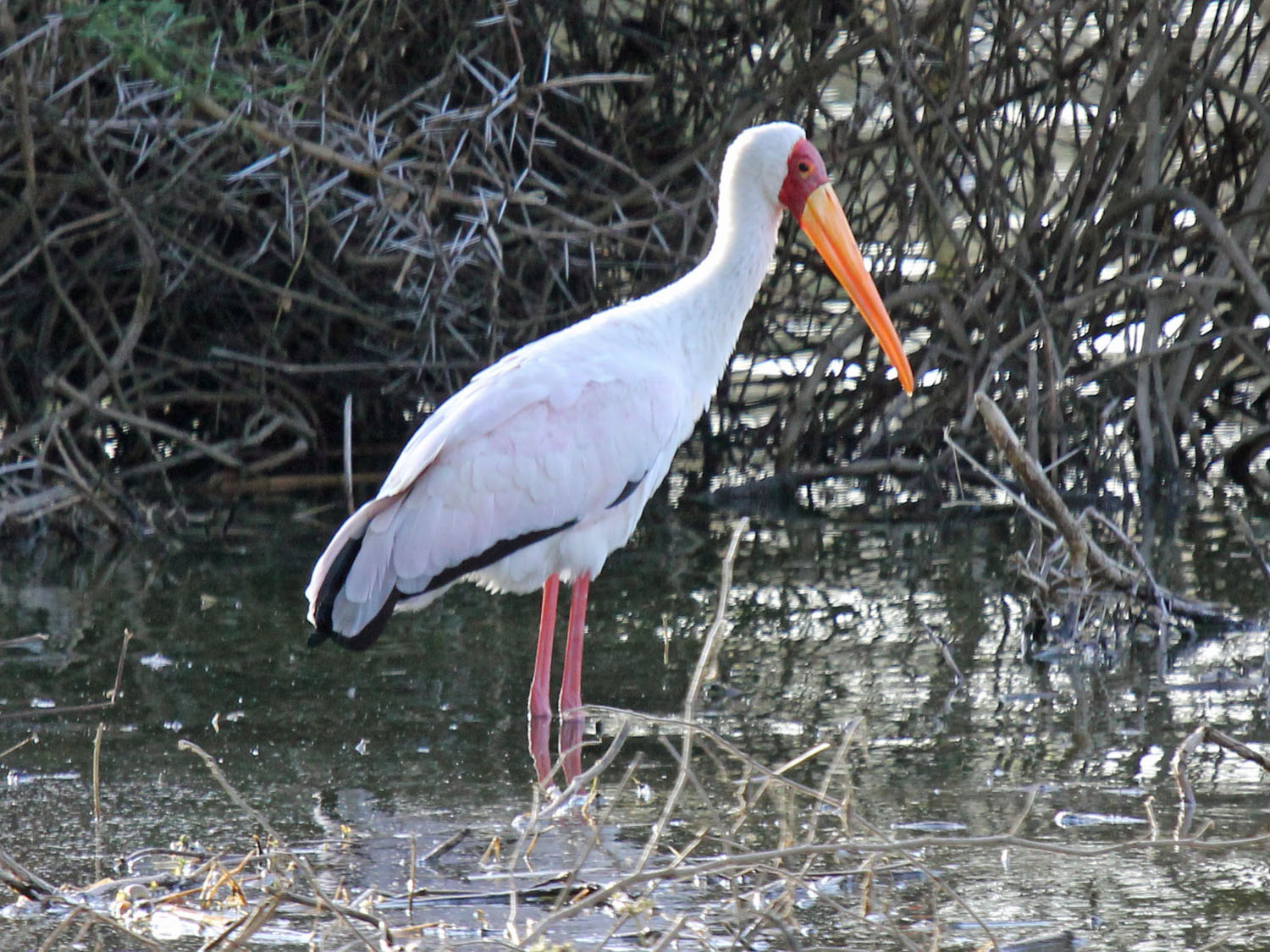


1) Juvenile 3) Storks kneel with their feet forward




Genus Jabiru - 1 species
Jabiru Jabiru mycteria Found: Central and South America
The Jabiru has mainly white plumage; bare and black head, upper neck; featherless red stretchable pouch at base of neck.
Image by: 1, 2) láudio Timm - Brazil 3) David Schenfeld - Brazil 4) Allan Hopkins - Guyana


