BIRDS of THE WORLD - An Online Bird Book
PELICANS and Allies
Order Pelicaniformes Family Pelecanidae - 1 genus
PELICANS and Allies
Order Pelicaniformes Family Pelecanidae - 1 genus
Herons (egrets), Pelicans, and Storks are related. Whether they should be grouped in one, two, or three orders is disputed. The grouping that will be followed here is: Herons - Pelicaniformes; Pelicans - Pelicaniformes; and storks - Ciconiiformes
Pelicans are large birds with a big throat pouch which they use for fishing. They primarily inhabit warm regions. Pelicans swim well with short, strong legs and feet that have four webbed toes. A layer of special fibers deep in the breast muscles can hold the wings rigidly horizontal for gliding and soaring. Pelicans rub the backs of their heads on their preen glands to pick up its oily secretion, which they transfer to their plumage to waterproof it. The diet of a Pelican consists mainly of fish. They often catch the fish by expanding the throat pouch which must be drained above the surface before they can swallow. The white pelicans often fish in groups by forming a line to chase schools of small fish into shallow water where they then scoop the fish up. The brown pelican of North America usually plunge-dives for its prey. Some other species occasionally plunge-dive. [abstracted from Wikipedia]
Genus Pelecanus
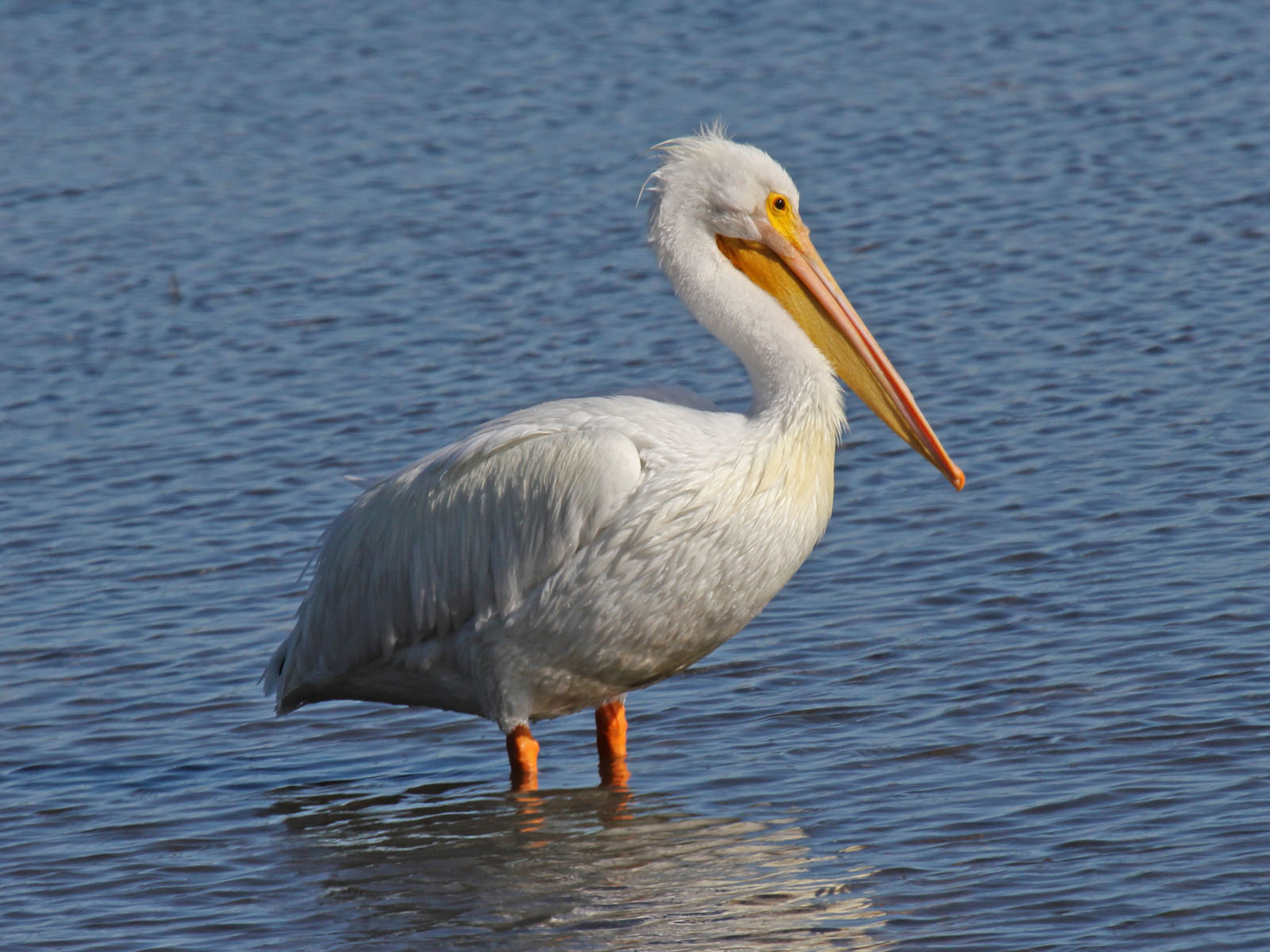
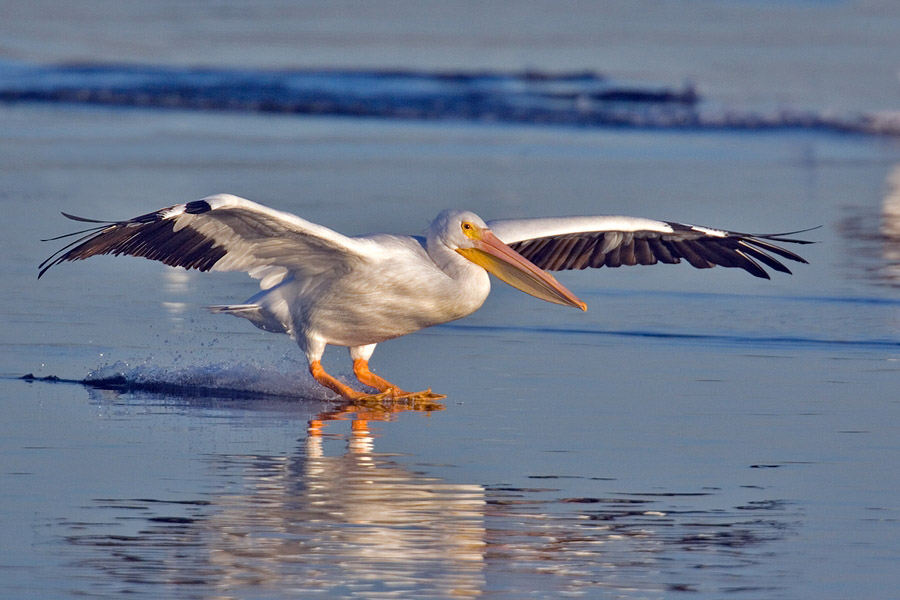
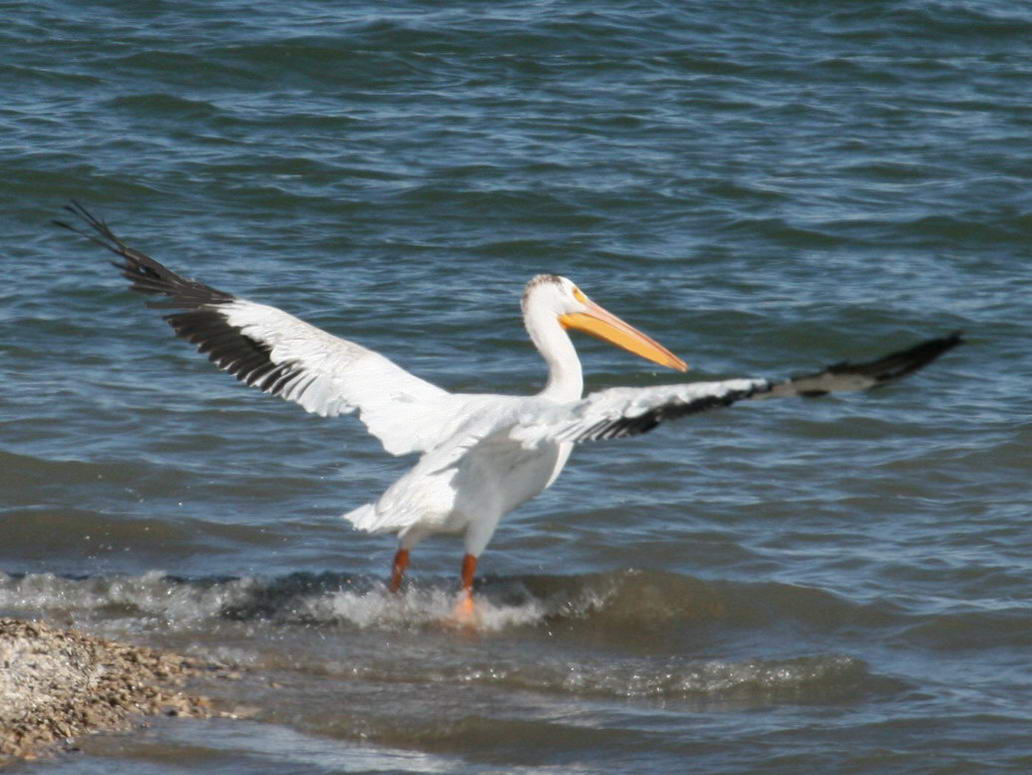
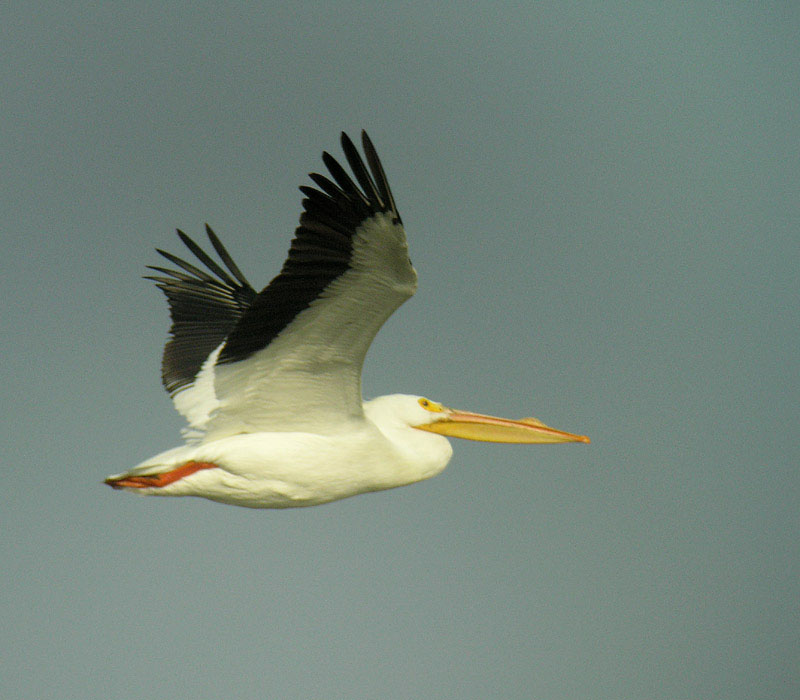
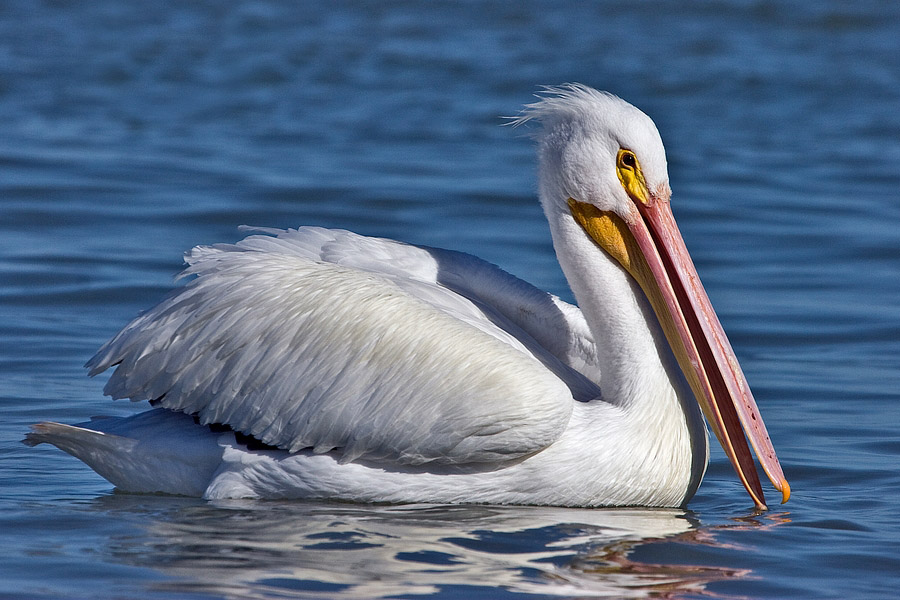
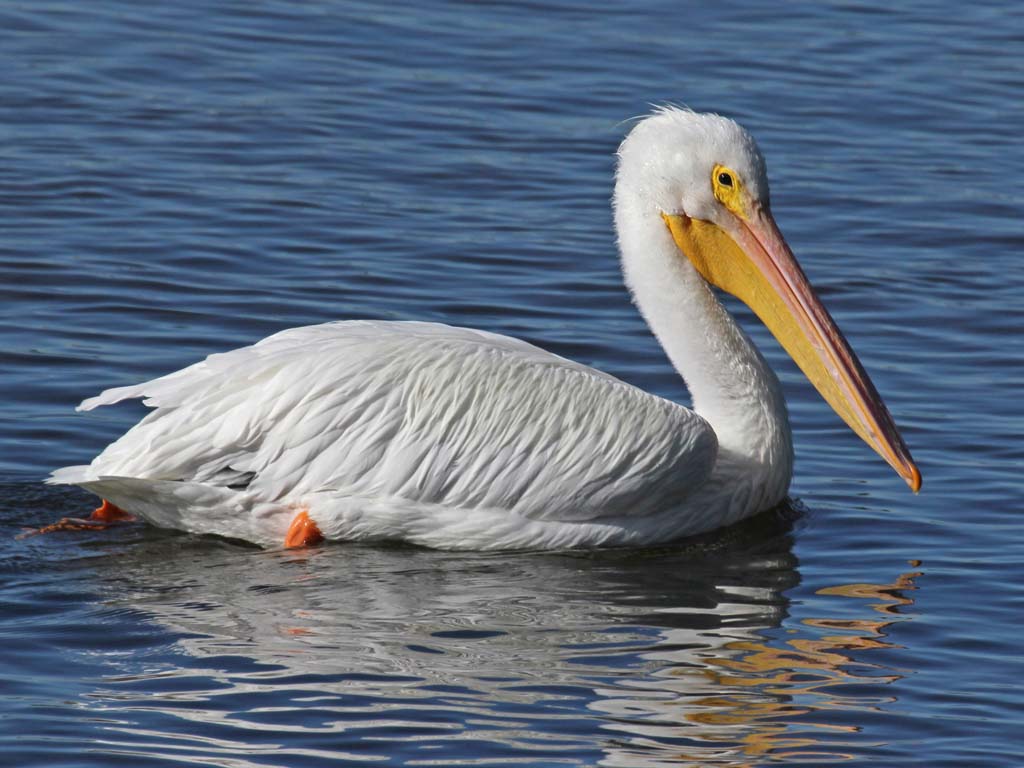
Pelican,_American White Pelecanus erythrorhynchos Found: North America and Central America
The American White Pelican has pure white plumage with black wing tips visible in flight. It swims or wades for fish.
Similar to: Brown Pelican. American White Pelican has white back; Brown Pelican has gray-brown back. American White Pelican is larger. American White Pelican wades for fish; Brown Pelican dives for fish.
Similar to: Great White Pelican. Ranges do not overlap. Great White Pelican is larger.
Image by: 1) Alan D. Wilson - California 2) Dick Daniels - Wyoming 3) Len Blumin - Miller, CA 4) Alan - Texas
5, 6) Dick - Ding Darling National Wildlife Refuge, Sanibel Island, Florida Similar to: Brown Pelican. American White Pelican has white back; Brown Pelican has gray-brown back. American White Pelican is larger. American White Pelican wades for fish; Brown Pelican dives for fish.
Similar to: Great White Pelican. Ranges do not overlap. Great White Pelican is larger.




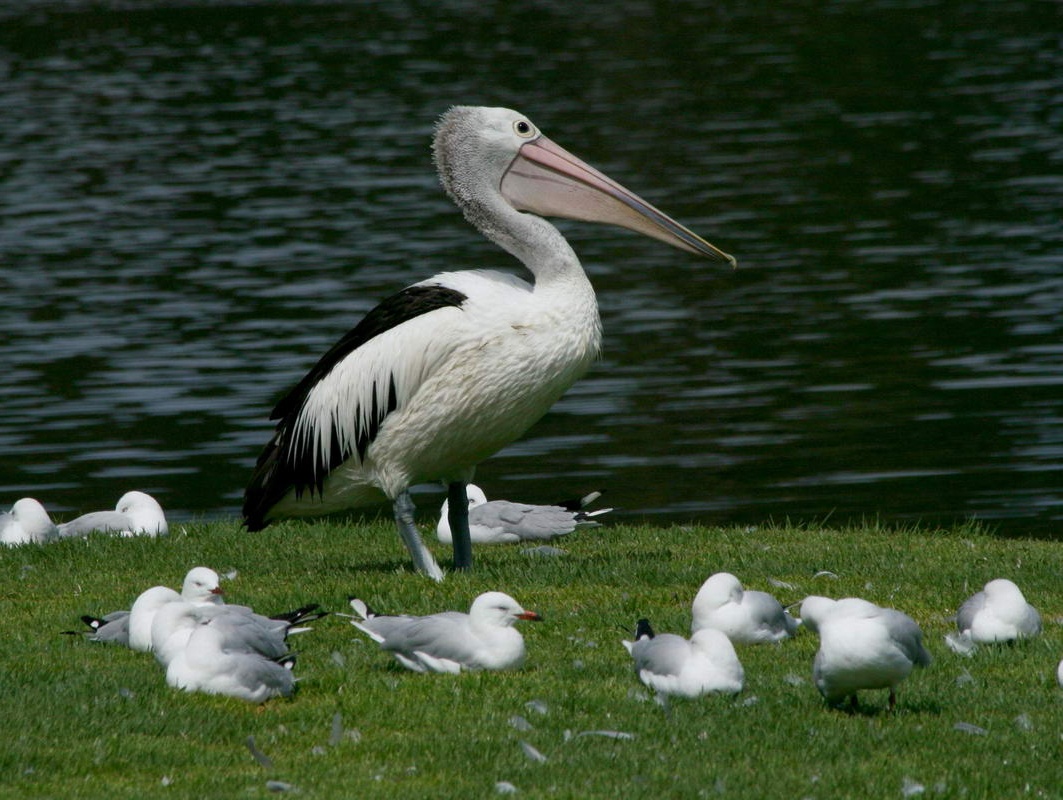
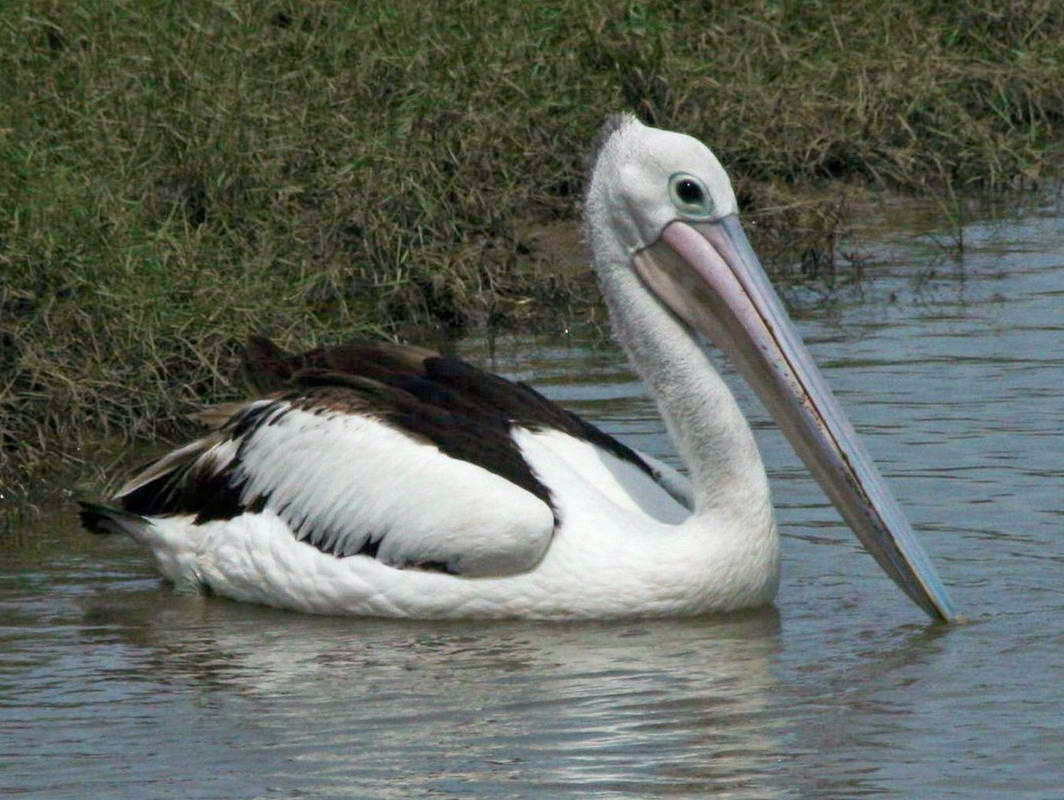
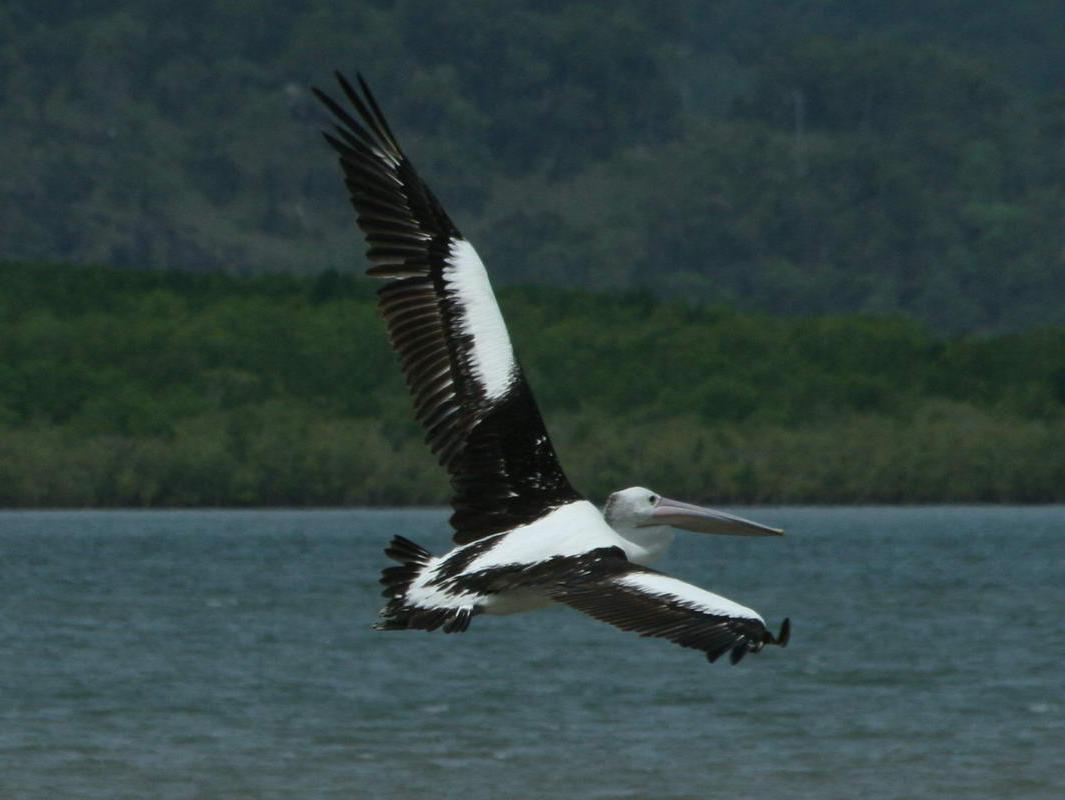
Pelican,_Australian Pelecanus conspicillatus Found: Australia and some Pacific Islands
The Austalian Pelican has black and white plumate. Nonbreeding has pale yellow eye-ring; breeding has orange eye-ring. It swims or wades for fish. Only pelican found in Australia.
Image by: 1, 2, 4) Dick Daniels - Australia 3) Paul_Balfe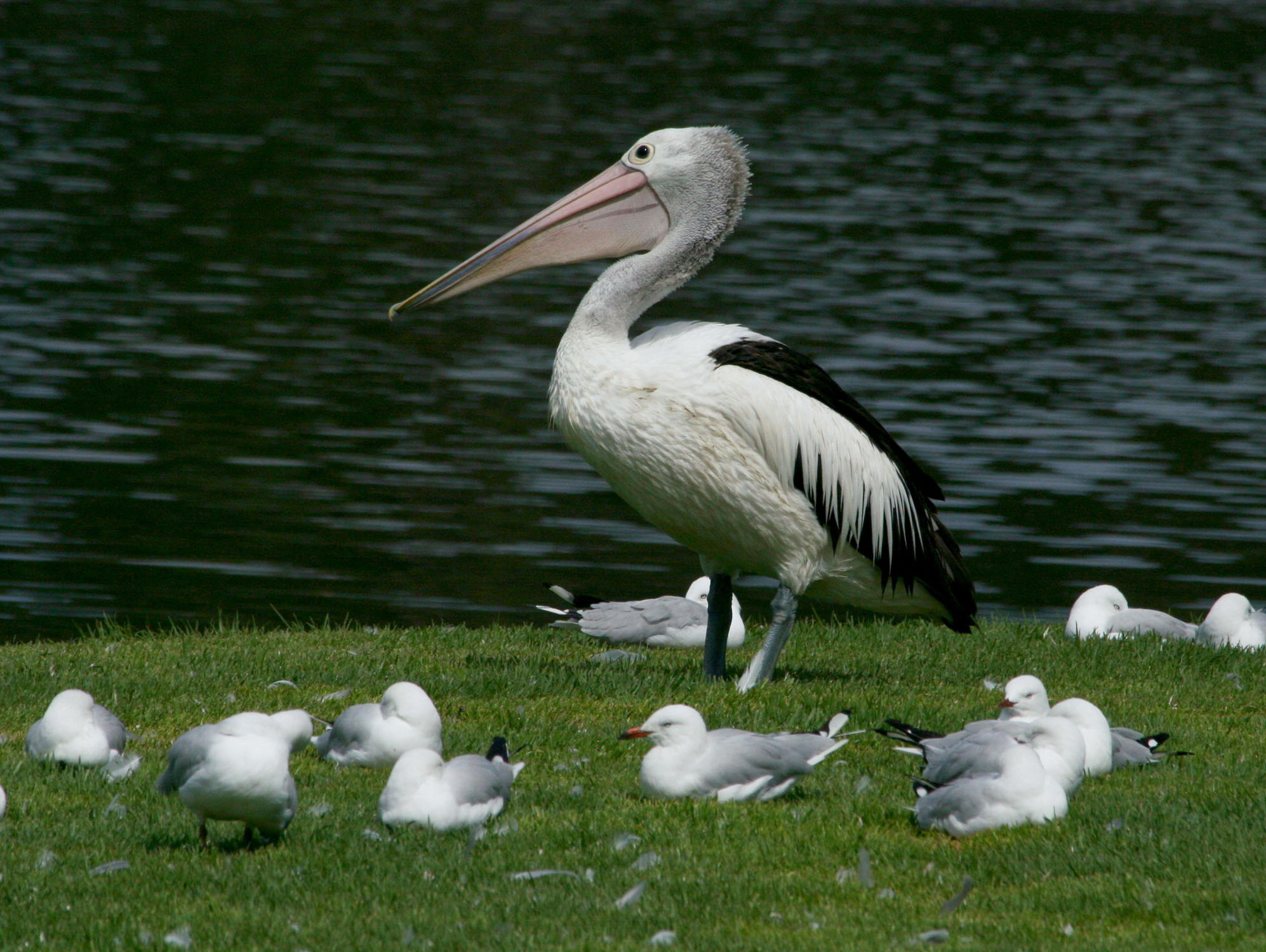


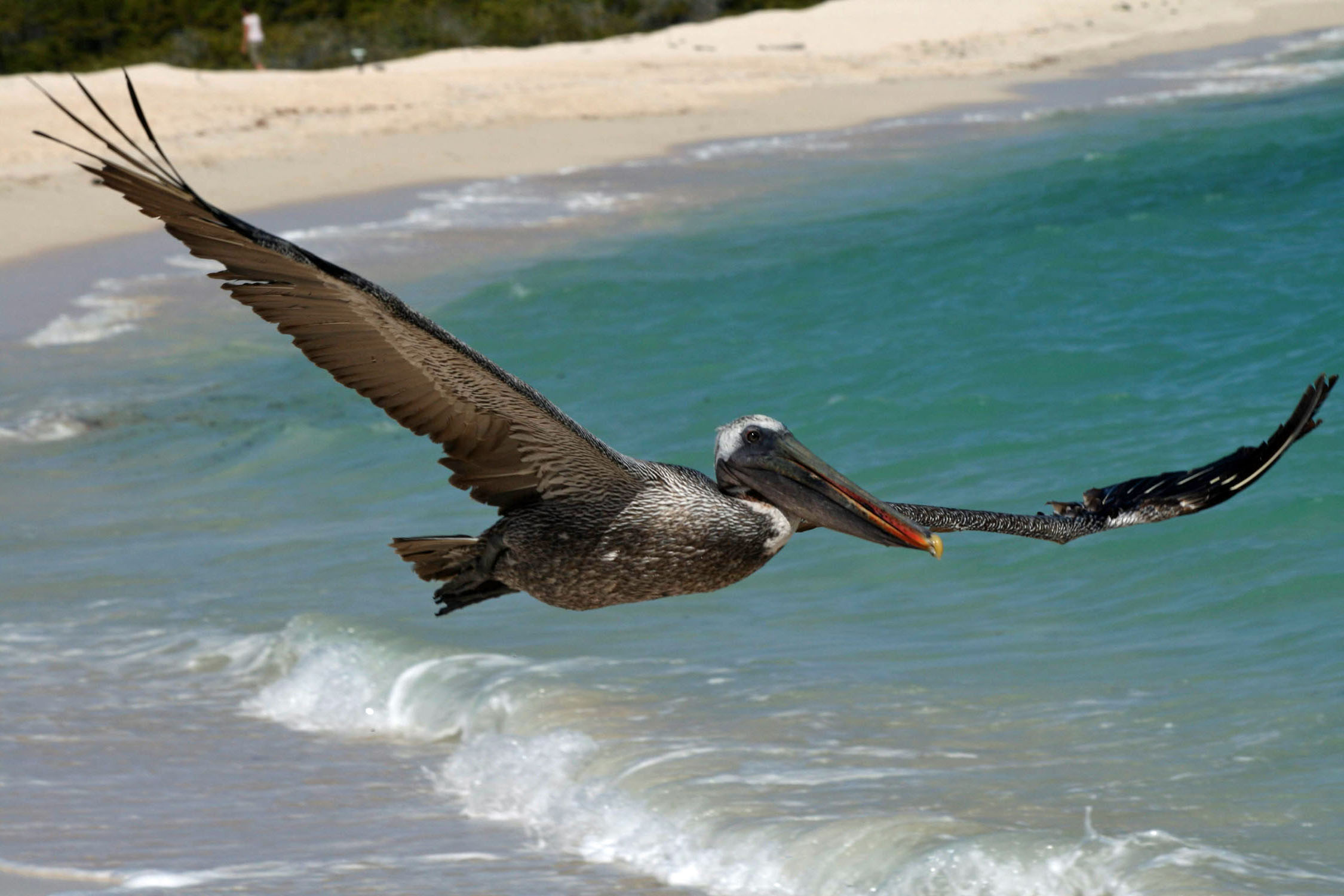
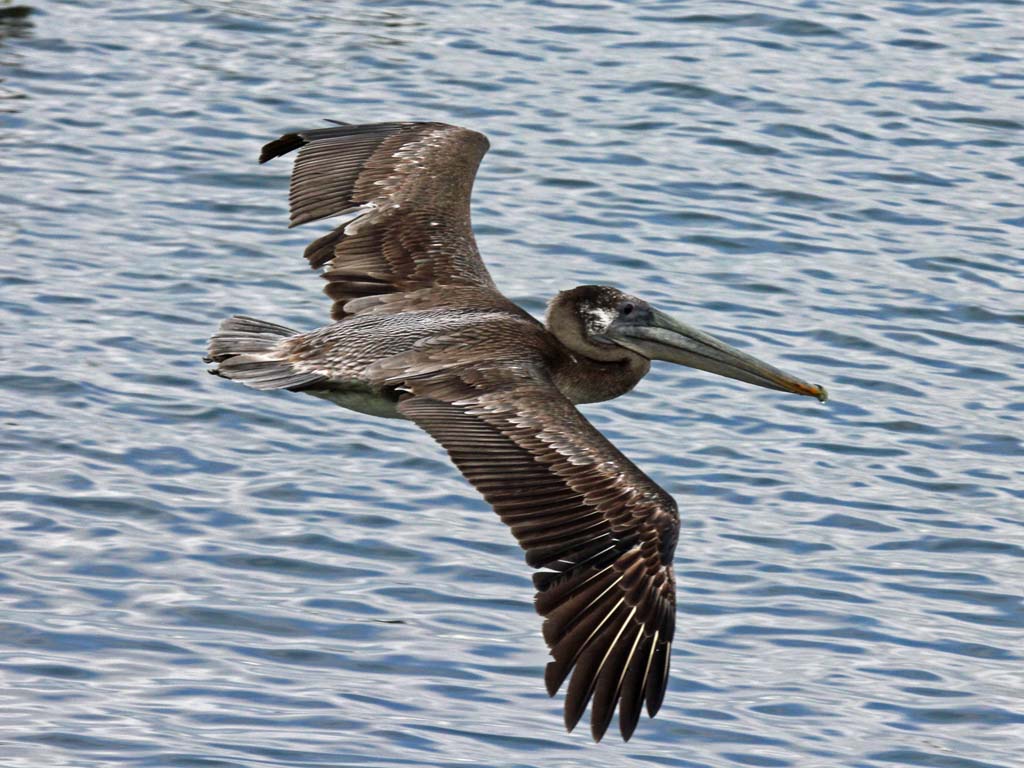
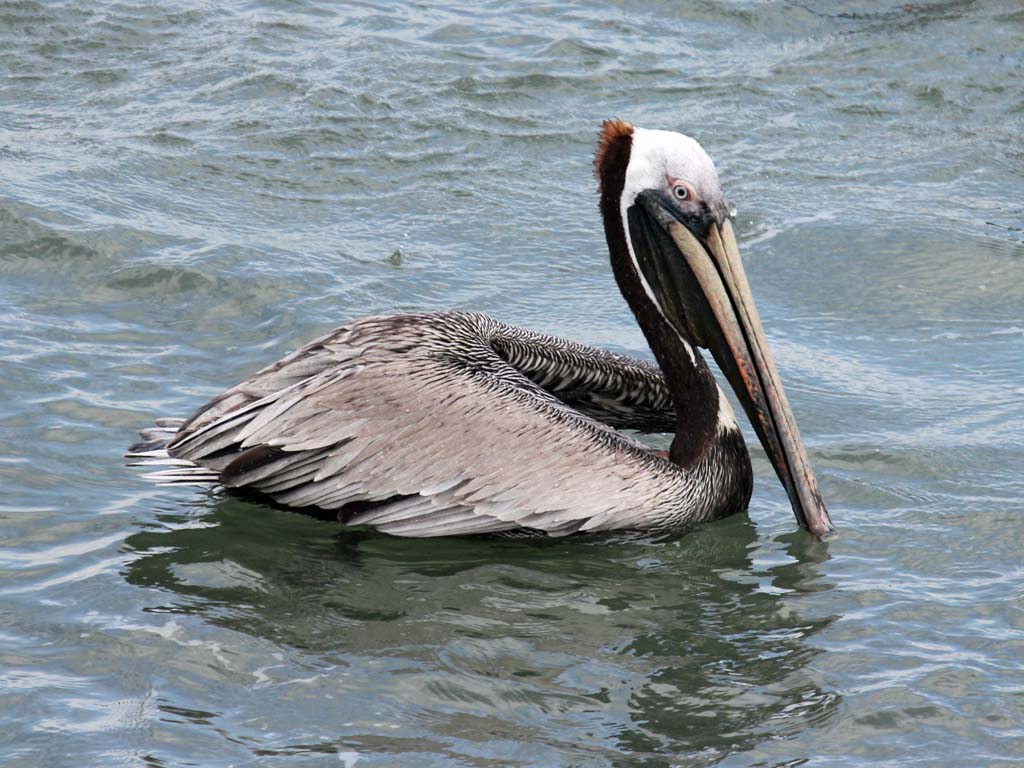
Pelican,_Brown Pelecanus occidentalis Found: The Americas
The adult Brown Pelican has light gray upperparts; brown underparts; white head with yellow wash. Atlantic subspecies has gray or brown pouch; white nape. Pacific has olive to red pouch, brown nape. Juvenile has brown head, upperparts; white belly. It dives for fish.
Similar to: American White Pelican. American White Pelican has white back; Brown Pelican has gray-brown back. American White Pelican is larger.
Similar to: Peruvian Pelican. Brown Pelican is considerably smaller than Peruvian Pelican. Adult Brown Pelican head is often yellowish; adult Peruvian Pelcian head is white. Peruvian Pelican not found in North America.
Image by:
1, 2, 3, 4, 5, 6, 7 8 , 9, 10, 11) Dick Daniels - the Carolinas Similar to: American White Pelican. American White Pelican has white back; Brown Pelican has gray-brown back. American White Pelican is larger.
Similar to: Peruvian Pelican. Brown Pelican is considerably smaller than Peruvian Pelican. Adult Brown Pelican head is often yellowish; adult Peruvian Pelcian head is white. Peruvian Pelican not found in North America.
_RWD3.jpg)

_RWD2.jpg)
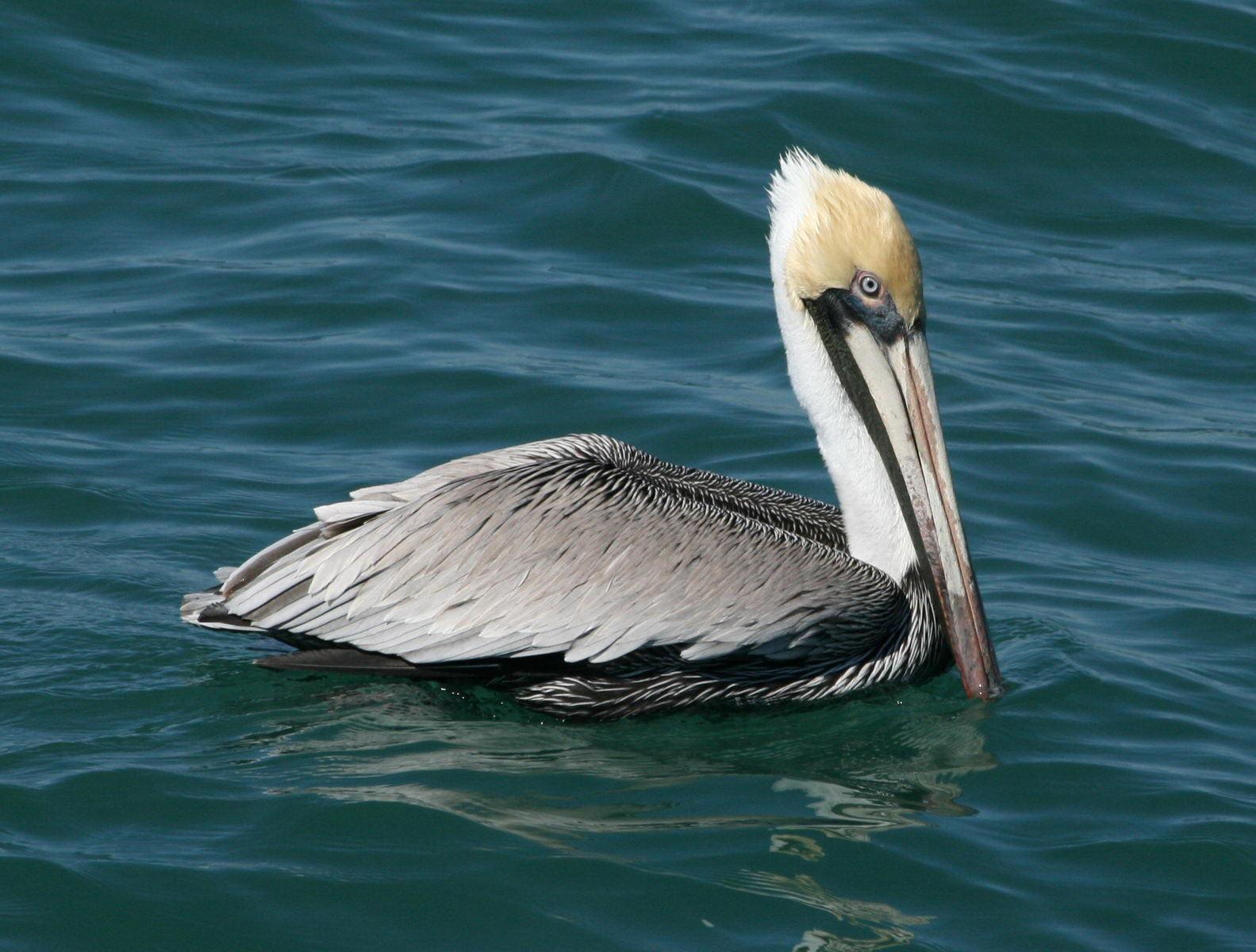
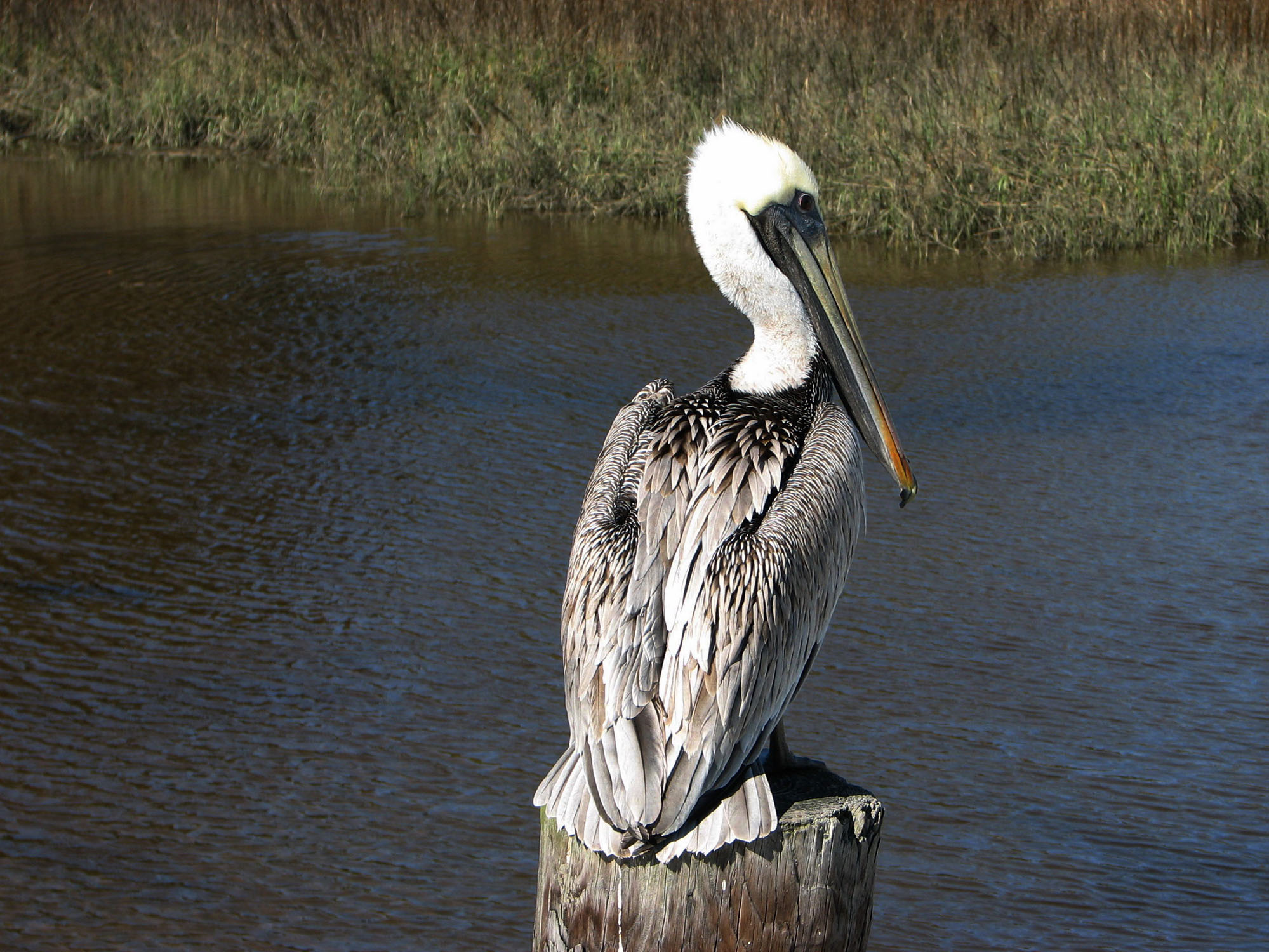
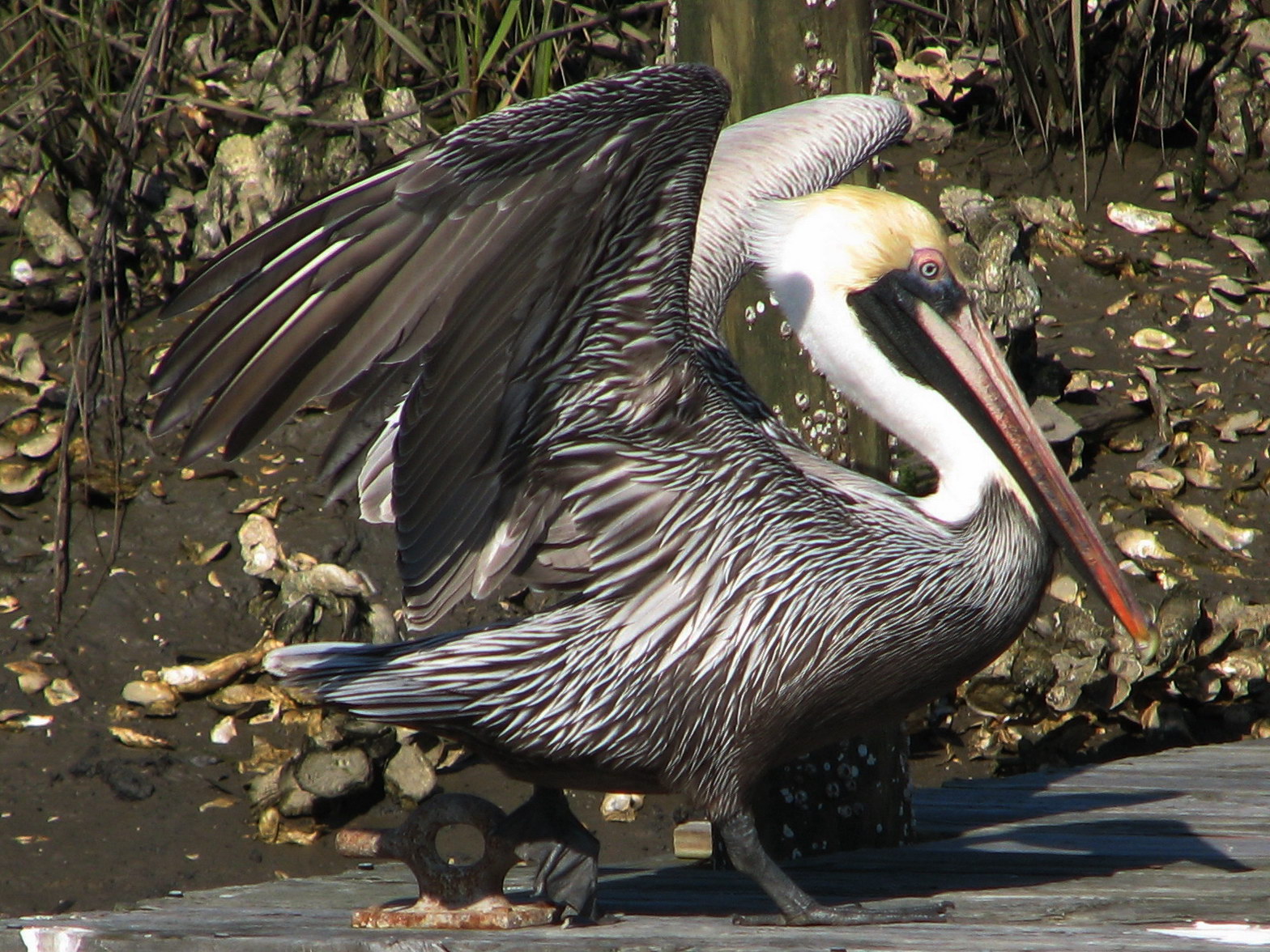
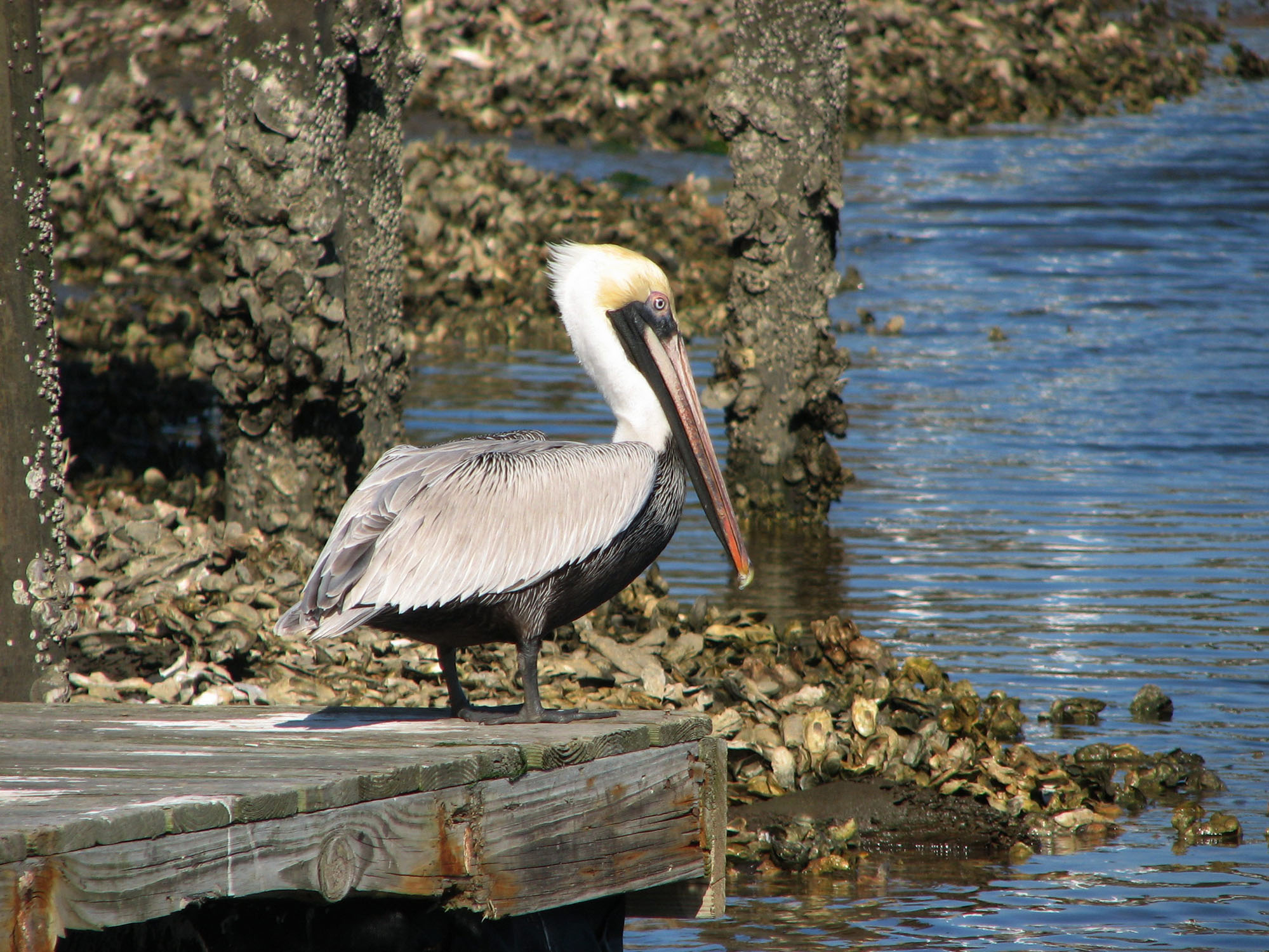


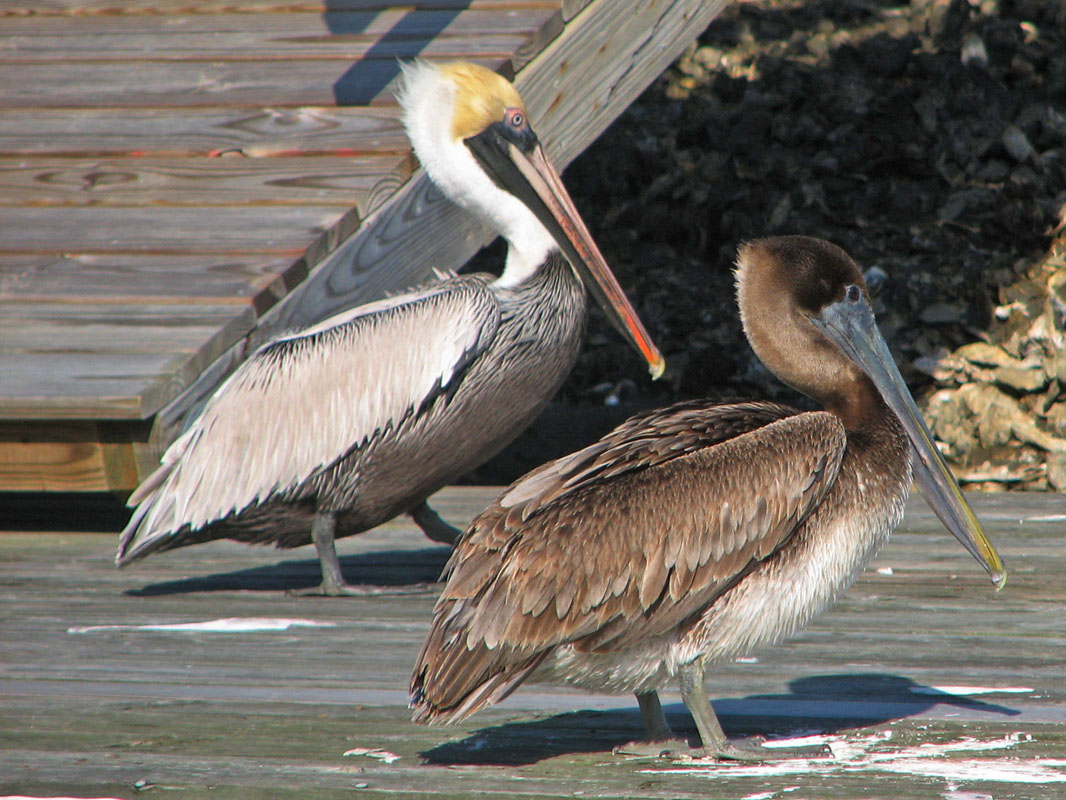
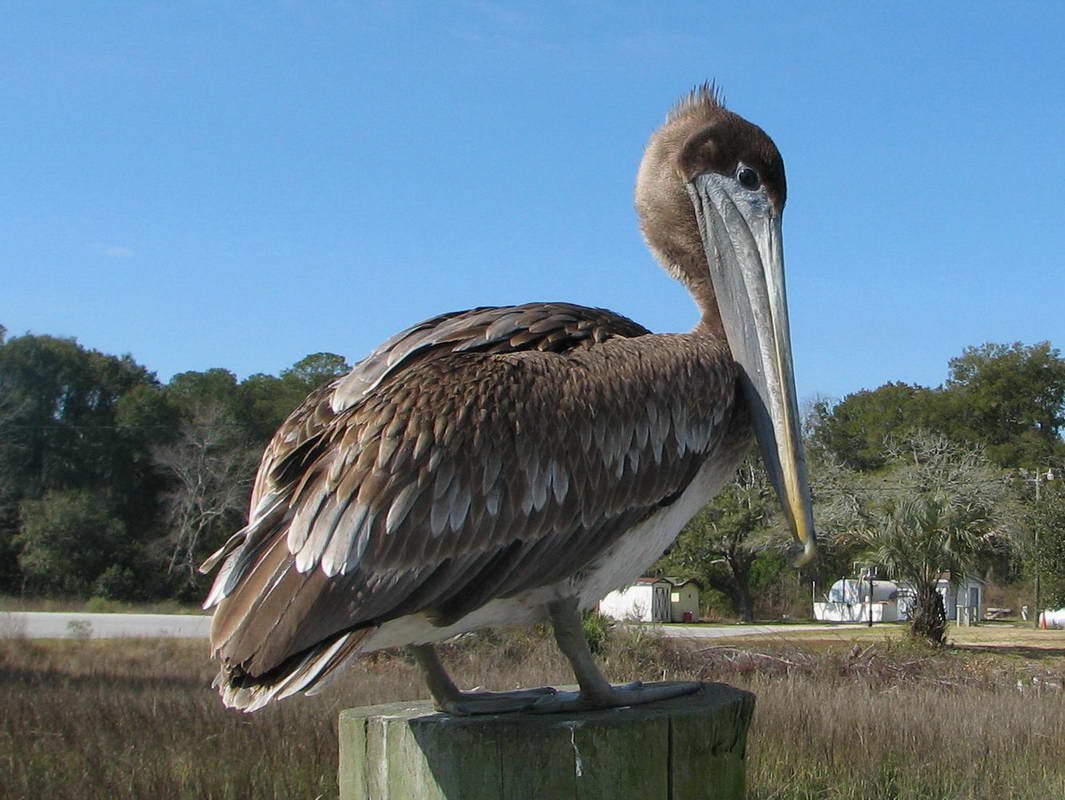
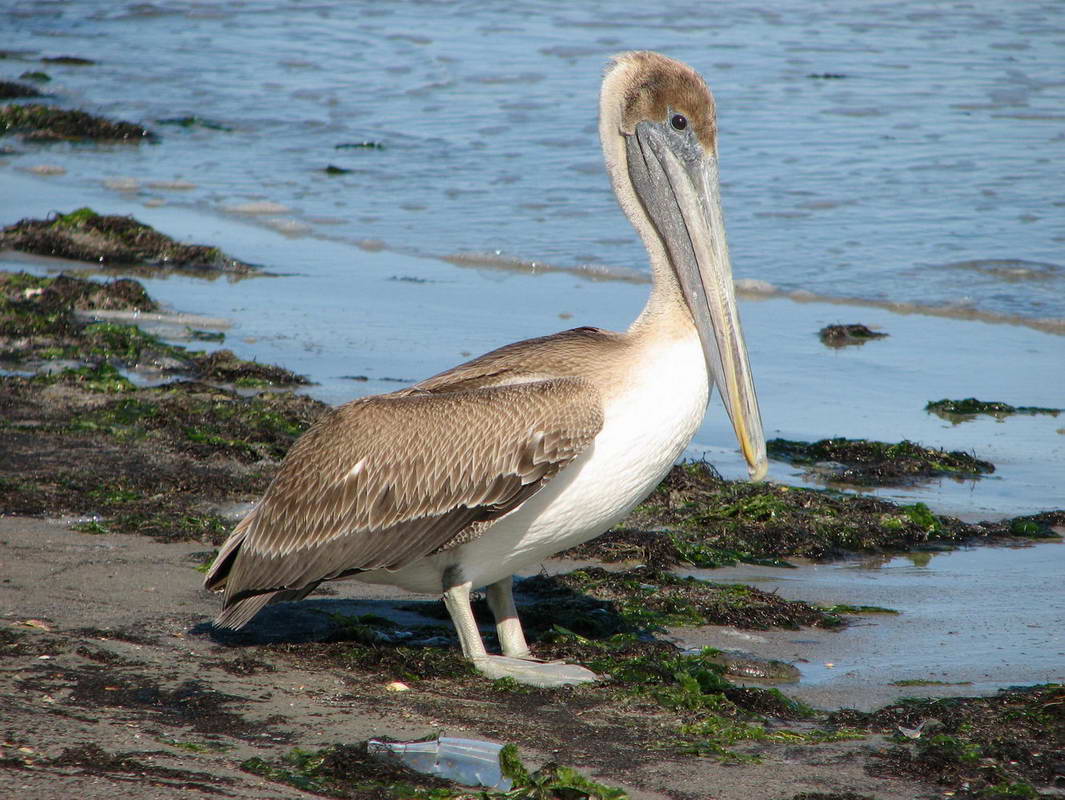
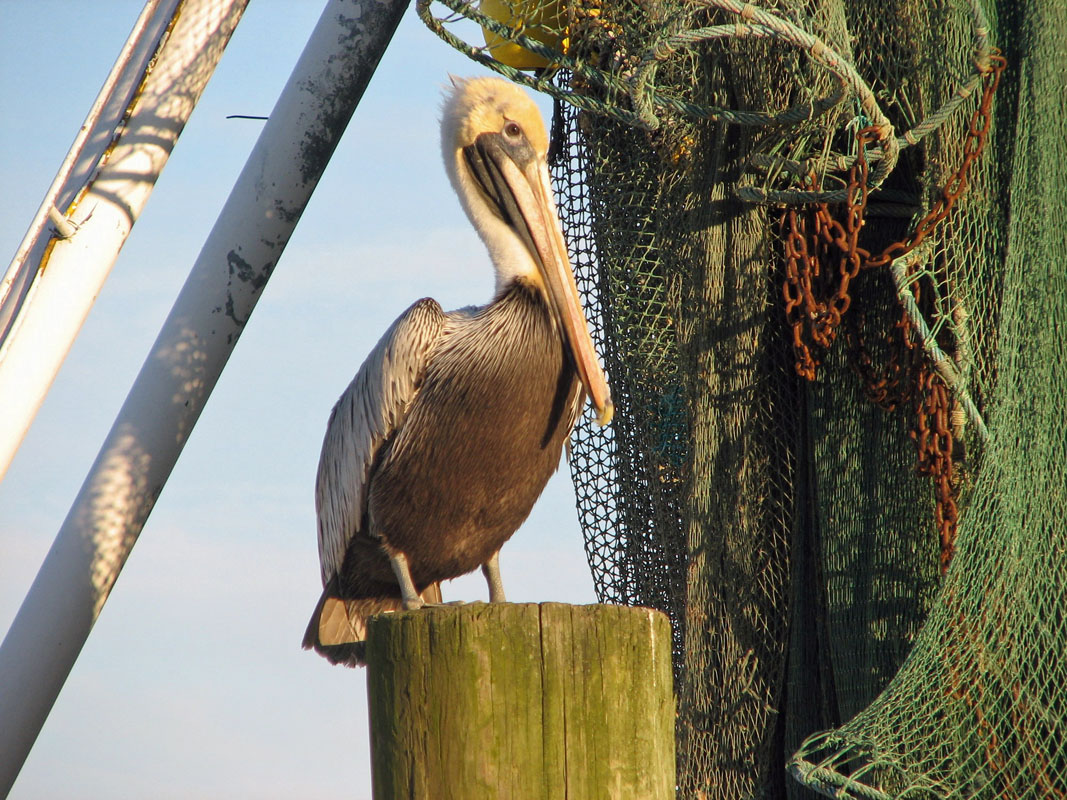
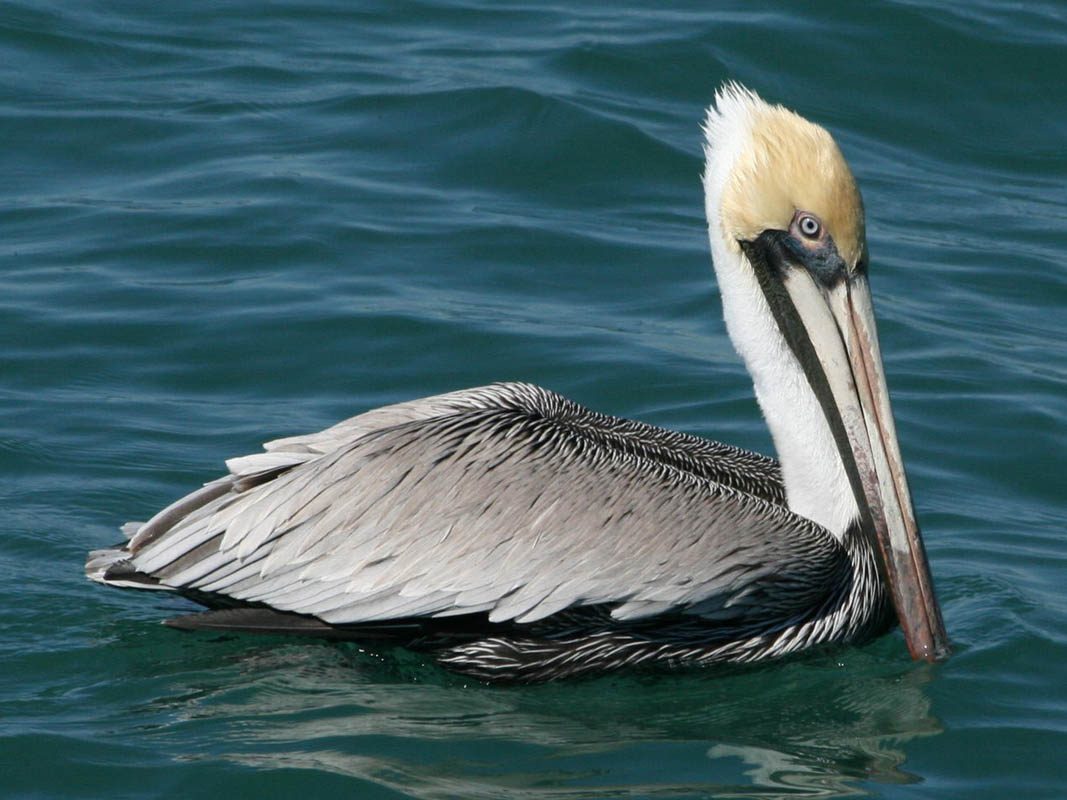
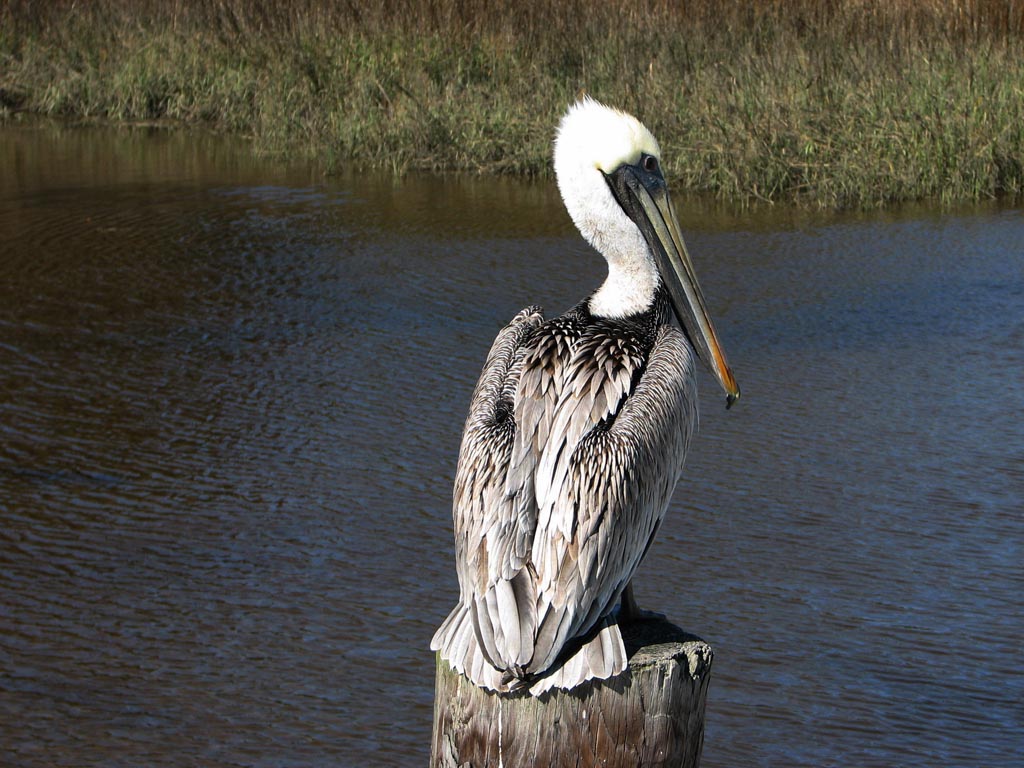
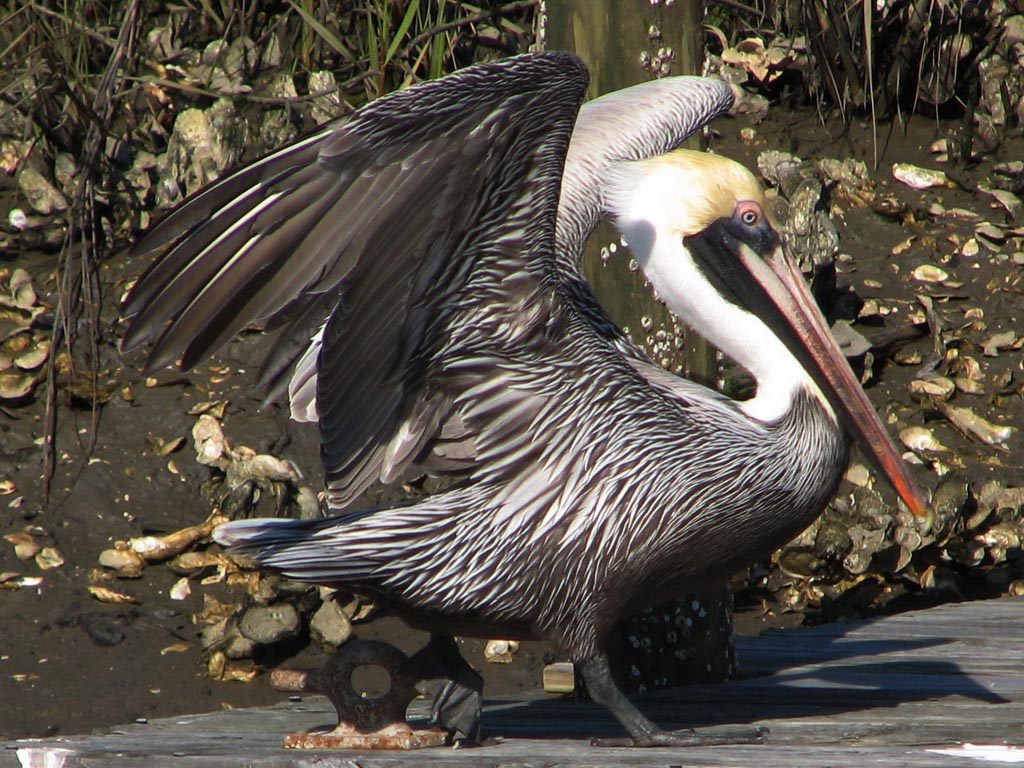
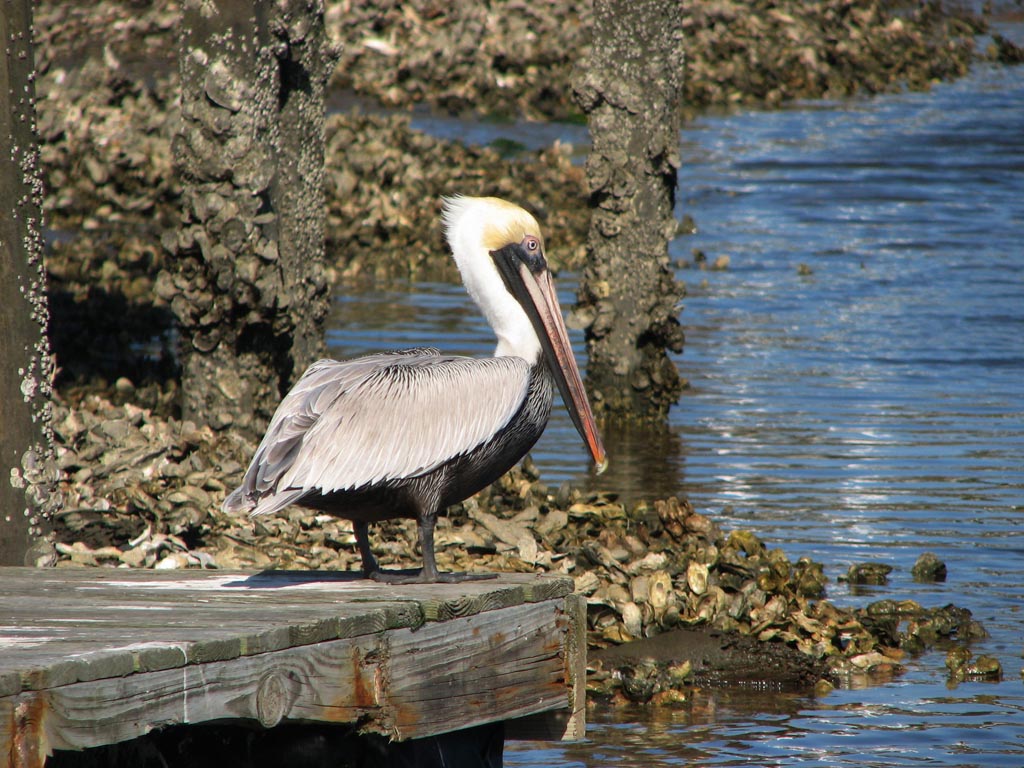


Image by: 1) Sandy Cole - Florida 2) Dick - Half Moon Bay, California 3) Alan D Wilson- La Jolla, California
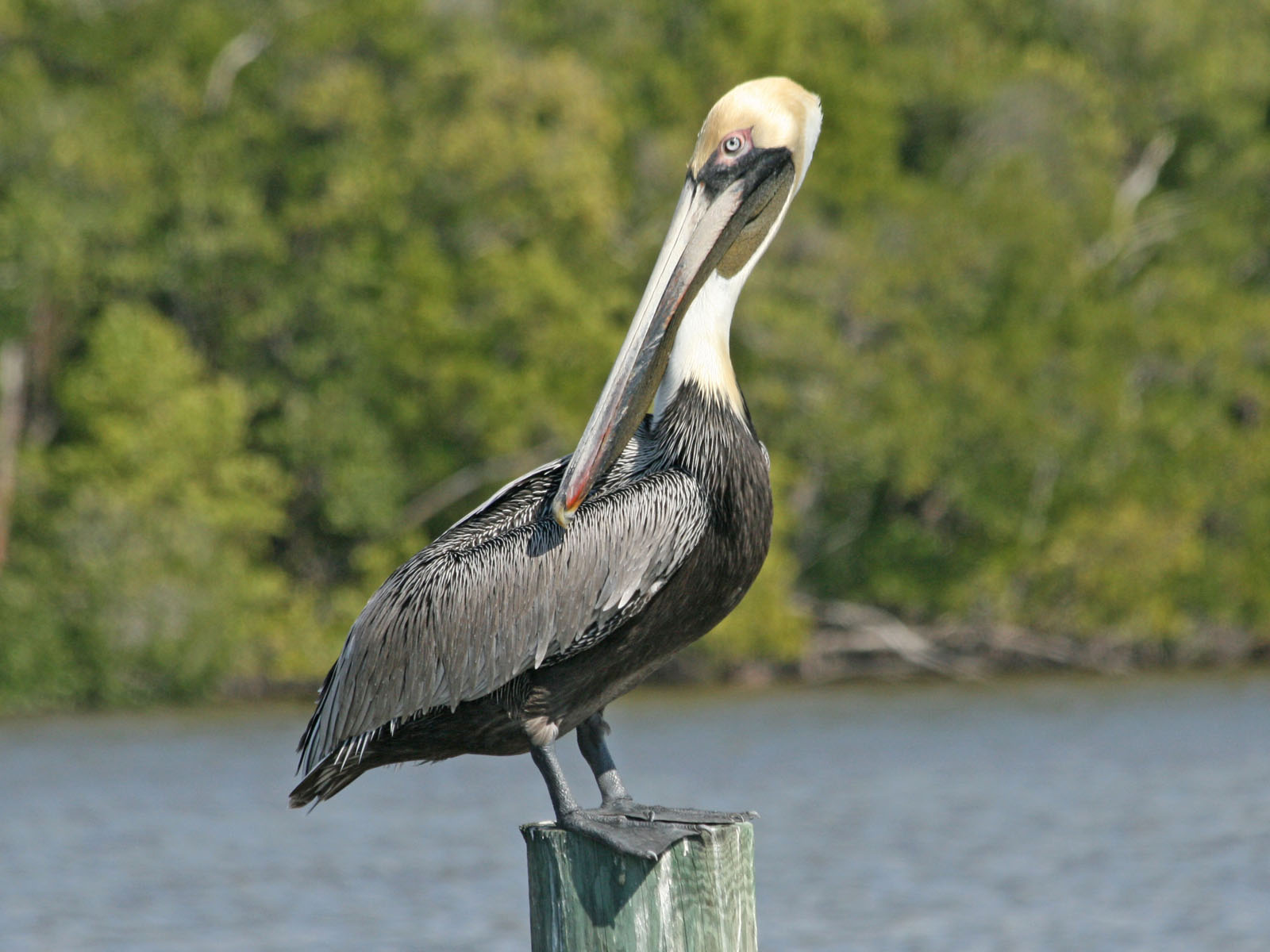

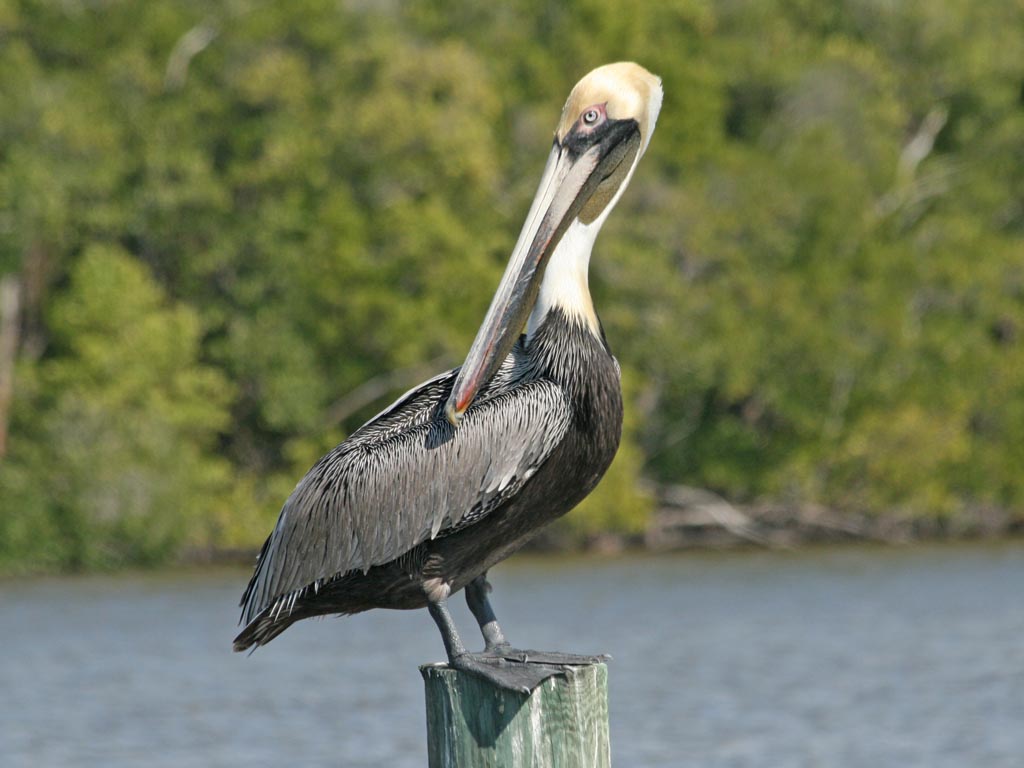

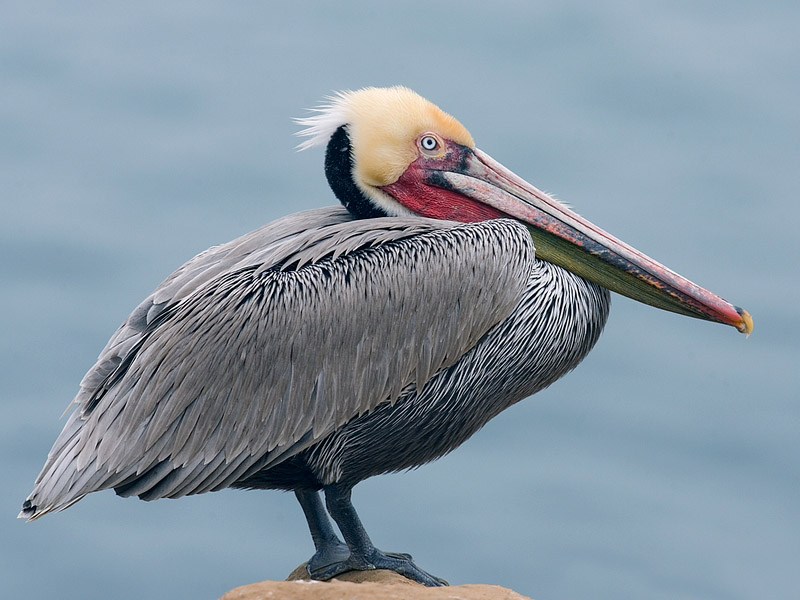
Image by: 1, 2, 3) Dick - Panama 4) Dick - St. John 5) Dick - Galapagos




Pelican,_Dalmatian Pelecanus crispus Found: Europe, Asia
The Dalmation Pelican has silver-white plumage (dingier brownish-gray when nonbreeding); curly nape feathers; gray legs; black wing tips (visible in flight). It swims or wades for fish.
Similar to: Great White Pelican. On average, the Dalmation Pelican is larger than the Great White Pelican. Dalmation has a messy hairdo compared with Great White. Dalmation is off white versus pure white for the Great White.
Image by: 1, 4, 5) Dick Daniels - San Diego Zoo 2) Bhardwaj
Shanthanu - Bhuj, Gujarat,
India 3) Shizhao - Beijing zoo Similar to: Great White Pelican. On average, the Dalmation Pelican is larger than the Great White Pelican. Dalmation has a messy hairdo compared with Great White. Dalmation is off white versus pure white for the Great White.



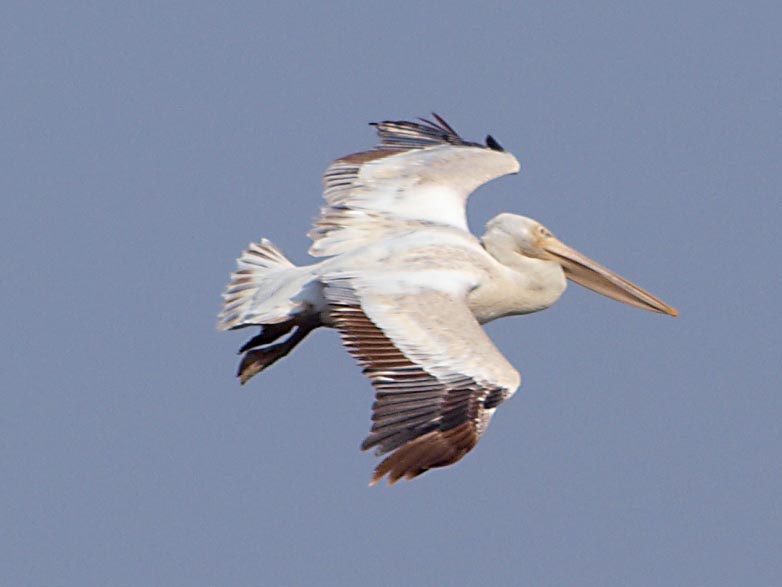


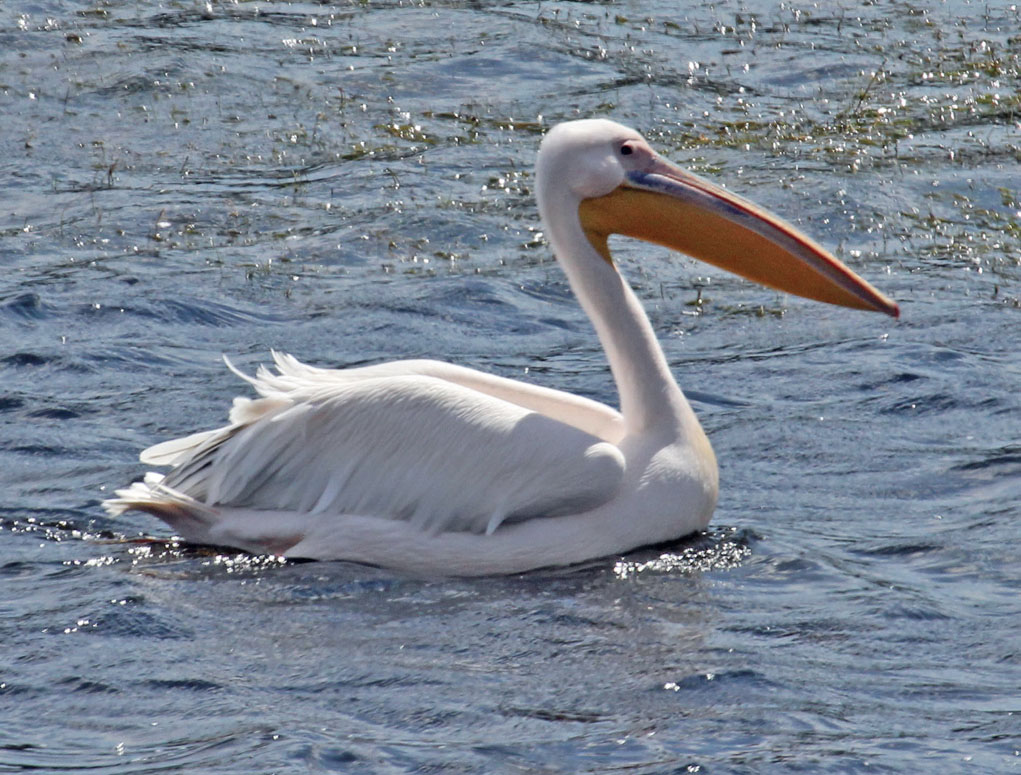
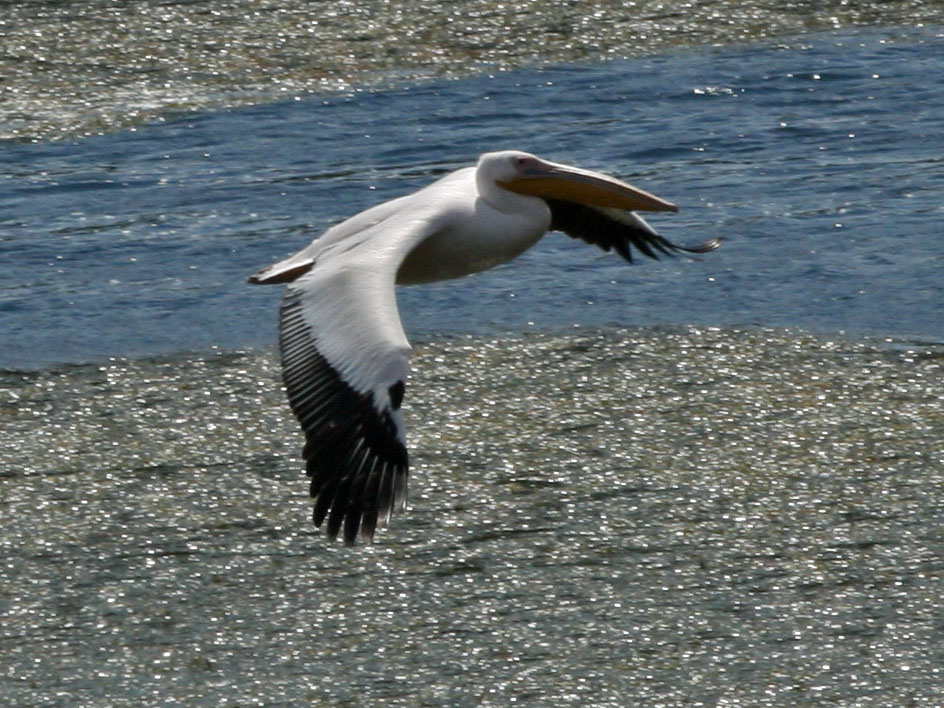
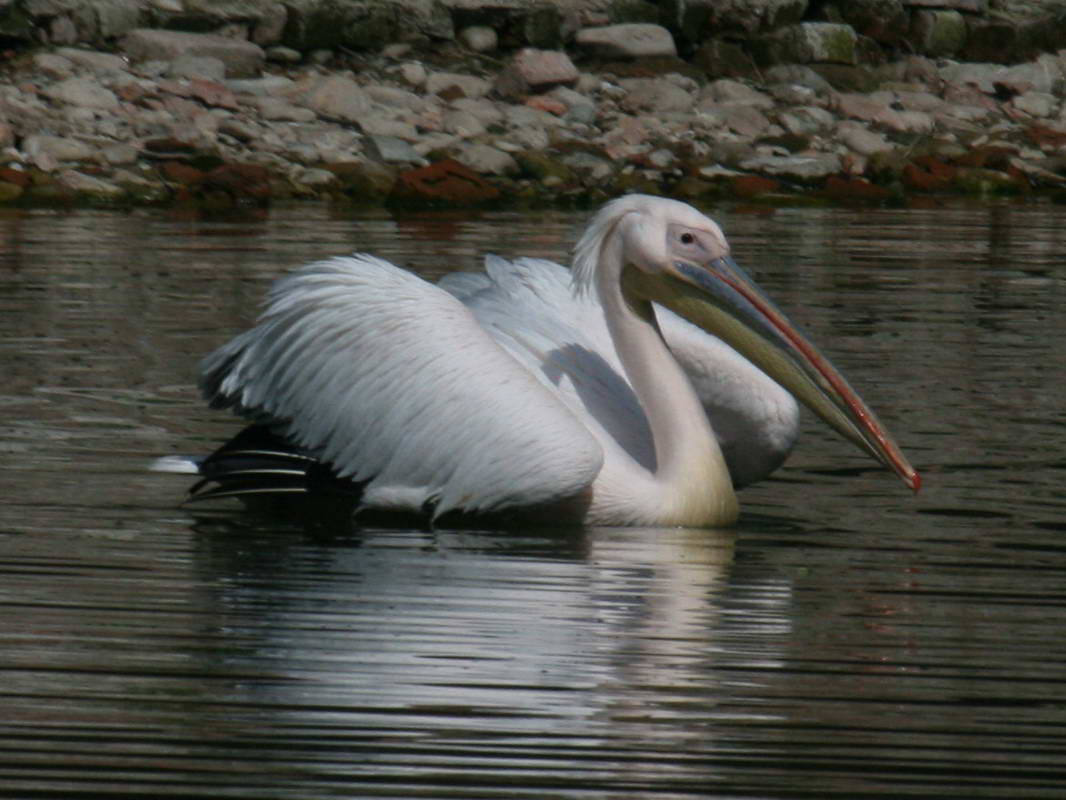
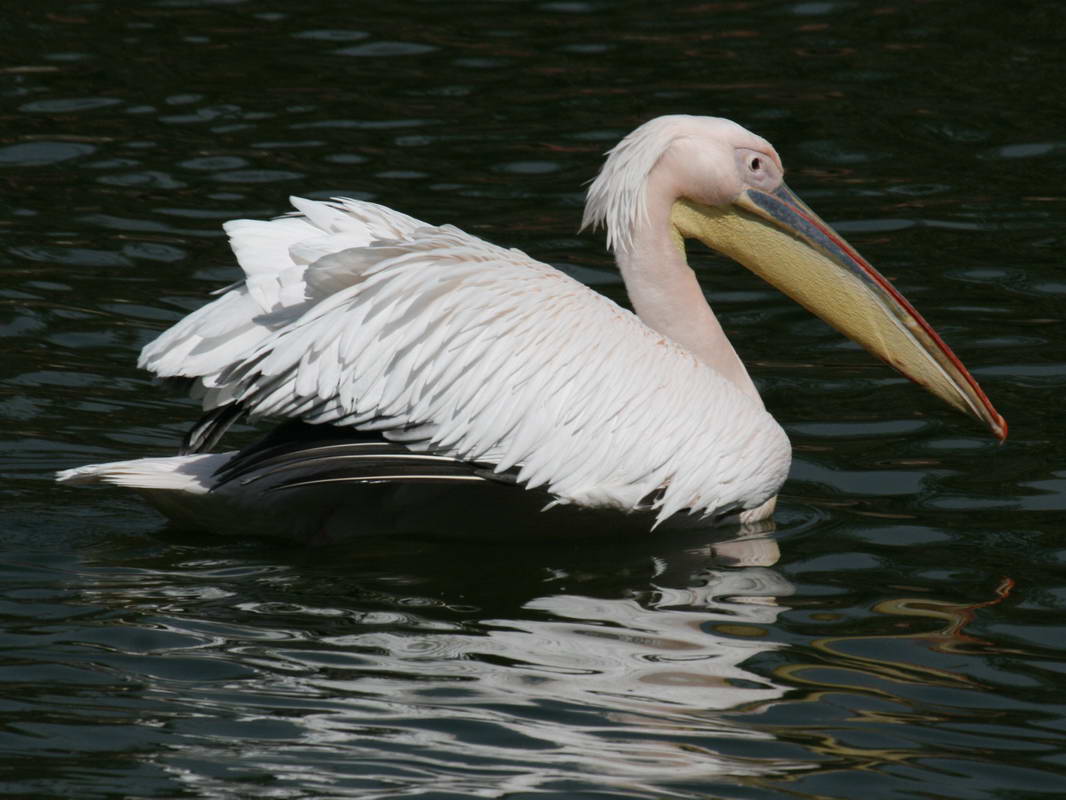
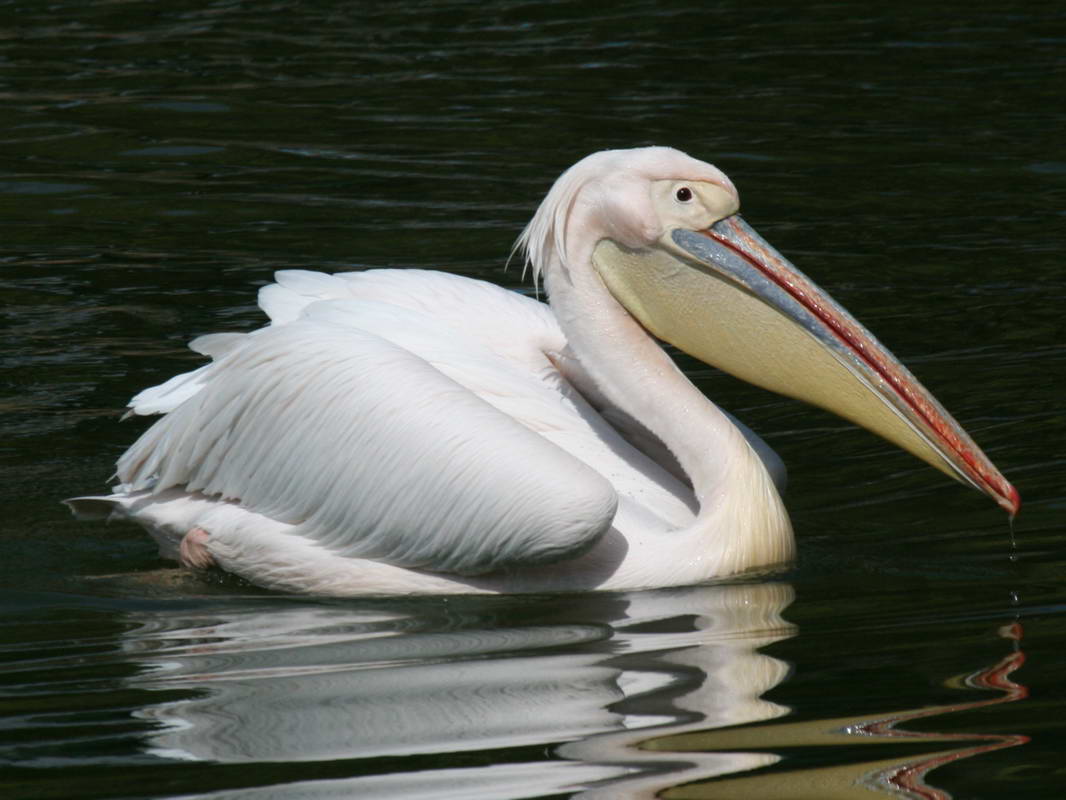
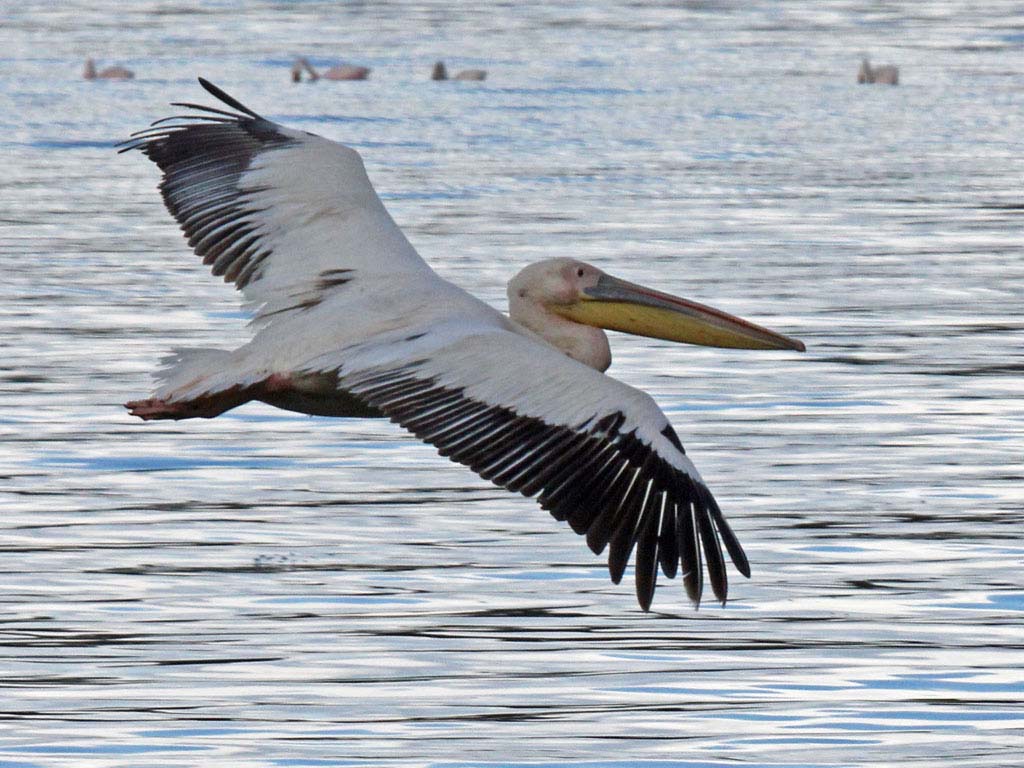
Pelican,_Great White also White Pelican also Rosy Pelican Pelecanus onocrotalus Found: Europe, Asia, Africa
The Great White Pelican has pure white plumage with black wing tips visible in flight. It swims or wades for fish.
Similar to: American White Pelican. Ranges do not overlap. Great White Pelican is larger.
Similar to: Dalmation Plelican. On average, the Dalmation Pelican is larger than the Great White Pelican. Dalmation has a messy hairdo compared with Great White. Dalmation is off white versus pure white for the Great White.
Similar to: Pink-backed Pelican. Great White Pelican is much larger. Pink-backed Pelican is gray versus pure white for the Great White.
Image by: 1) S. Shankar - Kenya 2) Dick Daniels - De Hoop, South AFrica 3) Sandy Cole - De Hoop, South Africa 4, 5, 6) Dick - Nepal 7) Dick -Kenya 8) Cristiano Crolle - Namibia 7) Video by Avibirds. More vidoesSimilar to: American White Pelican. Ranges do not overlap. Great White Pelican is larger.
Similar to: Dalmation Plelican. On average, the Dalmation Pelican is larger than the Great White Pelican. Dalmation has a messy hairdo compared with Great White. Dalmation is off white versus pure white for the Great White.
Similar to: Pink-backed Pelican. Great White Pelican is much larger. Pink-backed Pelican is gray versus pure white for the Great White.
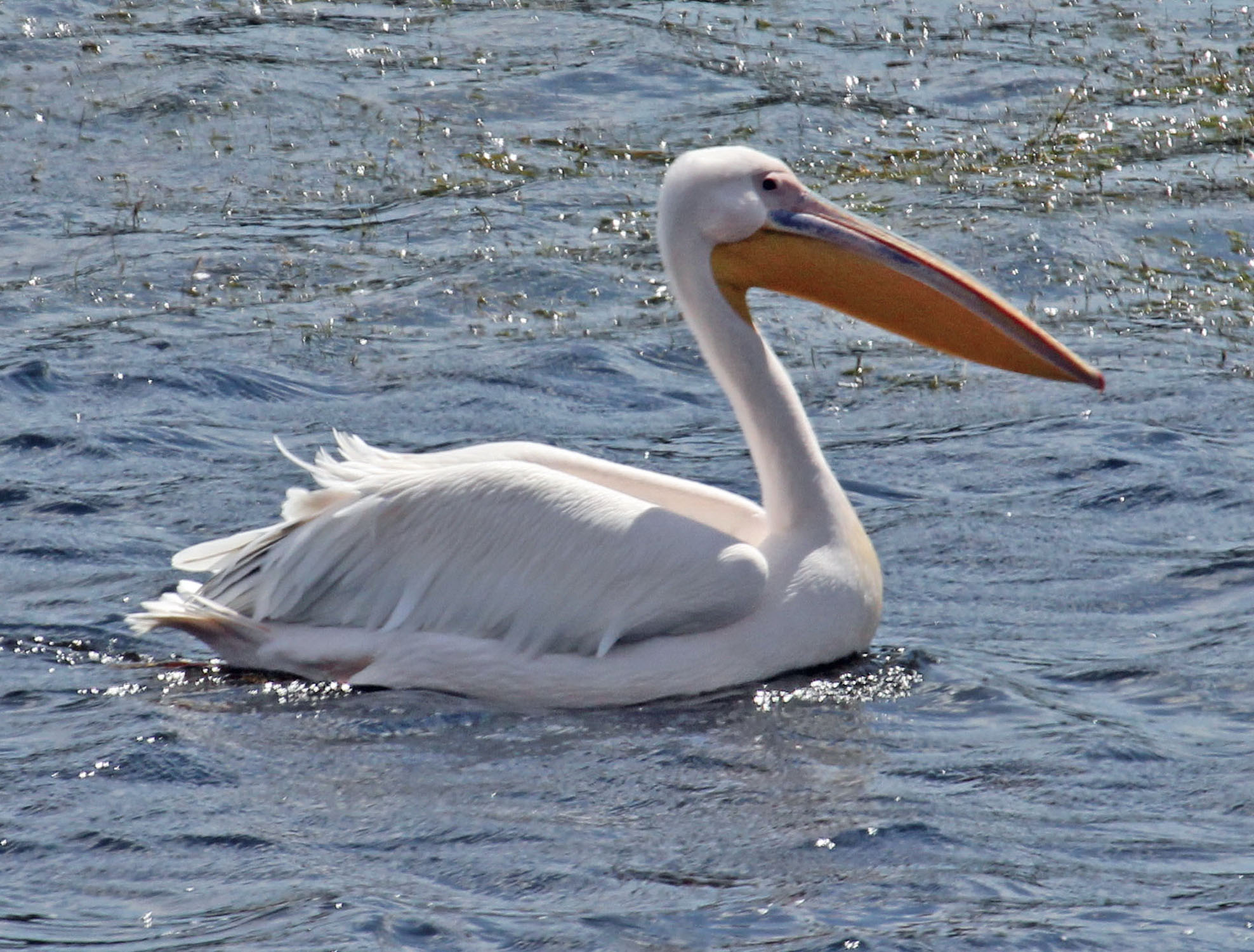

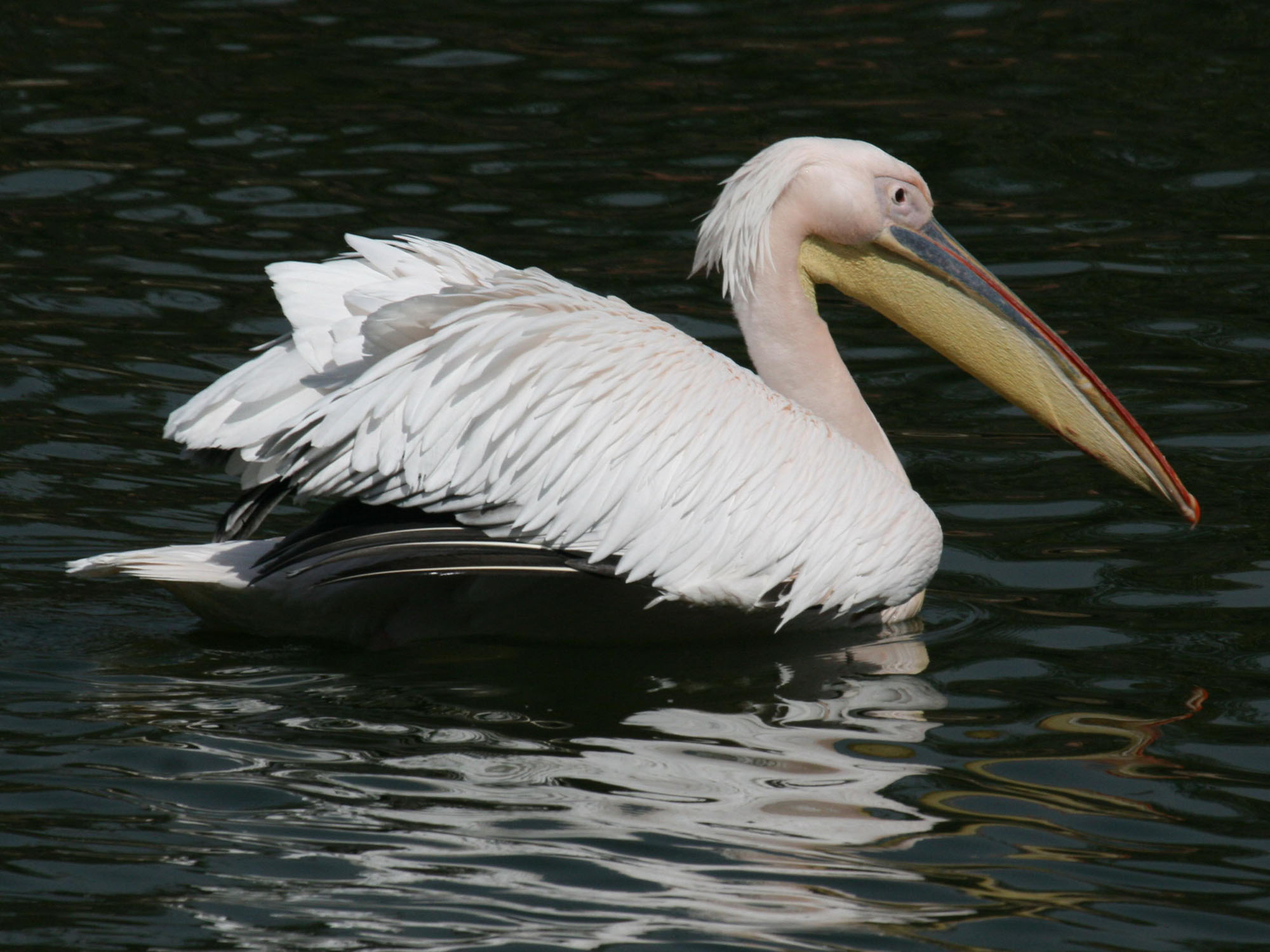




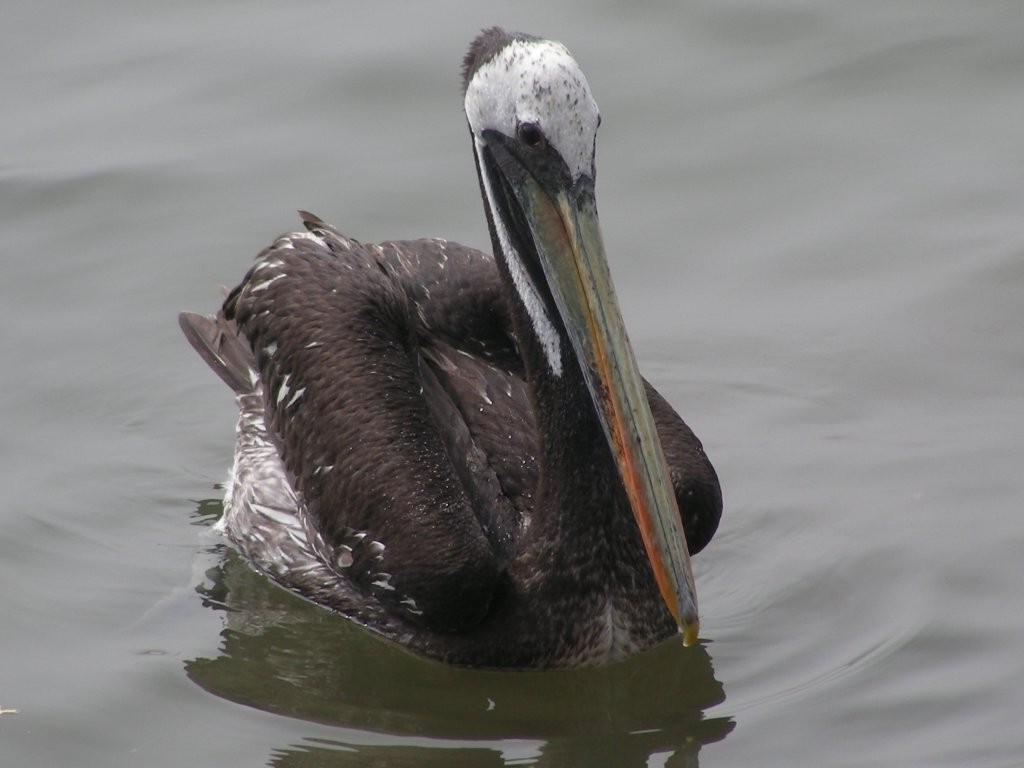
Pelican,_Peruvian Pelecanus thagus Found: South America (west coast)
The Peruvian Pelican has gray-brown upperparts; brown underparts; white head; white neck (brown nape when breeding). Juvenile has brown head, upperparts; white belly. It dives for Fish.
Similar to: Brown Pelican. Brown Pelican is considerably smaller than Peruvian Pelican. Adult Brown Pelican head is often yellowish; adult Peruvian Pelcian head is white. Peruvian Pelican not found in North America.
Image by: 1) Charlie Westerinen 2) Alastair Rae 3) Manuel Franco 4, 5, 6, 7) Dick Daniels - Papudo. ChileSimilar to: Brown Pelican. Brown Pelican is considerably smaller than Peruvian Pelican. Adult Brown Pelican head is often yellowish; adult Peruvian Pelcian head is white. Peruvian Pelican not found in North America.


1) Juvenile


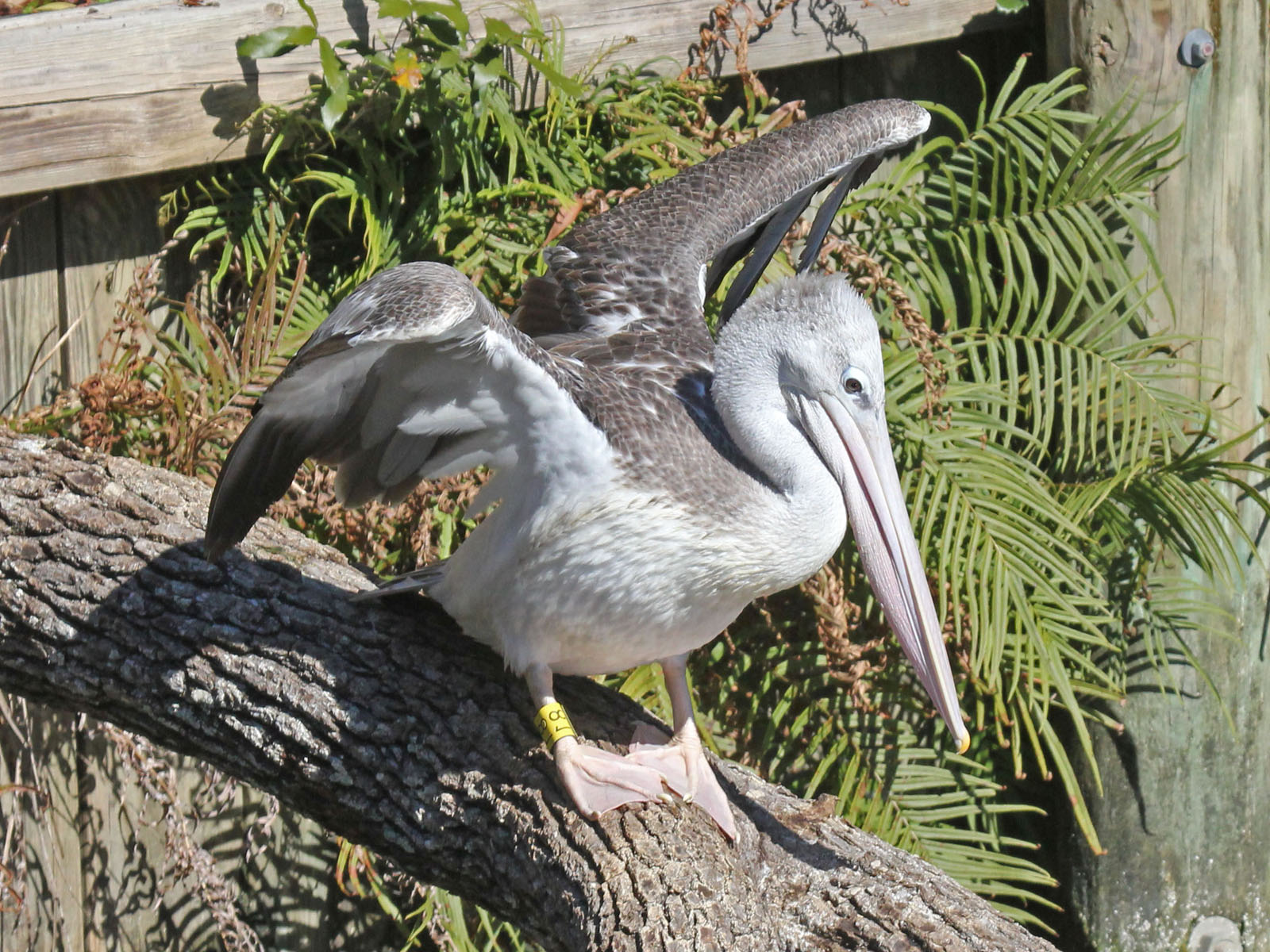
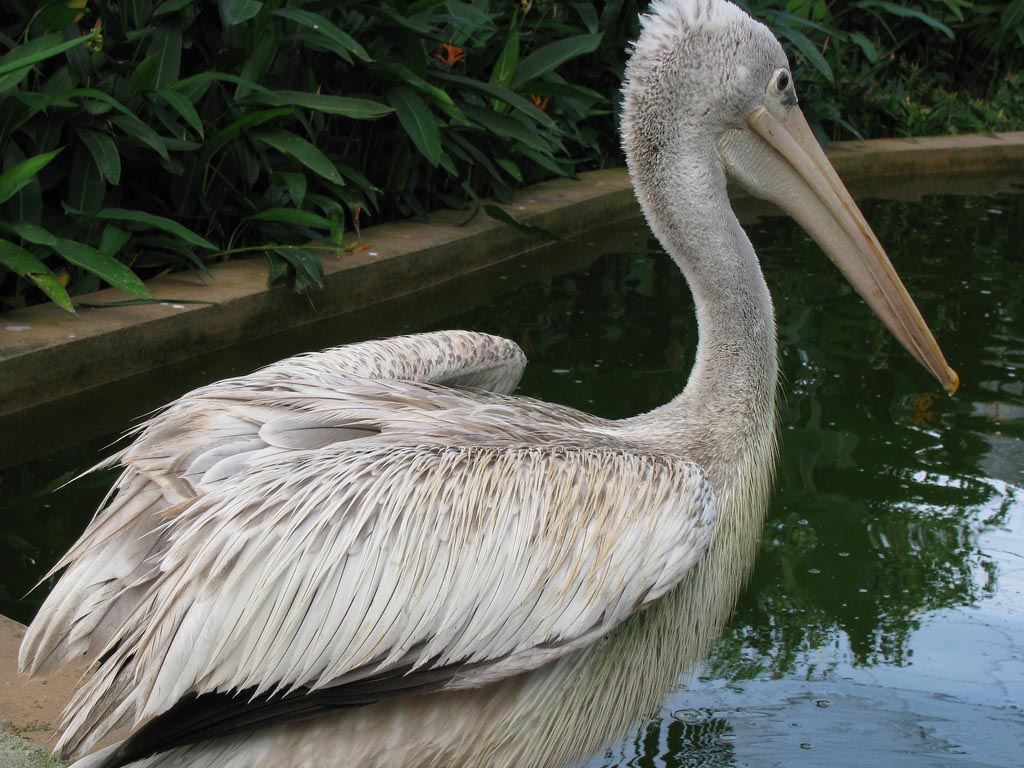
Pelican,_Pink-backed Pelecanus rufescens Found: Africa
The Pink-backed Pelican has gray and white plumage; occasionally pink wash on back. It swims or wades for fish.
Similar to: Great White Pelican. Great White Pelican is much larger. Pink-backed Pelican is gray versus pure white for the Great White.
Image by: 1. 2. 3) Dick - Jacksonville Zoo, Florida 4, 5, 6) Dick - Fish Eagle Lodge, Knysna Lagoon, KenyaSimilar to: Great White Pelican. Great White Pelican is much larger. Pink-backed Pelican is gray versus pure white for the Great White.

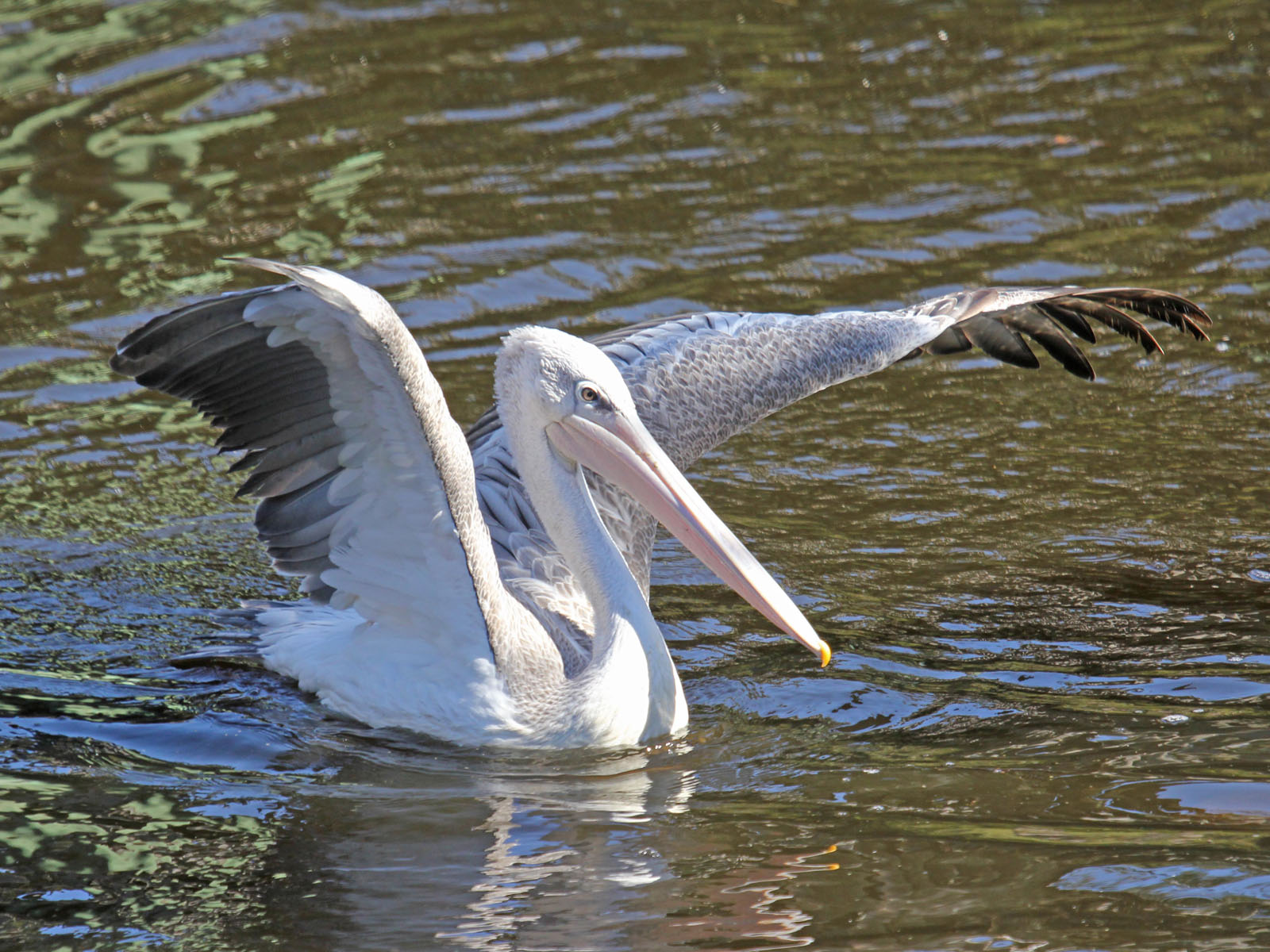


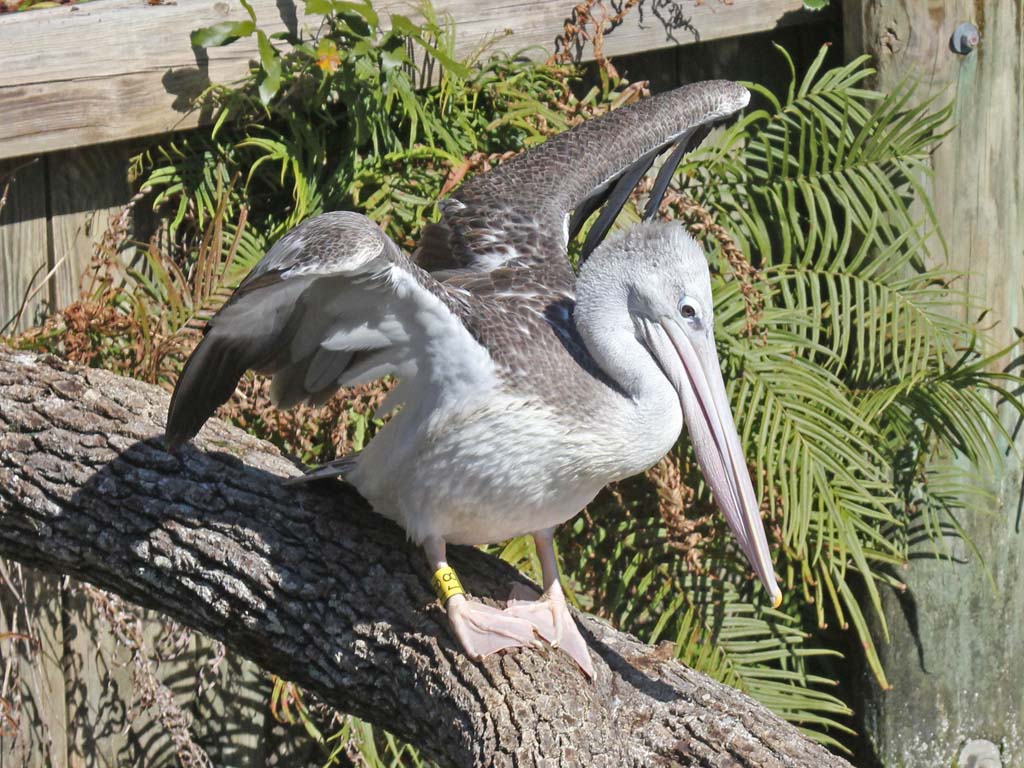
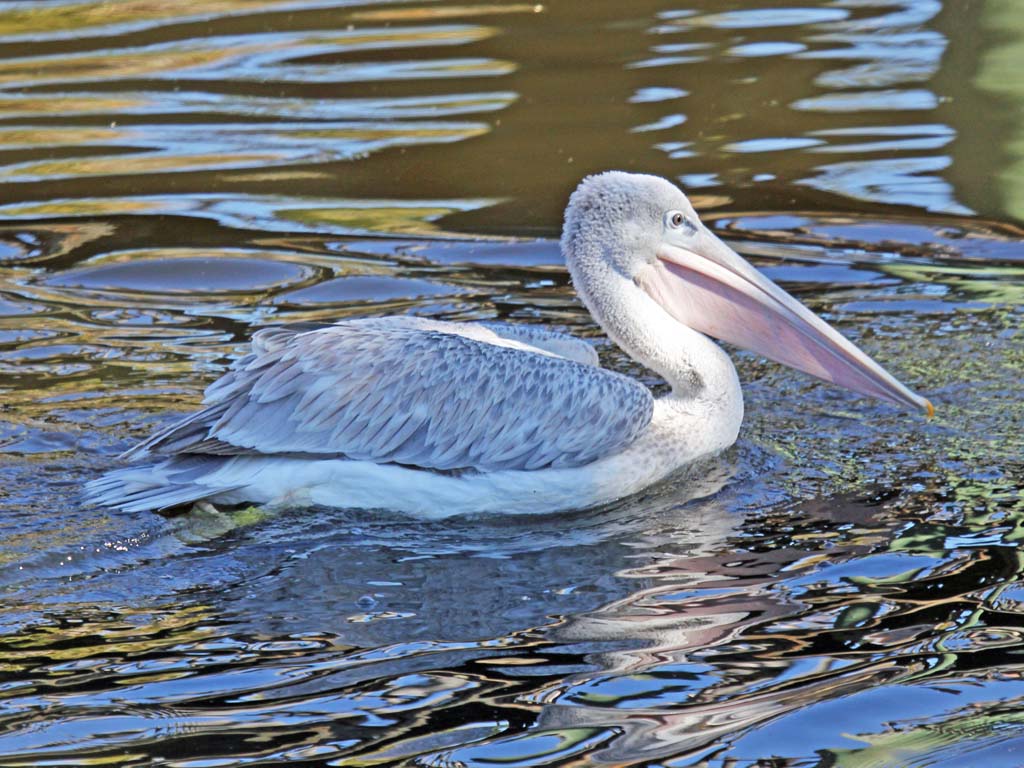
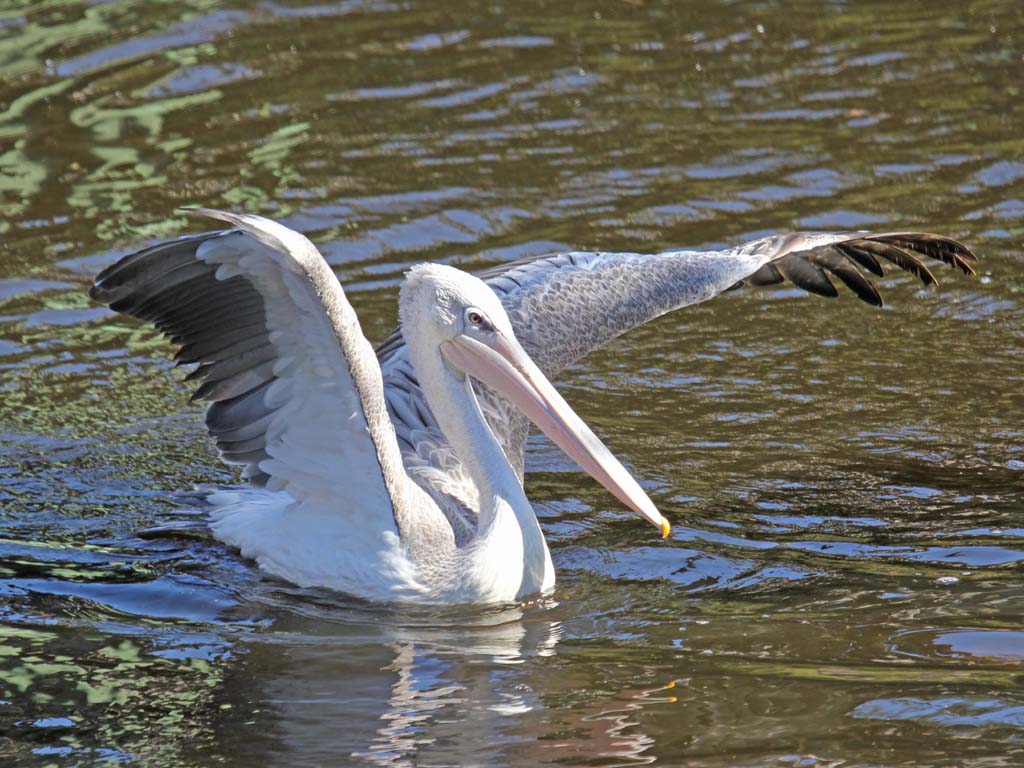


Pelican,_Spot-billed also Gray Pelican Pelecanus philippensis Found: southern Asia
The Spot-billed Pelican has grayish-white plumage; spots on bill. It swims or wades for fish.
Similar to: Great White Pelican. Spot-billed Pelican is grayish-white versus pure white for the Great White. Spot-billed Pelican has spots on bill.
Image by: 1, 4) Lip Kee - Sri Lanka 2) Chamara Irugalratne - Sri Lanka 4) S. Shankar - Kuala Lumpur Bird Park 5) JM Garg - India 6) Vijay IsmavelSimilar to: Great White Pelican. Spot-billed Pelican is grayish-white versus pure white for the Great White. Spot-billed Pelican has spots on bill.

1) Juvenile




Family Scopidae - 1 genus
It is a matter of debate whether the Hammerkop belongs in the same order as Pelicans or the Storks.
Genus Scopus - 1 species
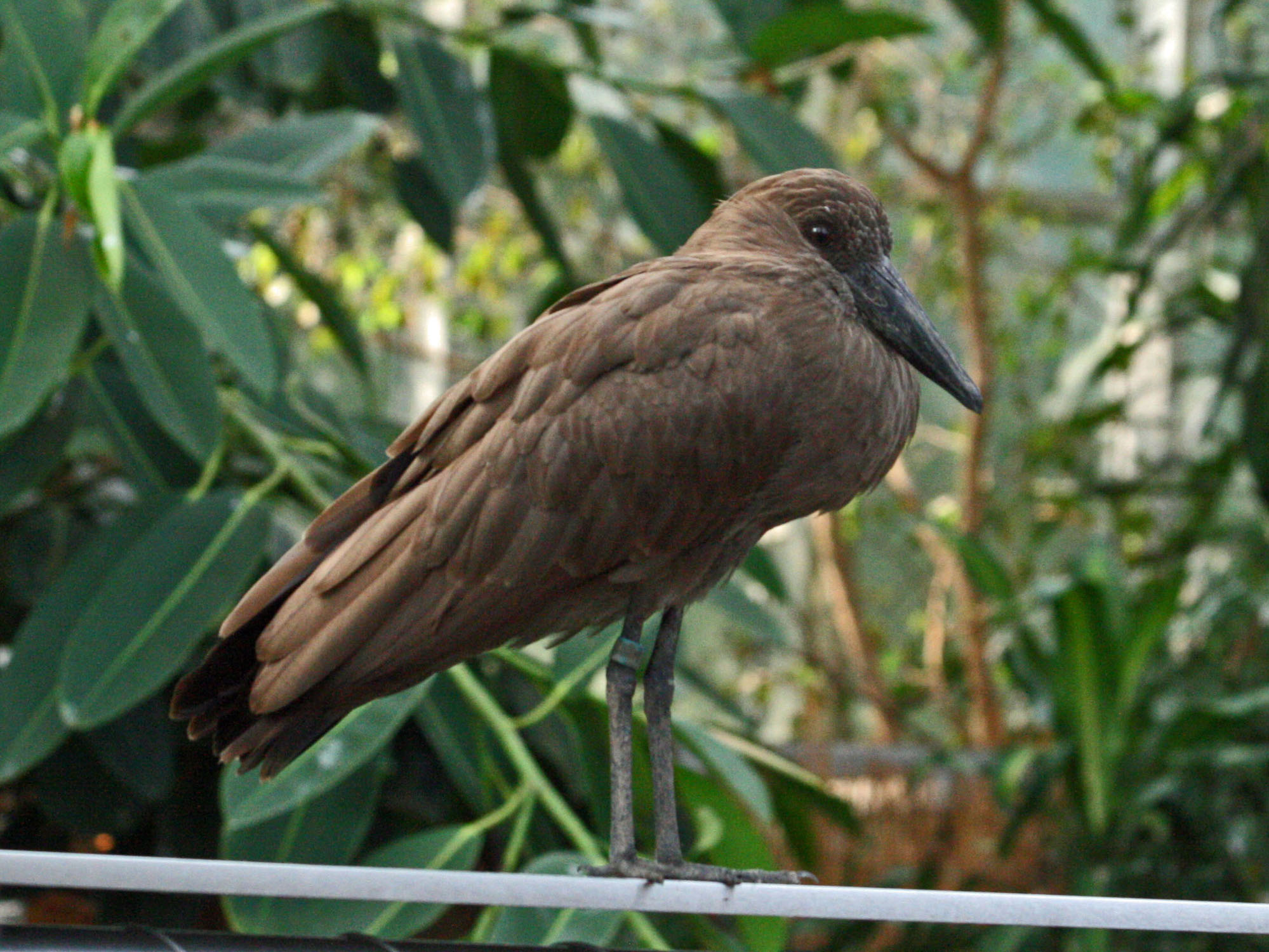
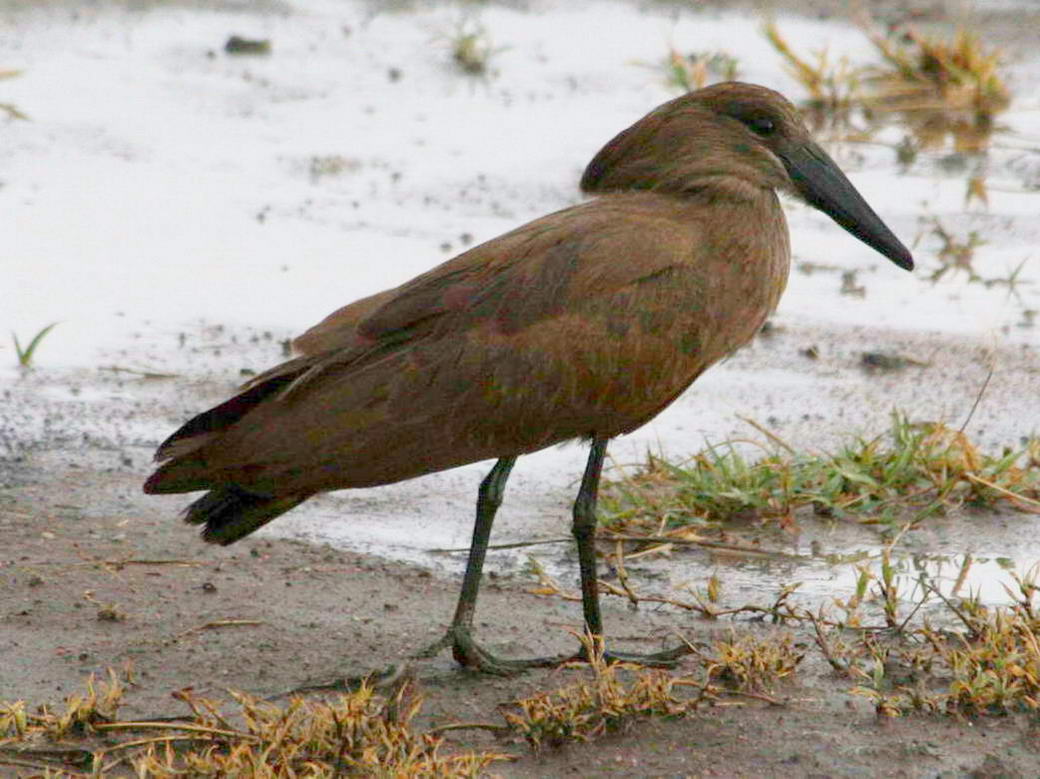
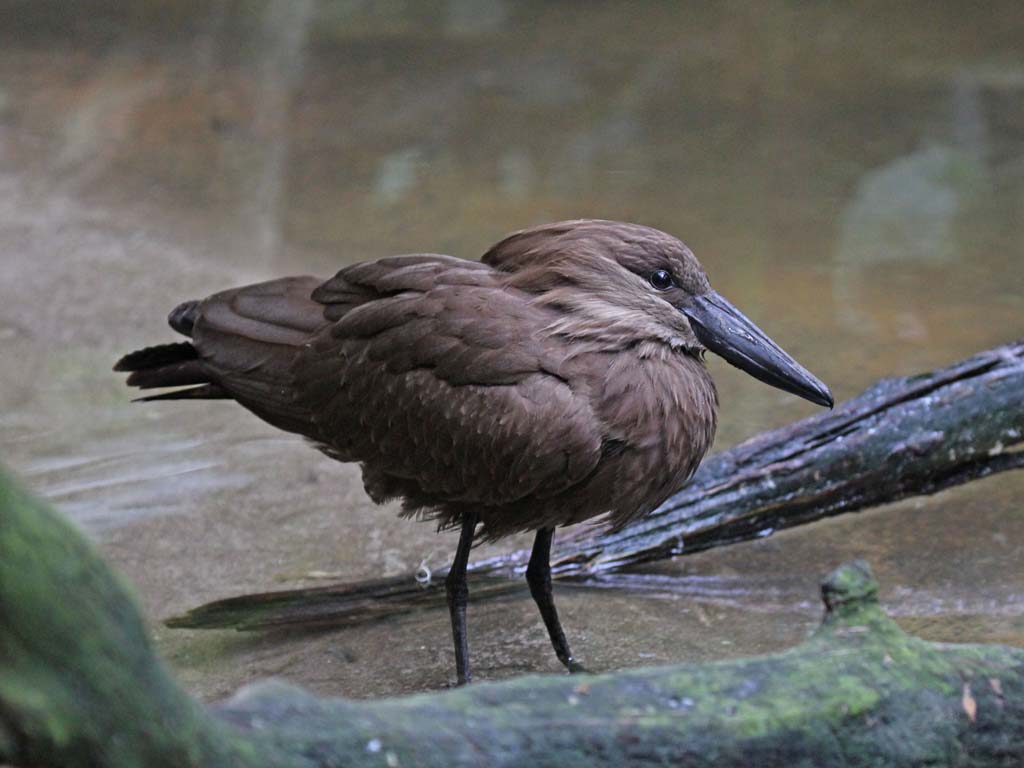
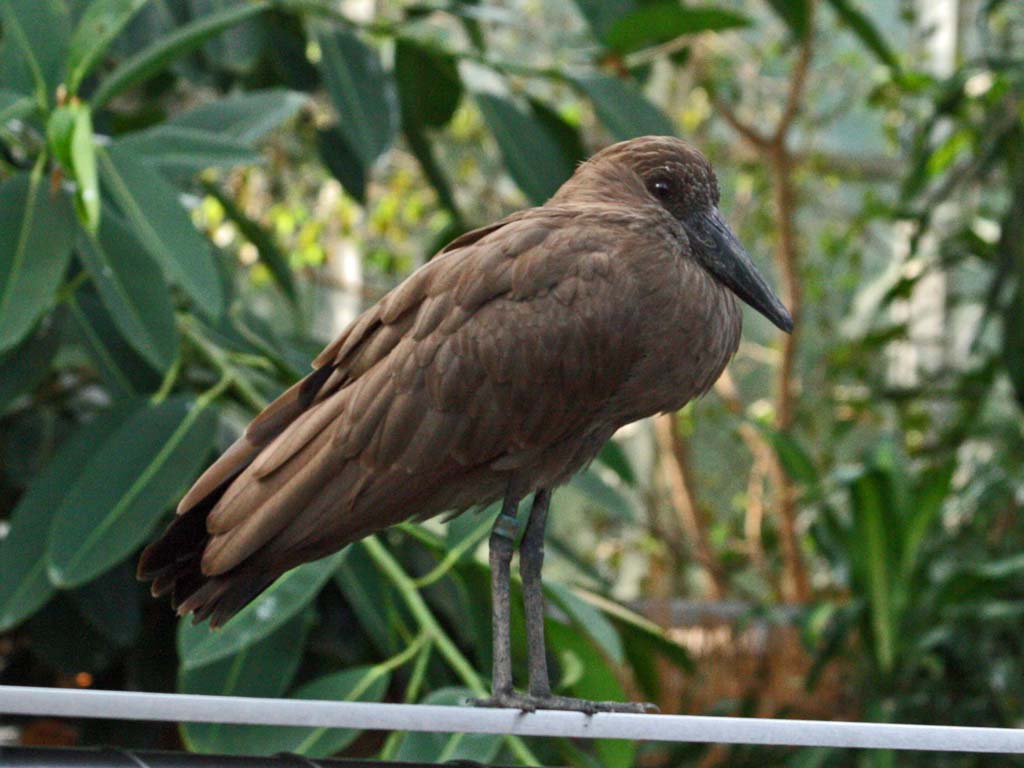
Hamerkop Scopus umbretta Found: Africa
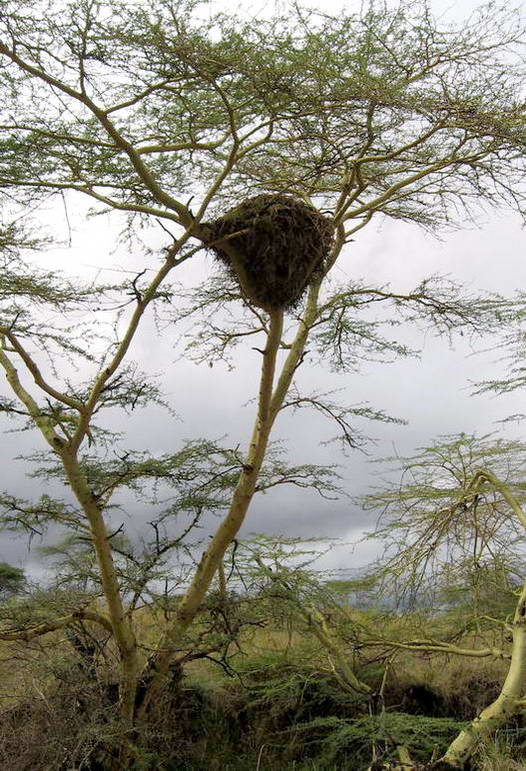
The Hamerkop has brown plumage; long flat bill; partially webbed feet. It builds a huge nest.
Image: 1) Dick Daniels - Tanzania 2, 3, 4)
Dick -
San Diego Zoo 5) Sandy - National Aviary 6) Sandy Cole - Tanzania 7, 8, 9) Dick - Nairobi National Park, Kenya_RWD.jpg)




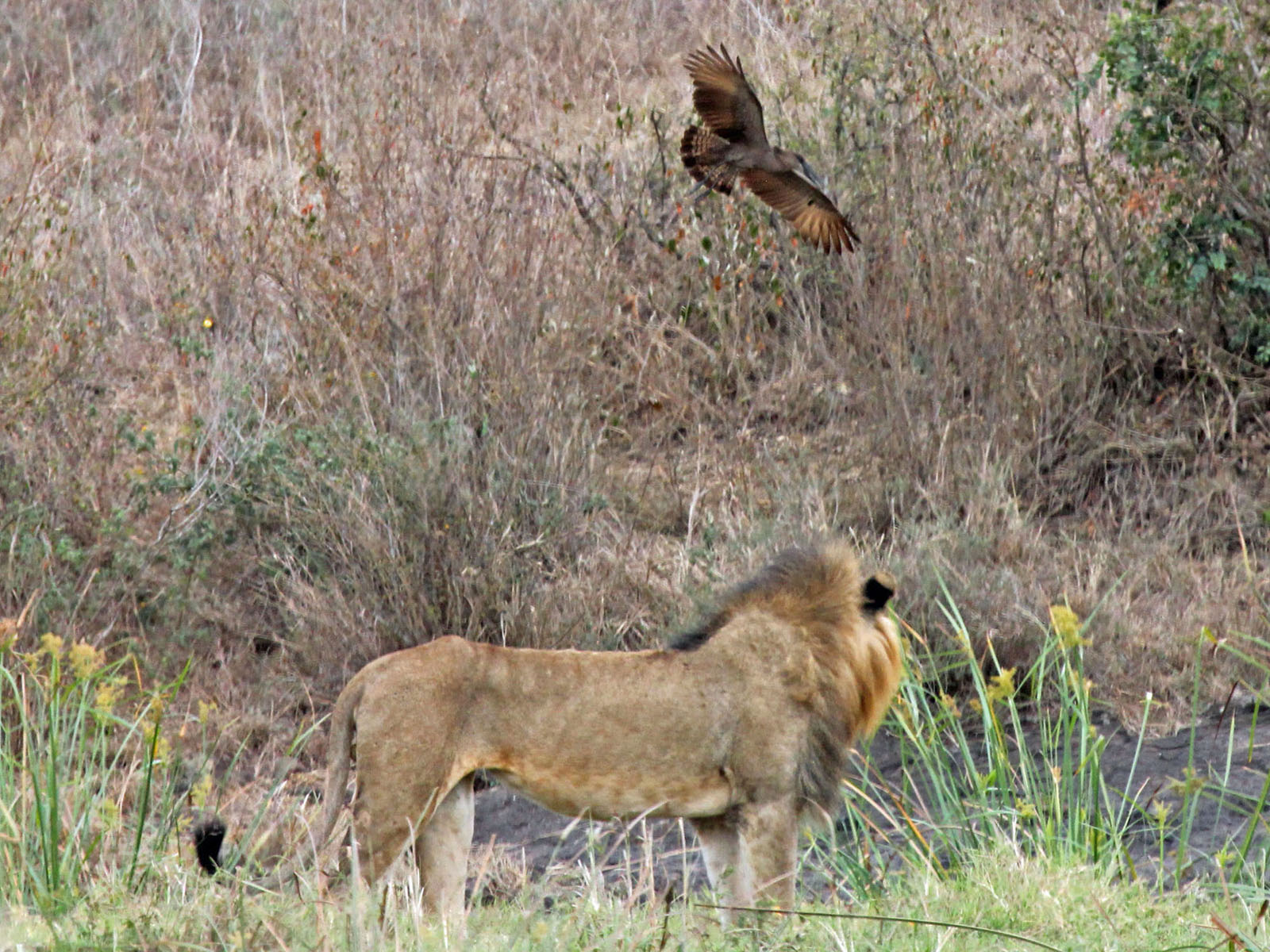
6) Hammerkop nest, perhaps the world's largest nest 9) Hamerkop warning about presence of lion




Family Balaenicipitidae - 1 genus
It is a matter of debate whether the Shoebill belongs in the same order as Pelicans or the Storks.
Genus Balaeniceps - 1 species
Shoebill Balaeniceps rex Found: Africa
The Shoebill has blue-gray plumage; massive bill. When hunting fish it moves slowly and detects the fish purely by sight.
Image by: 1) Darren Bellerby - Jurong Bird Park, Singapore
2) Charlie Westerinen - Prague Zoo 3) Fritz Geller-Grimm -Zoological
Garden, Frankfurt/Main, Germany


